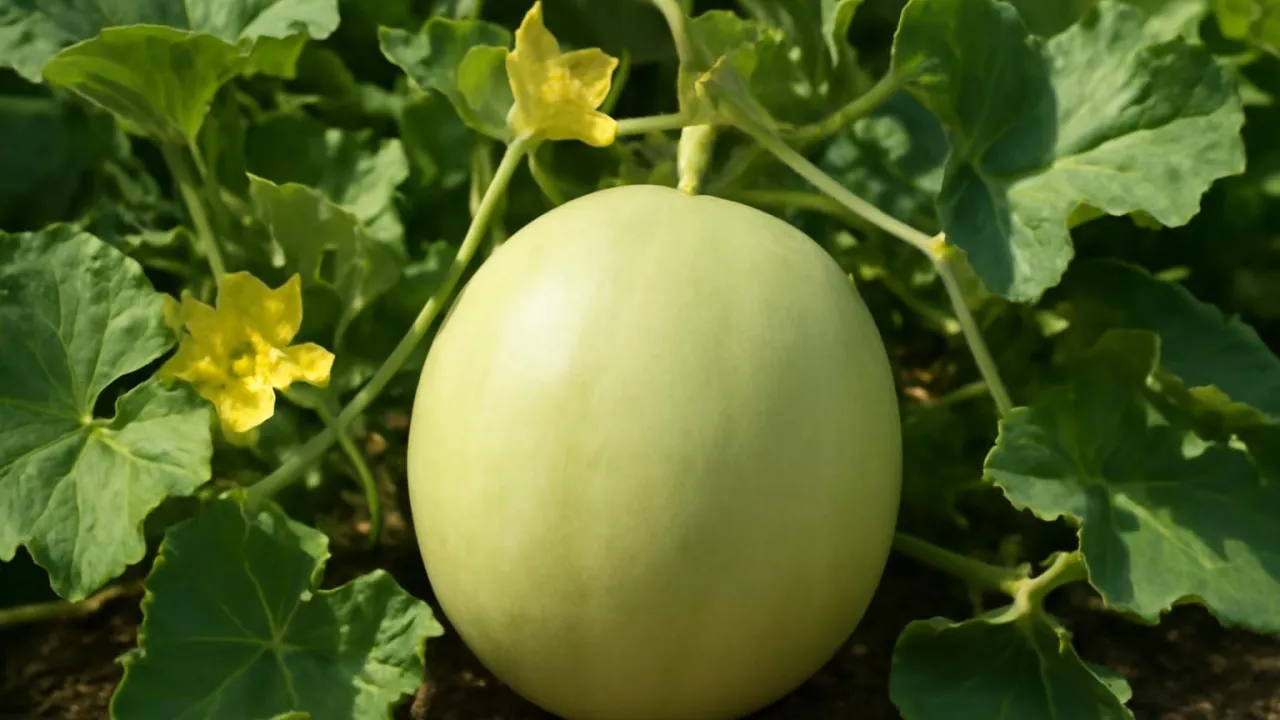
Honeydew melons can contain over 90% water, making them very refreshing!
✨ Word Sparks (Grade 2 Glossary)
Tap 🔊 to hear
pollinate
When bees help flowers make fruit
vine
A plant stem that grows along the ground
ripe
Ready to eat and tastes very sweet
🪝
Did you know honeydew melons grow on long vines in warm sunny places?
1
What Honeydew Melons Look Like
Honeydew melons have smooth pale green skin and round shapes. They grow to about six to nine inches. Their inside is juicy and light green. People love to eat them fresh in summer.
2
How They Grow
Honeydew melons grow on that spread across the ground. They need warm weather and plenty of sunlight. Bees help the flowers so melons can grow. Farmers pick the melons when they are and sweet.
3
A Special Feature
The honeydew melon’s skin is smooth and waxy to protect it. Its sweet flesh is full of water and natural sugar. This makes it juicy and refreshing to eat. It is a healthy snack that many people enjoy.
Honeydew melons belong to the same species as cantaloupes but have smoother skin and sweeter flesh.
✨ Word Sparks (Grade 3 Glossary)
Tap 🔊 to hear
pollination
When bees move pollen to help fruit grow
adaptation
A change that helps plants survive better
nutrients
Food substances plants and animals need
🪝
Have you ever wondered how honeydew melons stay so juicy and sweet in hot weather?
1
Appearance and Adaptation
Honeydew melons have smooth, pale green skin that helps protect them from sun damage. Their round shape allows even ripening under warm sunlight. The waxy surface reduces water loss through evaporation. These help the melon stay fresh in hot climates.
2
Growth and Pollination
Honeydew melons grow on sprawling vines that spread across the soil surface. occurs when bees transfer pollen between flowers, allowing fruit to develop. This relationship between bees and melons is vital for successful fruit production. Without pollination, the melons would not grow properly.
3
Juicy Sweet Flesh
Inside, the melon’s flesh is light green and very juicy, full of water and natural sugars. This juicy flesh provides and hydration to animals and people who eat it. The sweet taste attracts animals that help spread seeds. This is an important survival strategy for the plant.
4
Habitat and Cultivation
Honeydew melons thrive in warm, sunny climates with well-drained soil. Farmers cultivate them in fields where vines can spread widely. They require regular watering but cannot tolerate waterlogged soil. These conditions help produce the best quality, sweetest melons.
Honeydew melons reflect sunlight with their pale skin, helping reduce heat stress in hot climates.
✨ Word Sparks (Grade 4 Glossary)
Tap 🔊 to hear
symbiotic
A helpful relationship between two living things
evaporation
When water turns into vapor and leaves a surface
cultivate
To grow plants carefully for food or use
🪝
Did you know honeydew melons play a key role in warm ecosystems and human farming?
1
Physical Traits and Survival
Honeydew melons have smooth, pale green skin that reflects sunlight to reduce heat absorption, helping them survive in hot climates. Their waxy coating prevents excessive water loss through , which is crucial for maintaining juiciness. This physical adaptation allows the melon to stay fresh longer during warm weather. Additionally, their round shape promotes even ripening when exposed to sunlight.
2
Pollination and Ecosystem Role
Bees pollinate honeydew melon flowers by transferring pollen, enabling fruit development. This relationship benefits both the melons and the bees, as bees collect nectar for food. Honeydew melons provide hydration and nutrients to various animals, including humans, making them an important food source in their ecosystems. Their seeds are spread by animals that eat the fruit, aiding plant reproduction.
3
Agricultural Importance
Farmers honeydew melons in warm regions worldwide, including parts of Africa, the United States, and Asia. These melons require well-drained soil and consistent watering to produce sweet, high-quality fruit. Agricultural practices impact melon growth, and sustainable farming helps preserve soil health and water resources. Honeydew melons contribute economically by supplying fresh fruit markets globally.
4
Geographic Distribution and Climate
Honeydew melons thrive in warm temperate to subtropical climates where temperatures range between 70 and 85 degrees Fahrenheit. They are sensitive to frost and need long growing seasons with plenty of sunlight. These melons are commonly grown in regions such as California, Spain, and parts of West Africa. Climate changes can affect their growth cycles and yields.
1. How does the honeydew melon’s skin help it survive heat?
2. Why are bees important to honeydew melons?
🤯 Mind-Blowing Fact • Grade 5
Honeydew melons are over 90% water, making them one of the most hydrating fruits known.
✨ Word Sparks (Grade 5 Glossary)
Tap 🔊 to hear
Cucurbitaceae
The plant family of melons and cucumbers
transpiration
Water loss from plants through leaves and skin
cultivar
A plant variety made by selective breeding
🪝
What makes the honeydew melon a fascinating fruit in botany and agriculture worldwide?
1
Taxonomy and Botanical Classification
Honeydew melon is scientifically classified as Cucumis melo var. inodorus, a variety of muskmelon. It belongs to the family, which includes cucumbers, pumpkins, and squash. Unlike some melons, honeydew has smooth, pale green skin without a netted rind. Botanically, it is a pepo fruit, developing from a single ovary and containing multiple seeds.
2
Physiological Adaptations and Growth
Honeydew melons develop on trailing vines that require warm temperatures between 70 and 85 degrees Fahrenheit for optimal growth. Their waxy, reflective skin reduces , conserving water in arid conditions. The fruit’s flesh is rich in water, natural sugars, and vitamins such as vitamin C and potassium, supporting both plant metabolism and human nutrition. Pollination by bees triggers fruit set and seed development.
3
Historical Cultivation and Conservation
Honeydew melons have been cultivated for thousands of years, with origins traced to West Africa and the Middle East. Over time, selective breeding improved sweetness and texture. Today, efforts in agricultural science focus on developing disease-resistant and sustainable farming methods. Conservation of genetic diversity is important to protect honeydew melon varieties from pests and climate change impacts.
4
Quantitative Comparisons and Growth Metrics
A typical honeydew melon weighs between 4 and 8 pounds (1.8 to 3.6 kilograms) and measures 6 to 9 inches (15 to 23 centimeters) in diameter. The fruit contains over 90% water, making it highly hydrating. It requires approximately 80 to 100 days from planting to harvest, depending on climate conditions. Optimal soil temperatures for growth range from 70 to 85 degrees Fahrenheit.
5
Economic and Nutritional Importance
Honeydew melons contribute significantly to fresh fruit markets globally, especially in the United States, Spain, and North Africa. They provide essential nutrients like vitamin C, dietary fiber, and potassium, supporting human health. The fruit’s sweet flavor and hydrating properties make it popular in summer diets. Advances in cultivation techniques continue to improve yield and fruit quality worldwide.