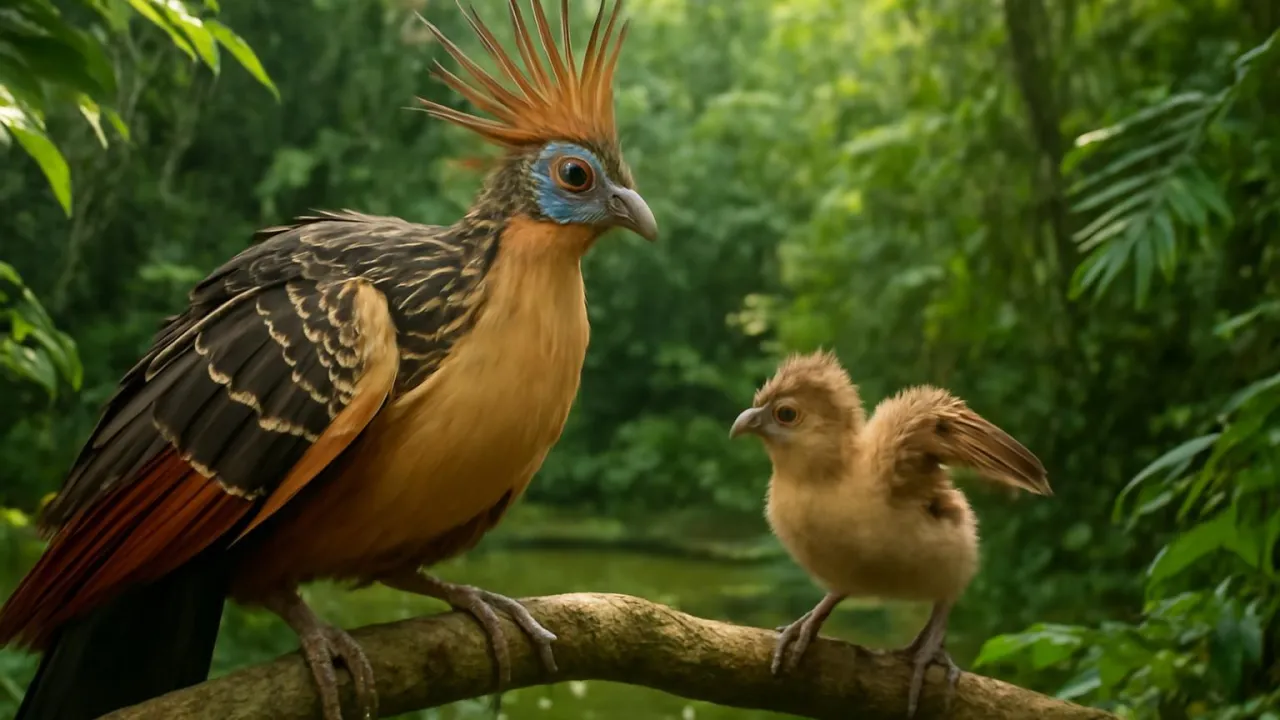
The hoatzin is sometimes called the 'stinkbird' because it smells so strong!
✨ Word Sparks (Grade 2 Glossary)
Tap 🔊 to hear
rainforest
A warm, wet forest with tall trees
digest
Break down food in the body
climb
Move up using hands or feet
🪝
Did you know there’s a bird that smells like a farm?
1
A Colorful Bird
The hoatzin has a blue face and bright red eyes. Its head has long, spiky feathers. This bird lives in the warm, wet of South America.
2
A Leafy Diet
Hoatzins eat mostly green leaves from trees and bushes. Their stomachs are like a cow’s and help them plants. When they eat, they make a funny smell like old hay.
3
Climbing Chicks
Baby hoatzins have two claws on each wing. They use these claws to trees if they fall from the nest. As they grow, the claws go away and they learn to fly.
2. What happens to the chicks’ wing claws as they grow?
🤯 Mind-Blowing Fact • Grade 3
Hoatzin chicks can swim and use their wing claws to climb back to their nest!
✨ Word Sparks (Grade 3 Glossary)
Tap 🔊 to hear
ferment
Break down food using tiny germs
predator
An animal that hunts other animals
adaptation
A special body part that helps survive
🪝
Can you imagine a bird that smells like a barn and climbs with its wings?
1
A Wild Look and Home
With a spiky orange crest and a bright blue face, the hoatzin looks wild and unusual. It lives along rivers and swamps in the Amazon rainforest, where thick trees and leafy plants grow everywhere. Its reddish eyes and brown feathers help it blend into the branches and leaves. You might hear its croaking call before you even spot it high in the trees.
2
Leafy Meals and Stinky Secrets
Most birds eat seeds, fruit, or insects, but the hoatzin munches mainly on leaves. Its huge stomach the leaves, breaking them down with the help of bacteria. This special digestion makes the bird smell like manure or hay, earning it the nickname 'stinkbird.' The strong smell can even help keep some away from its nest.
3
Amazing Climbing Chicks
Hoatzin chicks hatch with two claws on each wing, a rare trait among birds. If danger comes, the chicks can drop into the water below and swim to safety. They use their wing claws to climb back up tree branches to their nest. As they grow older, the claws disappear and they learn to fly instead.
4
A Peek Into the Past
The hoatzin is sometimes called a 'living fossil' because it has features like ancient birds and dinosaurs. Its clawed wings and leaf-digesting stomach are very rare in modern birds. Scientists study the hoatzin to learn about bird evolution and how strange help animals survive. This bird is truly one of a kind in the animal kingdom.
1. Why do hoatzin chicks have claws on their wings?
2. What makes the hoatzin’s stomach special?
🤯 Mind-Blowing Fact • Grade 4
The hoatzin is the only bird in the world that ferments leaves in its crop!
✨ Word Sparks (Grade 4 Glossary)
Tap 🔊 to hear
camouflage
Colors or patterns that help hide
fermentation
Breaking down food with bacteria
ecosystem
A place where living things interact
🪝
Would you believe there’s a bird that digests leaves like a cow and smells like a compost pile?
1
A Rainforest Oddball
The hoatzin stands out in the Amazon rainforest with its spiky orange crest, blue facial skin, and striking red eyes. This bird prefers swampy forests and riverbanks in South America, where it can find plenty of leafy food. Its brown, streaked feathers provide among the dense branches. The hoatzin’s unique appearance and smell make it easy to recognize.
2
Leaf-Eating and Fermentation
Unlike most birds, the hoatzin relies almost entirely on leaves for its diet, rarely eating fruit or insects. Its enormous crop, a special part of its digestive system, ferments the leaves using bacteria, much like a cow’s stomach. This process produces a strong, manure-like odor that has earned the hoatzin the nickname 'stinkbird.' The smell may help protect it from some predators by making it less appealing as prey.
3
Clawed Chicks and Survival
Hoatzin chicks are born with two sharp claws on each wing, an adaptation rarely seen in modern birds. If threatened, chicks can leap from their nest into the water below and use their claws to climb back up tree branches. As they mature, the claws disappear, and flight feathers grow in their place. This adaptation increases their chances of escaping predators like snakes and monkeys during their most vulnerable stage.
4
Ecosystem Role and Distribution
The hoatzin is found along slow-moving rivers and lakes in the Amazon and Orinoco basins, mostly in Brazil, Venezuela, Colombia, and Peru. By eating and digesting large amounts of leaves, hoatzins help recycle nutrients in the rainforest . Their droppings enrich the soil, supporting plant growth and food webs. Although not currently endangered, hoatzins depend on healthy wetlands and forests to survive.
The hoatzin is the only living bird whose chicks have real, functional wing claws for climbing!
✨ Word Sparks (Grade 5 Glossary)
Tap 🔊 to hear
fermentation
A process where bacteria break down food
evolution
How living things change over long time
nutrient cycling
Moving nutrients through plants, animals, and soil
🪝
How does a bird with dinosaur-like claws and a cow-like stomach survive in the Amazon?
1
Taxonomy and Evolutionary Mystery
The hoatzin (Opisthocomus hoazin) is a truly unique species, the sole member of its family Opisthocomidae and order Opisthocomiformes. Its evolutionary relationships have puzzled scientists for decades, as genetic studies have failed to place it conclusively with other bird groups. The presence of wing claws in chicks and its ancient digestive system suggest a distant connection to early avian ancestors, making it a living window into bird . Its closest relatives may be extinct, highlighting its evolutionary isolation. The hoatzin’s unusual features have led some to call it a 'living fossil.'
2
Physiology: Leaf Digestion and Fermentation
Unlike any other bird, the hoatzin’s primary food source is young, tender leaves, which make up over 80% of its diet. To digest this fibrous plant matter, the hoatzin has an enlarged crop and lower esophagus, where symbiotic bacteria ferment the leaves, breaking down cellulose into nutrients. This process is similar to the rumination found in cows, producing methane and a strong, manure-like odor. The digestive system is so large that it displaces the flight muscles, making the hoatzin a poor flier compared to other birds. The process also causes the bird’s body temperature to be slightly lower than most birds.
3
Clawed Chicks: Survival Adaptation
Hoatzin chicks hatch with two functional claws on each wing, a trait rarely seen in modern birds but present in some prehistoric species like Archaeopteryx. These claws allow the chicks to climb branches and escape predators, especially during their first two weeks of life before they can fly. If threatened, chicks may drop into the water and swim to safety, then use their wing claws to climb back to the nest. As they mature, the claws are resorbed and replaced by flight feathers. This adaptation provides a remarkable survival advantage in the dense, predator-rich Amazonian habitat.
4
Ecosystem Impact and Conservation
Hoatzins inhabit flooded forests, swamps, and riverbanks throughout the Amazon and Orinoco river basins, with stable populations in Brazil, Venezuela, Colombia, Peru, and Ecuador. By consuming large quantities of leaves, hoatzins play a vital role in , returning organic matter to the soil through their droppings. They also serve as prey for large raptors and mammals, linking various food webs. While currently classified as Least Concern by the IUCN, hoatzins are vulnerable to habitat destruction from deforestation, wetland drainage, and climate change. Protecting their riverine habitats is crucial for maintaining healthy populations.
5
Quantitative Curiosities and Scientific Significance
An adult hoatzin measures about 25 inches (64 cm) long and weighs around 2 pounds (900 grams). Its crop can hold up to 10% of its body weight in leaves at one time, and digestion can take several hours. Hoatzins fly only short distances, typically less than 100 feet (30 meters) at a time, due to reduced breast muscles. Their chicks’ wing claws are about half an inch (1.3 cm) long at hatching. The hoatzin’s unique combination of physiological and evolutionary traits makes it a focus of scientific research on avian adaptation and the evolutionary history of birds.