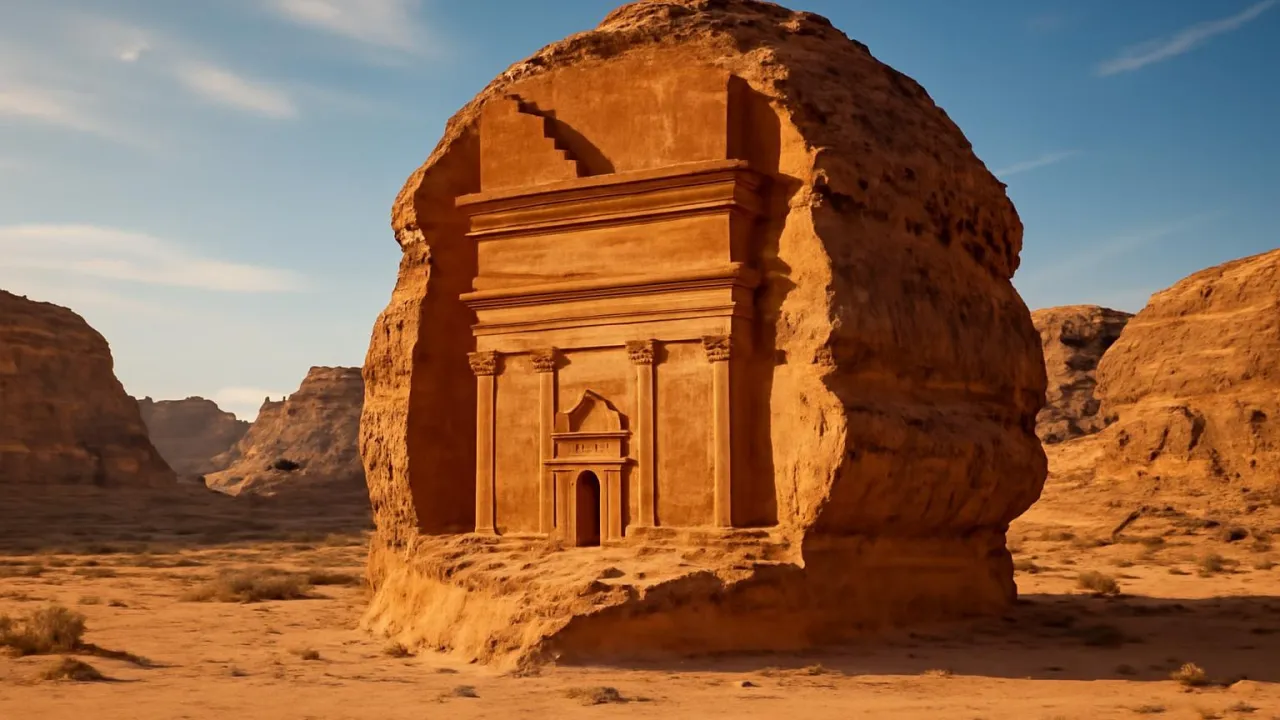
The largest tomb at Hegra is as tall as a seven-story building.
✨ Word Sparks (Grade 2 Glossary)
Tap 🔊 to hear
Nabataean
People who lived here long ago
pattern
A design made with shapes or lines
desert
A dry, sandy place with little rain
🪝
Can you imagine walking into a mountain with secret rooms?
1
Rocky Doors and Ancient Builders
Tall rocks rise from the , and some have doors carved inside. Long ago, people made these special tombs for their families. They used tools to shape the stone and create beautiful .
2
Cool Rooms and Quiet Spaces
Inside the tombs, it feels cool and quiet, even on hot days. The walls and beds are made from the same rock as outside. People visit to see the carvings and wonder about the people who built them.
3
A Place Full of Stories
Hegra is a place full of mystery and history. Visitors walk between the tombs and take pictures of the amazing shapes. The rocks glow orange and pink when the sun sets.
Some tombs at Hegra have inscriptions that are over 2,000 years old.
✨ Word Sparks (Grade 3 Glossary)
Tap 🔊 to hear
inscription
Words or symbols carved into stone
erosion
When wind or water slowly wears away rock
monument
A large, important building or statue
🪝
What secrets do you think ancient tombs carved in stone might hold?
1
Carved by Hand in the Desert
In the hot, dry desert, huge sandstone cliffs rise above the sand. Long ago, Nabataean builders carved doors, columns, and decorations into these rocks. Each tomb was made by hand using iron tools and careful planning. The shapes and patterns show the builders’ skill and creativity.
2
Inside the Tombs
Walking inside, you feel cool air and see smooth, echoing walls. The tombs have stone benches and carved beds for the dead. Some walls have in the Nabataean language, telling who was buried there. The rooms were designed to protect the dead from heat, wind, and sand.
3
A City of Stone
Hegra is called a 'city of stone' because of its many rock-cut . There are over 110 tombs, some standing as high as 72 feet. The largest tomb, Qasr al-Farid, stands alone and is famous for its unfinished carvings. Visitors come from all over the world to see these wonders.
4
Lasting Wonders
The dry desert has helped keep the tombs safe for thousands of years. Wind and sand slowly shape the rocks, a process called . Today, Hegra is a UNESCO World Heritage site, protected for everyone to explore and learn. These tombs help us understand ancient life and art.
Hegra’s tombs were carved using only hand tools—no machines or explosives were used.
✨ Word Sparks (Grade 4 Glossary)
Tap 🔊 to hear
facade
The decorated front of a building
acoustics
How sound moves in a space
archaeologist
A scientist who studies old places
🪝
If you could listen to the wind inside a stone tomb, what stories might it tell?
1
Master Builders of the Desert
Imagine standing before a towering cliff, its face carved with doors and columns by Nabataean craftsmen over 2,000 years ago. These ancient engineers used iron chisels and hammers to cut directly into the soft sandstone, creating tombs with detailed and inscriptions. Each tomb was carefully planned to honor important families and show off their wealth and status. The work required careful measurement and an understanding of how to shape stone without causing it to crack.
2
Inside Hegra’s Tombs
Stepping inside, you notice the air is cool and still, even as the desert bakes outside. The of the stone chambers make every sound echo softly, adding to the mystery. Carved benches, beds, and steps line the walls, all made from the same rock as the cliffs. Nabataean inscriptions above the entrances record the names and wishes of the people buried there, preserving their memory for centuries.
3
Nature’s Role in Preservation
Hegra’s tombs have survived so long because of the region’s dry climate and the properties of sandstone. Erosion from wind and sand has gently shaped the tombs’ edges but left most carvings clear and sharp. The site’s isolation in the desert also protected it from many invaders and builders who might have changed or destroyed the tombs. Today, study these monuments to learn about Nabataean culture, trade, and beliefs.
4
A World Heritage Treasure
Hegra became Saudi Arabia’s first UNESCO World Heritage site in 2008, recognized for its outstanding history and architecture. Visitors from around the world now explore the tombs, guided by experts who explain their art and engineering. The site teaches us about ancient trade routes, religious customs, and the power of stone to hold stories across time. Hegra’s preservation helps connect people today with the wonders of the past.
1. Why did the Nabataeans carve tombs into cliffs?
2. What helps keep Hegra’s tombs in good shape?
🤯 Mind-Blowing Fact • Grade 5
Qasr al-Farid, Hegra’s largest tomb, was left unfinished—its lower carvings are much rougher than the upper ones.
✨ Word Sparks (Grade 5 Glossary)
Tap 🔊 to hear
resonance
When sound vibrates and echoes in a space
conservation
Protecting old places from damage
geochemical
Related to the chemistry of rocks and earth
🪝
What if you could decode the ancient secrets hidden within a city carved from desert stone?
1
Engineering Marvels in Sandstone
Approaching Hegra’s monumental tombs, you encounter a breathtaking display of Nabataean engineering and artistry from the 1st century BCE to the 1st century CE. The builders selected sandstone cliffs with the right density and stability, then used iron chisels and wooden scaffolding to carve elaborate facades directly into the rock. Each tomb’s design required precise geometric planning to ensure the entrances, columns, and decorative elements aligned perfectly and the structure would not collapse. This advanced stonemasonry demonstrates a sophisticated understanding of both material science and architectural aesthetics.
2
Interior Design and Acoustic Mysteries
Inside, the tombs reveal not only funerary chambers but also unique acoustic properties. The thick sandstone walls dampen outside noise while creating a soft echo, a phenomenon known as , which may have enhanced rituals or ceremonies. Carved benches and beds, all hewn from the living rock, were designed to withstand centuries of erosion. Inscriptions in ancient Nabataean script provide valuable historical data about the individuals buried here and the society’s beliefs about the afterlife.
3
Natural Forces and Preservation
Hegra’s survival over two millennia is largely due to the region’s arid climate and the chemical composition of its sandstone. Minimal rainfall and low humidity have slowed weathering, while occasional sandstorms have gently abraded the surfaces rather than destroying them. Erosion continues to shape the tombs, but scientists now monitor the site, using modern technology to track changes and prevent further damage.
4
Hegra’s Place in History
Hegra was once a thriving Nabataean city along ancient trade routes connecting Arabia, Egypt, and the Mediterranean. Its tombs reflect the wealth generated by trade in incense, spices, and other goods. The city’s decline began after Roman annexation in 106 CE, but its monuments remained untouched for centuries, preserving a unique record of Nabataean culture. Today, archaeologists use advanced methods like 3D scanning and analysis to unlock new insights from the site.
5
A Global Heritage for the Future
Recognized as Saudi Arabia’s first UNESCO World Heritage site, Hegra stands as a symbol of cultural exchange and human creativity. Visitors from around the world marvel at its scale, with the tallest tomb, Qasr al-Farid, rising 72 feet above the desert floor. Educational programs and international research collaborations aim to protect Hegra for future generations, ensuring that its silent stone chambers continue to inspire curiosity and wonder for centuries to come.