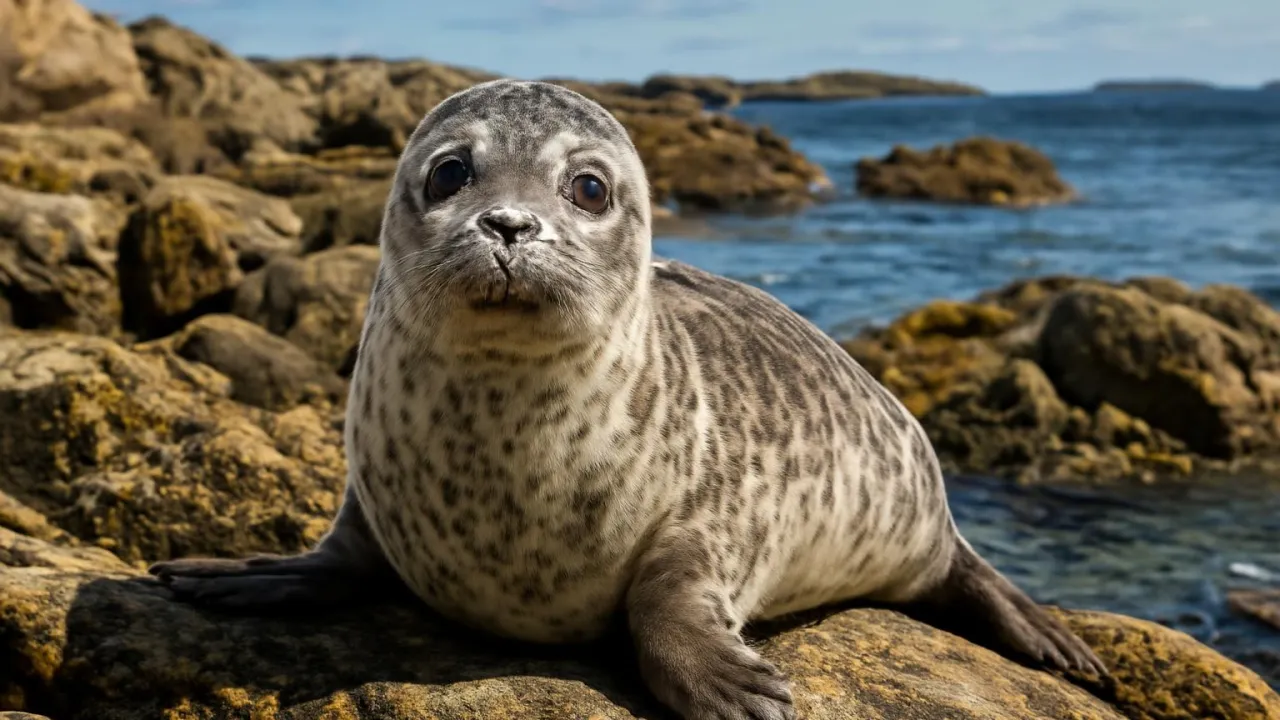
Harbor seals can dive up to 1,500 feet deep and stay underwater for 30 minutes!
✨ Word Sparks (Grade 2 Glossary)
Tap 🔊 to hear
blubber
Thick fat under skin that keeps animals warm
crustaceans
Animals like crabs and shrimp with hard shells
dive
To swim down deep under water
🪝
Have you ever wondered how harbor seals stay warm in cold water?
1
Warm Fur and Blubber
Harbor seals have thick fur and a layer of that keep them warm in cold water. Their fur is gray with dark spots. They live along rocky coasts where water can be chilly.
2
Swimming and Moving
Seals swim using their strong flippers and can move quickly underwater. On land, they wiggle their bodies to move. They can hold their breath for a long time while diving deep.
3
Eating Fish and More
Harbor seals eat many kinds of fish, squid, and . They hunt underwater using their sharp teeth. Their diet helps them get energy to swim and stay warm.
1. What helps harbor seals stay warm in cold water?
2. Where do harbor seals live?
🤯 Mind-Blowing Fact • Grade 3
Harbor seals can hold their breath underwater longer than most other seals, up to 30 minutes!
✨ Word Sparks (Grade 3 Glossary)
Tap 🔊 to hear
camouflage
Colors or patterns that help hide animals
predator
An animal that hunts other animals for food
blubber
Thick fat that keeps animals warm in cold water
🪝
Did you know harbor seals use camouflage to hide from predators in the water?
1
Camouflage and Fur Patterns
Harbor seals have spotted fur that helps them blend into rocky shorelines and ocean floors. This protects them from like sharks and killer whales. Their gray and brown colors match their environment well.
2
Diving and Holding Breath
These seals can dive deeply, holding their breath for up to 30 minutes underwater. This ability helps them avoid and catch food like fish and squid. Their lungs and blood store oxygen efficiently for long dives.
3
Role in the Ecosystem
Harbor seals are important in coastal food webs. They help control fish and squid populations. They also serve as prey for larger marine animals, keeping the ecosystem balanced.
4
Adaptations for Survival
Their thick insulates against cold water and stores energy. Their whiskers detect vibrations in water to find prey. These adaptations help harbor seals survive in harsh ocean habitats.
Harbor seals can dive up to 1,500 feet deep and hold their breath for 30 minutes to hunt underwater.
✨ Word Sparks (Grade 4 Glossary)
Tap 🔊 to hear
insulate
To keep heat inside and stay warm
ecosystem
A community of living things and their environment
prey
Animals hunted and eaten by predators
🪝
How do harbor seals survive and thrive in cold coastal waters around the world?
1
Physical Adaptations for Cold Water
Harbor seals have thick blubber and dense fur that their bodies against cold ocean temperatures, allowing them to swim comfortably in chilly waters. Their spotted fur provides camouflage among rocks and kelp beds, helping them avoid predators. These physical traits are vital for survival in coastal environments.
2
Ecosystem Role and Food Webs
As mid-level predators, harbor seals help control populations of fish, squid, and crustaceans, maintaining balance in marine food webs. They themselves are for larger predators like orcas and sharks, showing their important role in the ’s energy flow. Human fishing activities can impact their food supply and habitat.
3
Geographic Range and Habitats
Harbor seals are found along temperate and Arctic coastlines of the North Atlantic and Pacific Oceans. They prefer rocky shores, sandy beaches, and estuaries where they haul out to rest and breed. Their ability to adapt to different coastal habitats helps them survive in diverse environments.
4
Cause and Effect of Human Impact
Pollution and coastal development reduce harbor seal habitats and can harm their health. Overfishing decreases their availability, causing seals to travel farther for food. Conservation efforts aim to protect their habitats and food sources to support healthy populations.
1. What helps harbor seals avoid predators in their habitat?
2. How does overfishing affect harbor seals?
🤯 Mind-Blowing Fact • Grade 5
Harbor seals can dive deeper and hold their breath longer than most marine mammals, reaching 1,500 feet and 30 minutes underwater.
✨ Word Sparks (Grade 5 Glossary)
Tap 🔊 to hear
Phocidae
The family of true seals without external ears
mesopredator
An animal that hunts smaller animals but is also prey
haul-out
Place seals rest on land or ice between swims
🪝
What unique biological features allow harbor seals to dive deeply and thrive in cold coastal waters worldwide?
1
Taxonomy and Scientific Classification
Harbor seals belong to the family and the genus Phoca, scientifically named Phoca vitulina. They are true seals, lacking external ear flaps, which distinguishes them from sea lions. This classification helps scientists understand their evolutionary relationships within marine mammals and their adaptations.
2
Physiological Adaptations for Diving
Harbor seals have highly efficient oxygen storage in their blood and muscles, allowing dives up to 1,500 feet and breath-holds of 30 minutes. Their slow heart rate during dives conserves oxygen, and their flexible rib cages prevent lung collapse under pressure. These adaptations enable extended underwater hunting and survival in deep, cold waters.
3
Conservation Status and Human Impact
Currently, harbor seals are classified as Least Concern by conservation groups, but habitat loss and pollution threaten some populations. Overfishing reduces their prey, and entanglement in fishing gear causes injuries. Conservation programs monitor populations and protect critical sites to support their survival.
4
Ecological Role and Food Web Dynamics
As , harbor seals regulate fish and invertebrate populations, influencing coastal marine ecosystems. Their presence supports biodiversity by maintaining balanced food webs. Predators like orcas depend on healthy seal populations, showing interconnected ecosystem relationships and energy flow.
5
Quantitative Comparisons and Facts
Adult harbor seals typically weigh between 180 and 285 pounds (82 to 130 kilograms) and measure 4 to 6 feet (1.2 to 1.8 meters) long. They swim at speeds up to 12 miles per hour (19 kilometers per hour) and can dive to depths of 1,500 feet (460 meters). Their thick blubber can be up to 4 inches (10 centimeters) thick to insulate against cold temperatures, enabling survival in frigid waters.