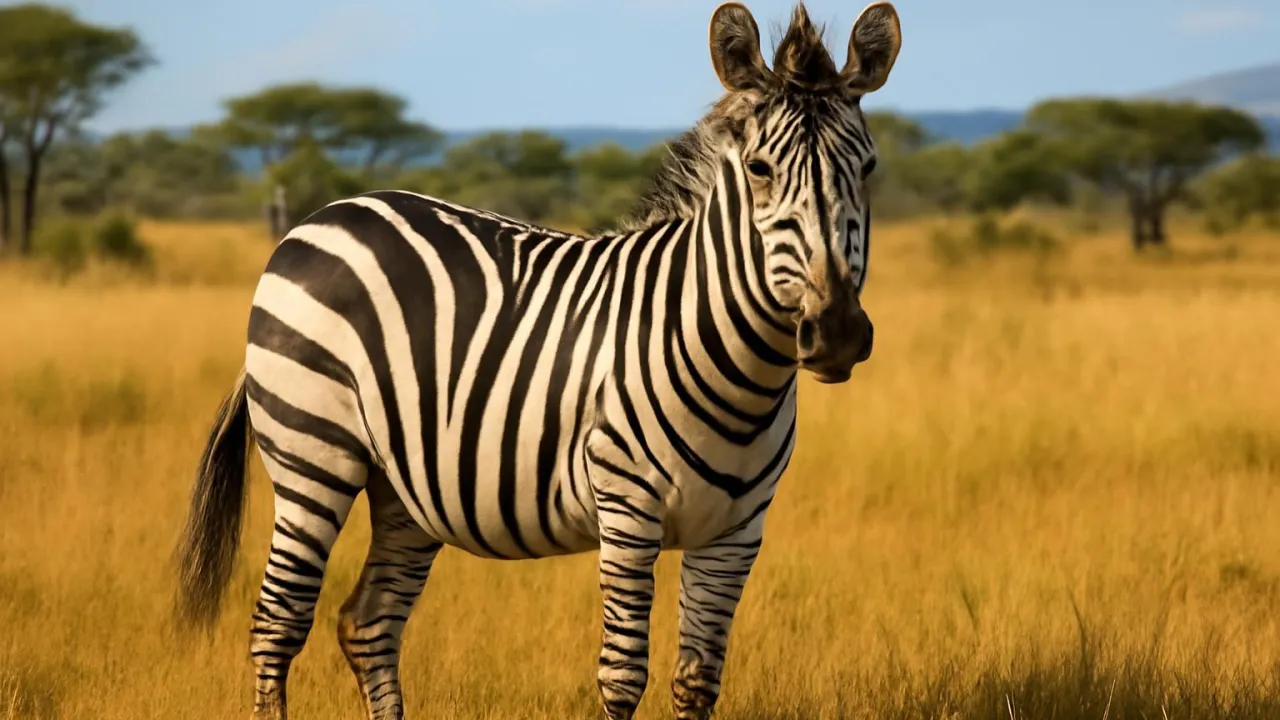
Zebra stripes help confuse predators by making it hard to see one zebra alone.
✨ Word Sparks (Grade 2 Glossary)
Tap 🔊 to hear
predator
An animal that hunts other animals
herd
A group of animals living together
unique
One of a kind or special
🪝
Have you ever wondered why zebras wear black and white stripes?
1
Zebra Stripes and Their Purpose
Plains zebras have black and white stripes that help them hide in tall grass. Their stripes confuse when they run fast. Each zebra’s stripes are and help friends recognize each other.
2
Where Do Zebras Live?
Zebras live in the grasslands and savannas of Africa where they find plenty of grass to eat. They drink water from rivers and lakes to stay healthy. Zebras like warm weather and open spaces to run.
3
Zebra Life and Sounds
Zebras live in groups called to protect each other from danger. They make barking and braying sounds to talk to their friends. Baby zebras are called foals and stay close to their mothers.
Zebra stripes may help control body heat by creating tiny air flows on their skin.
✨ Word Sparks (Grade 3 Glossary)
Tap 🔊 to hear
camouflage
Colors or patterns that help animals hide
herbivore
An animal that eats only plants
predator
An animal that hunts others for food
🪝
How do plains zebras use their stripes to survive in the wild?
1
Stripes as Camouflage
Plains zebras have bold black and white stripes that create in tall grasses. This helps confuse like lions and hyenas when zebras move in herds. The stripes break up their shape, making it hard for predators to focus on one animal.
2
Habitat and Diet
Zebras live mainly in African savannas where grasses grow thick and tall. They are , eating mostly grasses that provide nutrients for energy. Zebras need water daily and often travel long distances to find fresh water sources.
3
Social Life and Protection
Zebras live in social groups called herds that protect members from . They use vocal sounds like barks and brays to communicate danger or find each other. Herds work together to watch for threats and help young foals stay safe.
4
Adaptations for Survival
Zebras have strong legs for running fast to escape . Their teeth are adapted to graze tough grasses. The unique stripe pattern also helps regulate body temperature by creating small air currents along their skin.
1. What is one way zebra stripes help zebras survive?
2. Why do zebras live in herds?
🤯 Mind-Blowing Fact • Grade 4
Zebra stripes create motion dazzle, confusing predators and protecting the herd during fast runs.
✨ Word Sparks (Grade 4 Glossary)
Tap 🔊 to hear
motion dazzle
A pattern that confuses animals when moving
ecosystem
A community of living things and their environment
herd
A group of animals living and moving together
🪝
What role do plains zebras play in their ecosystem and how do their stripes help them survive?
1
Stripes and Predator Confusion
Plains zebras’ black and white stripes create a visual effect called that confuses predators like lions when zebras run in groups. This adaptation reduces the chance of any single zebra being caught by breaking up their outline and making it difficult for predators to target one animal.
2
Ecosystem Role and Food Web
Zebras are important herbivores in African savannas, grazing on grasses and helping maintain the grassland . Their grazing promotes new plant growth, which supports many other animals. Zebras also serve as prey for large predators, playing a vital role in the food web.
3
Social Structure and Communication
Zebras live in with complex social bonds that help protect against predators. They communicate through vocalizations such as barks, brays, and snorts to warn of danger or maintain group cohesion. The herd structure allows zebras to watch for threats and care for young foals effectively.
4
Geographic Distribution and Adaptations
Plains zebras are found across eastern and southern Africa’s savannas and grasslands. Their strong legs enable fast running speeds up to 40 miles per hour to escape predators. Their stripes may also help regulate body temperature by creating small air currents along their skin, an important adaptation to hot climates.
1. How do zebra stripes help protect them from predators?
2. What is one role zebras play in their ecosystem?
🤯 Mind-Blowing Fact • Grade 5
Each plains zebra’s stripe pattern is as unique as a human fingerprint, helping scientists identify individuals.
✨ Word Sparks (Grade 5 Glossary)
Tap 🔊 to hear
Equidae
The animal family that includes horses and zebras
micro air currents
Tiny flows of air that help cool animals
Near Threatened
A species at risk of becoming endangered
🪝
How do plains zebras’ unique stripes, physiology, and social behavior contribute to their survival and ecosystem roles?
1
Scientific Classification and Physical Traits
The plains zebra, scientifically named Equus quagga, belongs to the family, closely related to horses and donkeys. Adult zebras stand about 4.5 to 5 feet tall at the shoulder and weigh between 600 and 900 pounds. Their distinctive black-and-white stripes are unique to each individual and serve multiple functions beyond camouflage, including social recognition and parasite deterrence.
2
Physiological Adaptations and Mechanics
Zebras possess strong, muscular legs that allow them to run at speeds up to 40 miles per hour, enabling quick escapes from predators. Their teeth are specially adapted to graze tough savanna grasses efficiently. Additionally, the stripe pattern may help regulate body temperature by creating along the skin, which cool the animal in hot climates.
3
Social Structure and Communication
Plains zebras live in complex social groups called harems, typically consisting of one stallion, multiple mares, and their offspring. They communicate using a variety of vocalizations such as barks, brays, and snorts, as well as body language to maintain group cohesion and warn of predators. This social behavior enhances survival by improving protection and care for young foals.
4
Ecological Importance and Geographic Range
Zebras play a crucial role in African savanna ecosystems by grazing on grasses, which encourages plant growth and maintains habitat diversity. They are prey for large carnivores like lions and hyenas, forming a key part of the food web. Plains zebras inhabit eastern and southern Africa, ranging from Kenya to South Africa, thriving in savannas and open woodlands.
5
Conservation Status and Quantitative Comparisons
Currently, plains zebras are classified as due to habitat loss and hunting pressures. Populations vary but can reach several hundred thousand individuals in protected areas. Zebras can run faster than most predators, reaching speeds of 40 miles per hour, and their height is comparable to a tall human, standing about 1.4 to 1.5 meters tall.