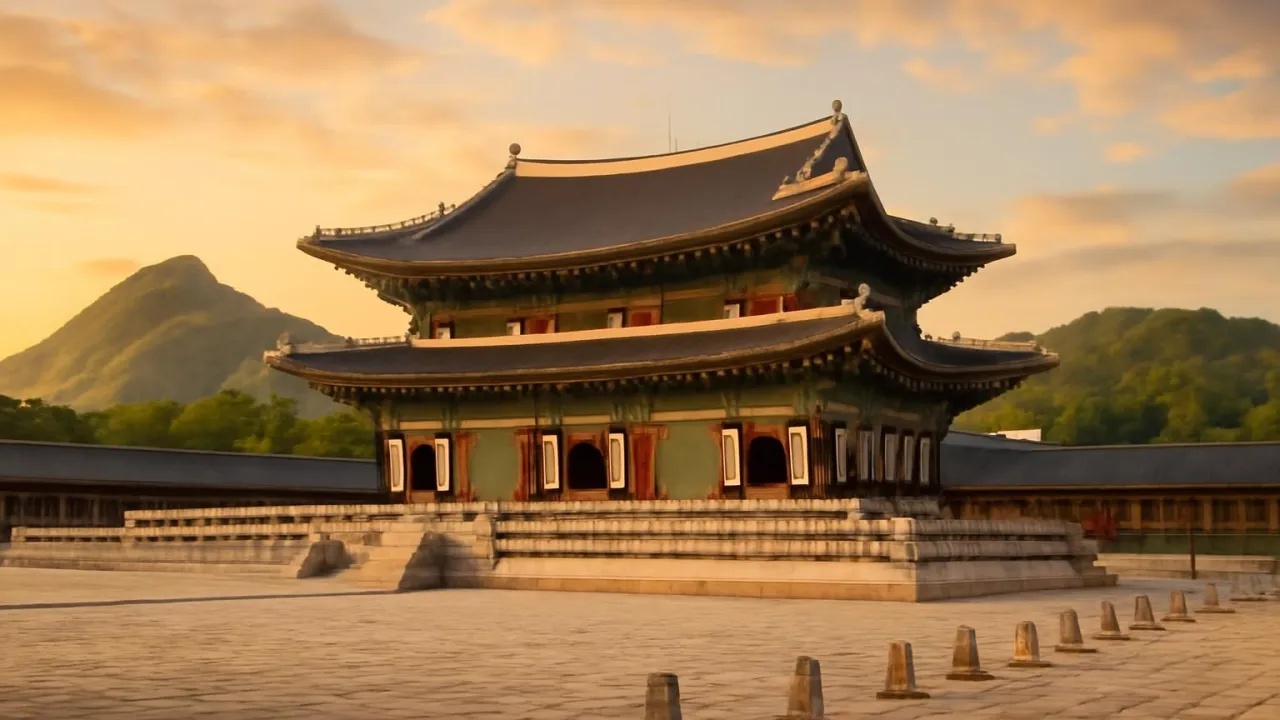
Gyeongbokgung has over 500 buildings inside its palace walls!
✨ Word Sparks (Grade 2 Glossary)
Tap 🔊 to hear
courtyard
An open space inside a building.
ceremony
A special event or celebration.
guard
A person who protects a place.
🪝
What would it feel like to walk under a royal gate?
1
A Palace for Kings
Gyeongbokgung Palace has tall red gates and wide stone . Kings and queens once lived here and held big ceremonies. Today, you can walk where they walked and see their grand halls.
2
Gardens and Ponds
The palace gardens have shady trees and pretty lotus ponds. Birds and fish live in the water, making the gardens peaceful. Many visitors enjoy the quiet paths and colorful flowers.
3
Guards and Visitors
wear bright hats and stand very still at the gates. People visit from all over the world and take photos in old Korean clothes. The palace is a special place for learning about Korea’s past.
Gyeongbokgung’s main throne hall uses no nails—just wooden joints and beams!
✨ Word Sparks (Grade 3 Glossary)
Tap 🔊 to hear
symmetry
When both sides match or mirror.
dynasty
A family that rules for many years.
arch
A curved shape over a doorway.
🪝
Imagine hearing a drum echo through a palace with 500 buildings!
1
A Palace Built for Royalty
Gyeongbokgung Palace was built in 1395 for the kings of Korea's Joseon . Its name means 'Palace Greatly Blessed by Heaven,' and it was the largest royal palace in Seoul. The palace grounds are filled with grand wooden halls, wide courtyards, and colorful gates.
2
Symmetry and Design
The palace is famous for its , with buildings arranged in neat lines. Architects used wooden beams and curved roofs to create strong, beautiful structures. The main gate, Gwanghwamun, is a giant stone that welcomes visitors.
3
Gardens and Lotus Ponds
Inside the walls, gardens bloom with cherry trees and ponds filled with lotus flowers. These gardens were designed to bring peace and beauty to the palace. The sound of birds and the sight of fish add to the calm feeling.
4
Traditions Continue Today
Today, visitors can watch the changing of the guard ceremony at the main gate. Many people wear hanbok, traditional Korean clothing, to explore the palace. Gyeongbokgung is a symbol of Korea’s history and culture.
2. What is special about the palace’s throne hall?
🤯 Mind-Blowing Fact • Grade 4
The palace’s main throne hall, Geunjeongjeon, is South Korea’s largest surviving wooden building!
✨ Word Sparks (Grade 4 Glossary)
Tap 🔊 to hear
geomancy
Planning buildings by land and energy flow.
joinery
Connecting wood without using nails.
heritage
Something important passed down in history.
🪝
What secrets would you discover exploring a palace with hidden gates and lotus ponds?
1
A Palace Steeped in History
Gyeongbokgung Palace was constructed in 1395 as the principal royal palace of the Joseon Dynasty, which ruled Korea for over five centuries. Its name, meaning 'Palace Greatly Blessed by Heaven,' reflects its importance as the heart of royal power and government. The palace has survived invasions, fires, and restorations, standing today as a symbol of Korean resilience and .
2
Ingenious Architecture and Symmetry
The palace complex is renowned for its symmetrical design, with wooden halls and pavilions arranged along a central north-south axis. Builders used interlocking wooden joints instead of nails, a technique called ',' to create sturdy, earthquake-resistant structures. The grand Gwanghwamun Gate features a massive stone arch and a tiled roof with upturned eaves, showcasing traditional Korean craftsmanship.
3
Gardens, Water, and Harmony
Gyeongbokgung’s gardens blend nature and architecture, with lotus ponds, stone bridges, and cherry trees providing a sense of harmony. The palace layout follows principles of , or 'pungsu-jiri,' to ensure good fortune and balance. These gardens were designed for peaceful walks, royal ceremonies, and seasonal festivals.
4
Living History and Cultural Legacy
Today, visitors can watch the colorful changing of the guard ceremony and explore restored halls wearing traditional hanbok clothing. Gyeongbokgung is a beloved symbol of Korean identity, attracting millions of visitors each year. Its preservation helps people learn about Korea’s royal traditions, architectural innovation, and cultural pride.
1. Why did builders use joinery instead of nails in the palace?
2. What does the palace’s garden design help create?
🤯 Mind-Blowing Fact • Grade 5
Geunjeongjeon Hall’s columns are painted with natural pigments made from minerals, plants, and even clamshells!
✨ Word Sparks (Grade 5 Glossary)
Tap 🔊 to hear
pungsu-jiri
Korean geomancy, or land energy planning.
restoration
Carefully fixing and rebuilding old things.
Confucian
Relating to wise ideas from Confucius.
🪝
If you could step through Gwanghwamun Gate, what stories would the palace stones tell you?
1
Origins and Endurance of a Royal Landmark
Gyeongbokgung Palace, constructed in 1395, served as the main seat of the Joseon Dynasty, which governed Korea for over 500 years. The palace’s name, meaning 'Palace Greatly Blessed by Heaven,' reflects its role as the symbolic heart of the nation’s political, cultural, and spiritual life. Though devastated by invasions and fires—most notably during the Japanese invasions of the late 16th century and occupation in the 20th century—the palace has been painstakingly restored to preserve its historical significance.
2
Architectural Mastery: Symmetry, Joinery, and Spatial Planning
Gyeongbokgung’s architectural design showcases advanced principles of symmetry and spatial hierarchy, with the main halls aligned along a central axis. Traditional Korean joinery, known as 'gagu,' utilizes interlocking wooden beams and columns without nails, enhancing both flexibility and earthquake resistance. The palace complex originally comprised over 500 buildings, including Geunjeongjeon (the main throne hall), which remains South Korea’s largest surviving wooden structure at 37 meters long and 27 meters high.
3
Geomancy and Environmental Harmony
The site was carefully chosen using geomancy (), aligning the palace with Mount Bugaksan to the north and the Han River to the south for optimal energy flow and protection. Lotus ponds, stone bridges, and meticulously landscaped gardens reflect the ideals of harmony between humans and nature. These features not only provided aesthetic beauty but also played roles in ceremonial processions and seasonal celebrations.
4
Cultural Legacy and Modern Revival
Today, Gyeongbokgung stands as a living museum, where the changing of the guard ceremony and hanbok rentals immerse visitors in Korea’s royal traditions. The palace is a UNESCO World Heritage candidate and a major educational site, drawing millions annually to learn about Joseon architecture, governance, and daily court life. Ongoing projects ensure the palace remains a vibrant symbol of Korean resilience and identity.
5
Engineering Challenges and Preservation Efforts
Restoring Gyeongbokgung required detailed historical research, traditional woodworking skills, and modern engineering analysis to rebuild lost structures accurately. Preservationists use native pine wood, handmade roof tiles, and natural pigments to match original materials, while monitoring for environmental threats like air pollution and seismic activity. The palace’s enduring presence demonstrates the power of combining ancient wisdom with contemporary science to protect cultural treasures for future generations.