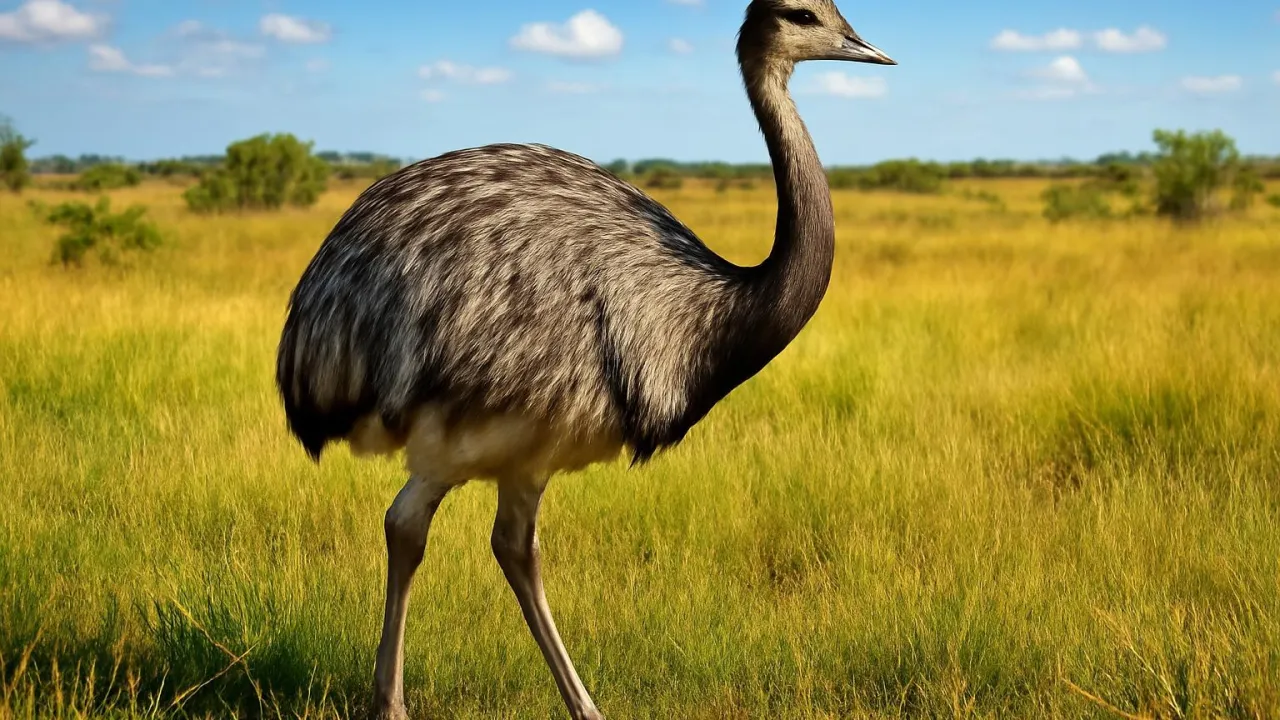
Greater rheas can run faster than many cars stuck in city traffic jams!
✨ Word Sparks (Grade 2 Glossary)
Tap 🔊 to hear
savanna
A grassy land with few trees
predator
An animal that hunts other animals
nest
A place where birds lay eggs
🪝
What helps a bird run faster than many cars in city traffic?
1
Big Bird with Long Legs
The greater rhea has long legs that help it run very fast across fields. It cannot fly but can reach speeds up to 37 miles per hour. This speed helps the bird escape from quickly.
2
Eating Plants and Bugs
Greater rheas eat plants, seeds, insects, and small animals to stay healthy. They peck at food on the ground using their strong beaks. They need open spaces with plenty of food and water.
3
Living in Grasslands
These birds live in warm grasslands and of South America. They hide in tall grasses to stay safe from . The rhea builds on the ground to lay eggs.
Greater rheas are one of the fastest running birds on two legs in the world!
✨ Word Sparks (Grade 3 Glossary)
Tap 🔊 to hear
adaptation
A body change that helps survival
camouflage
Colors that help hide from danger
omnivore
An animal that eats plants and meat
🪝
Did you know the greater rhea is one of the largest flightless birds in the world?
1
Amazing Size and Speed
The greater rhea stands up to 5.6 feet tall and weighs about 50 pounds. It cannot fly, but it runs at speeds up to 37 miles per hour. This speed helps it escape predators like foxes and big cats. Its long legs are an important for running fast.
2
What It Eats and How
Greater rheas are that eat plants, seeds, insects, and small animals. Their strong beaks help them peck and grab food from the ground. Eating a variety of foods gives them the nutrients needed to grow and stay healthy.
3
Habitat and Survival
These birds live in open grasslands and savannas in South America. Their grayish feathers provide among the grasses to hide from predators. They build large nests on the ground where females lay eggs and males protect the young.
4
Interesting Bird Behavior
Male greater rheas take care of the eggs and chicks, which is unusual for birds. They protect the nest from predators and keep the chicks safe. This behavior helps more young birds survive to adulthood.
Male greater rheas care for eggs from several females, protecting many chicks at once!
✨ Word Sparks (Grade 4 Glossary)
Tap 🔊 to hear
ecosystem
All plants and animals in one place
paternal
Relating to a father’s care
predator
An animal that hunts others
🪝
How does the greater rhea survive in South America’s open grasslands without flying?
1
Adaptations for Running and Hiding
The greater rhea cannot fly, but its long, powerful legs allow it to run up to 37 miles per hour to escape . Its gray feathers provide excellent camouflage in the grasslands, making it harder for predators to spot it. These adaptations work together to help the bird survive in open habitats.
2
Role in the Ecosystem
Greater rheas play an important role in their by eating plants, seeds, insects, and small animals, which helps control insect populations and spread seeds. They also serve as prey for large like jaguars and pumas. This balance keeps the grassland food web healthy and strong.
3
Breeding and Nesting Behavior
Male greater rheas build large nests on the ground and care for eggs laid by several females. This unique breeding system increases the survival chances of the chicks. The males fiercely protect the nest from , showing a rare example of care among birds.
4
Geographic Distribution and Human Impact
Greater rheas live mainly in Argentina, Brazil, Uruguay, and Paraguay, preferring grasslands and savannas. Human farming and land development reduce their habitat, but conservation efforts work to protect these birds and their . Understanding their role helps people support wildlife preservation.
1. What helps the greater rhea hide from predators?
2. Where do male greater rheas build nests?
🤯 Mind-Blowing Fact • Grade 5
Greater rheas run up to 37 miles per hour, faster than many city cars in traffic jams!
✨ Word Sparks (Grade 5 Glossary)
Tap 🔊 to hear
ratite
A big bird that cannot fly
lek polygyny
Males care for eggs from many females
seed disperser
An animal that spreads plant seeds
🪝
What makes the greater rhea a unique giant bird that thrives without flight in South America?
1
Scientific Classification and Physical Traits
The greater rhea (Rhea americana) belongs to the family, which includes other large, flightless birds like ostriches and emus. It stands up to 5.6 feet tall and weighs up to 50 pounds, making it the largest bird native to South America. Its wings are small and not suited for flight but help with balance during running.
2
Physiological Mechanics of Movement
Greater rheas use their long, muscular legs to run at speeds up to 37 miles per hour, which is crucial for escaping predators in open grasslands. Their three-toed feet provide traction on soft soil, and their lightweight bones reduce body weight for faster movement. These physical features are adaptations to a flightless lifestyle.
3
Reproductive Behavior and Conservation
Males build large nests and incubate eggs from multiple females, demonstrating a unique breeding system called . This paternal care increases chick survival rates, but habitat loss from agriculture threatens populations. Conservation programs in Argentina and Brazil aim to protect their grassland habitats and ensure species survival.
4
Ecological Role and Geographic Range
Greater rheas are important and insect controllers within South American savannas, contributing to ecosystem balance. Their range includes Argentina, Brazil, Uruguay, Paraguay, and Bolivia, primarily in temperate grasslands and open woodlands. Human activities like farming and urbanization fragment their habitats, impacting population numbers.
5
Comparative Facts and Mind-Blowing Data
Greater rheas can run faster than most cars in city traffic, reaching 37 miles per hour, while their body weight is about 50 pounds. They lay eggs about 5 inches long, which are incubated for 30 to 40 days. Their wingspan reaches nearly 5 feet, although they cannot fly. These facts highlight their impressive adaptations to life on the ground.