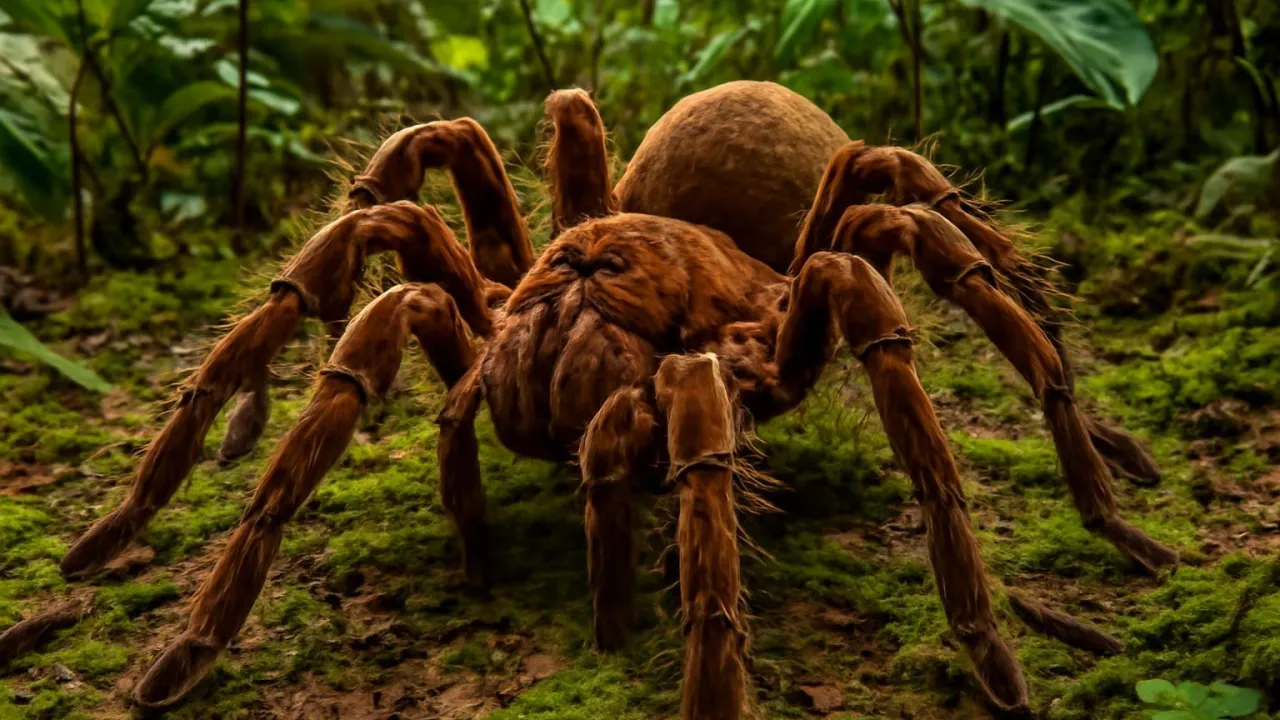
The Goliath Birdeater can weigh as much as a small cat, making it the heaviest spider alive!
✨ Word Sparks (Grade 2 Glossary)
Tap 🔊 to hear
tarantula
A large, hairy spider that lives in forests
rainforest
A warm, wet forest where many animals live
venom
Poison that some animals use to catch food
🪝
Have you ever seen a spider as big as a dinner plate before?
1
Huge and Hairy Spider
The Goliath Birdeater is the largest spider in the world by weight and size. It has thick brown hair covering its body and long legs that help it move slowly but powerfully. This spider can grow up to twelve inches across, which is about the size of a dinner plate.
2
Lives in Rainforests
This spider lives deep in the warm, wet of South America. It hides in burrows under leaves and logs to stay safe from predators. The rainforest gives it plenty of insects and small animals to eat.
3
Strong Fangs and Diet
The Goliath Birdeater uses its big fangs to catch prey like insects, frogs, and small rodents. It injects to paralyze its food before eating. Despite its size, it moves quietly and waits patiently for a meal.
1. What helps the Goliath Birdeater catch its food?
2. Where does this spider live?
🤯 Mind-Blowing Fact • Grade 3
The Goliath Birdeater’s venom is not deadly to humans but can cause pain and swelling.
✨ Word Sparks (Grade 3 Glossary)
Tap 🔊 to hear
camouflage
Colors or patterns that help hide animals
venom
Poison some animals use to catch food or defend
predator
An animal that hunts other animals for food
🪝
Did you know the Goliath Birdeater is the heaviest spider on Earth?
1
Giant Spider’s Appearance
The Goliath Birdeater has thick, brown hair that helps it blend into the forest floor. Its large legs span up to twelve inches, making it one of the biggest spiders alive. This hair also protects it from and helps sense nearby movements. Its body is strong and built for hunting.
2
Rainforest Habitat
This spider lives in the humid rainforests of South America, where it hides in burrows beneath leaves and logs. The dense forest floor provides and protection from . The moist environment helps the spider stay healthy and active. It is mostly nocturnal, hunting at night.
3
Diet and Hunting Skills
The Goliath Birdeater is a carnivore that feeds on insects, frogs, and small rodents. It uses sharp fangs to inject that paralyzes prey quickly. This venom helps the spider digest its food outside its body. Its slow, quiet movements help it sneak up on prey without being noticed.
4
Survival Adaptations
This tarantula uses to avoid by blending with leaves and dirt. Its thick hair can release irritating hairs to defend itself if threatened. The spider’s strong legs help it dig burrows and climb trees. These adaptations increase its chances of survival in a tough environment.
1. What helps the Goliath Birdeater hide from predators?
2. How does this spider catch its prey?
🤯 Mind-Blowing Fact • Grade 4
The Goliath Birdeater’s burrows help improve soil health by mixing air and nutrients underground, benefiting many plants.
✨ Word Sparks (Grade 4 Glossary)
Tap 🔊 to hear
ecosystem
All living things and their homes working together
deforestation
Cutting down many trees and plants in forests
burrow
A hole or tunnel animals dig to live in
🪝
How does the Goliath Birdeater survive as the largest spider in the rainforest?
1
Physical Features and Adaptations
The Goliath Birdeater’s large size and thick brown hair provide excellent camouflage against the rainforest floor, helping it avoid predators and ambush prey effectively. Its powerful legs allow it to dig deep that serve as safe shelters during the day and places to store food. When threatened, it can release irritating hairs from its body to defend itself effectively and deter attackers.
2
Role in the Rainforest Ecosystem
As a predator, this tarantula controls populations of insects and small animals, maintaining balance in the rainforest food web and preventing overpopulation. It also serves as prey for larger animals like birds and mammals, showing its important place in the . Its burrowing helps aerate the soil, mixing nutrients and improving plant growth in the forest floor.
3
Geographic Distribution and Habitat
The Goliath Birdeater is native to the tropical rainforests of northern South America, especially in countries like Brazil, Venezuela, and Guyana. It prefers humid environments with dense leaf litter and fallen logs, which provide shelter and hunting grounds. These habitats are increasingly threatened by and human activities such as logging and farming.
4
Human Impact and Conservation
and habitat loss threaten the Goliath Birdeater’s survival by reducing its living space and food sources, which could lead to population decline. While not currently endangered, protecting rainforest habitats is crucial for this spider’s future and the health of the . Educating people about its role in the ecosystem helps reduce fear and promotes conservation efforts to save both the spider and its environment.
1. What does the Goliath Birdeater do to protect itself?
2. Why is the Goliath Birdeater important in the rainforest?
🤯 Mind-Blowing Fact • Grade 5
The Goliath Birdeater can live over 20 years, making it one of the longest-living spiders known to science.
✨ Word Sparks (Grade 5 Glossary)
Tap 🔊 to hear
Theraphosidae
The family of large, hairy tarantulas
urticating
Irritating hairs used for defense by some spiders
ecotourism
Travel that helps protect nature and wildlife
🪝
What makes the Goliath Birdeater Tarantula the largest and one of the most fascinating spiders on Earth?
1
Scientific Classification and Size
The Goliath Birdeater, scientifically named Theraphosa blondi, belongs to the family of tarantulas. It is the largest spider by mass, with a leg span reaching up to twelve inches and a weight that can exceed six ounces. This spider’s impressive size helps it dominate its ecological niche in South American rainforests and hunt a wide range of prey.
2
Physiological Mechanics and Hunting
This tarantula’s powerful legs and sharp fangs allow it to capture and subdue prey effectively. It uses venom to immobilize animals such as insects, frogs, and small mammals, injecting digestive enzymes that liquefy the prey’s tissues for easier consumption. Its hairs serve as a defense mechanism by irritating predators’ skin and mucous membranes, deterring attacks.
3
Behavior, Habitat, and Distribution
Native to the tropical rainforests of northern South America, including Brazil, Venezuela, and Guyana, the Goliath Birdeater prefers humid, dense forest floors with abundant leaf litter. It constructs burrows for shelter and ambush hunting, remaining mostly nocturnal to avoid daytime predators. Its habitat is increasingly threatened by deforestation and human encroachment.
4
Conservation and Human Interaction
While not currently classified as endangered, habitat destruction poses a significant risk to the Goliath Birdeater’s populations. Conservation efforts focus on preserving rainforest environments and educating the public to reduce fear and prevent unnecessary killing. Sustainable has also raised awareness about this spider’s ecological importance and need for protection.
5
Quantitative Comparisons and Records
The Goliath Birdeater can weigh up to six ounces, heavier than many small birds, and its leg span surpasses that of a dinner plate. It can live up to twenty-five years in captivity, which is unusually long for spiders. Its venom is mild compared to other spiders but causes pain and swelling in humans, making it a formidable but not deadly creature.