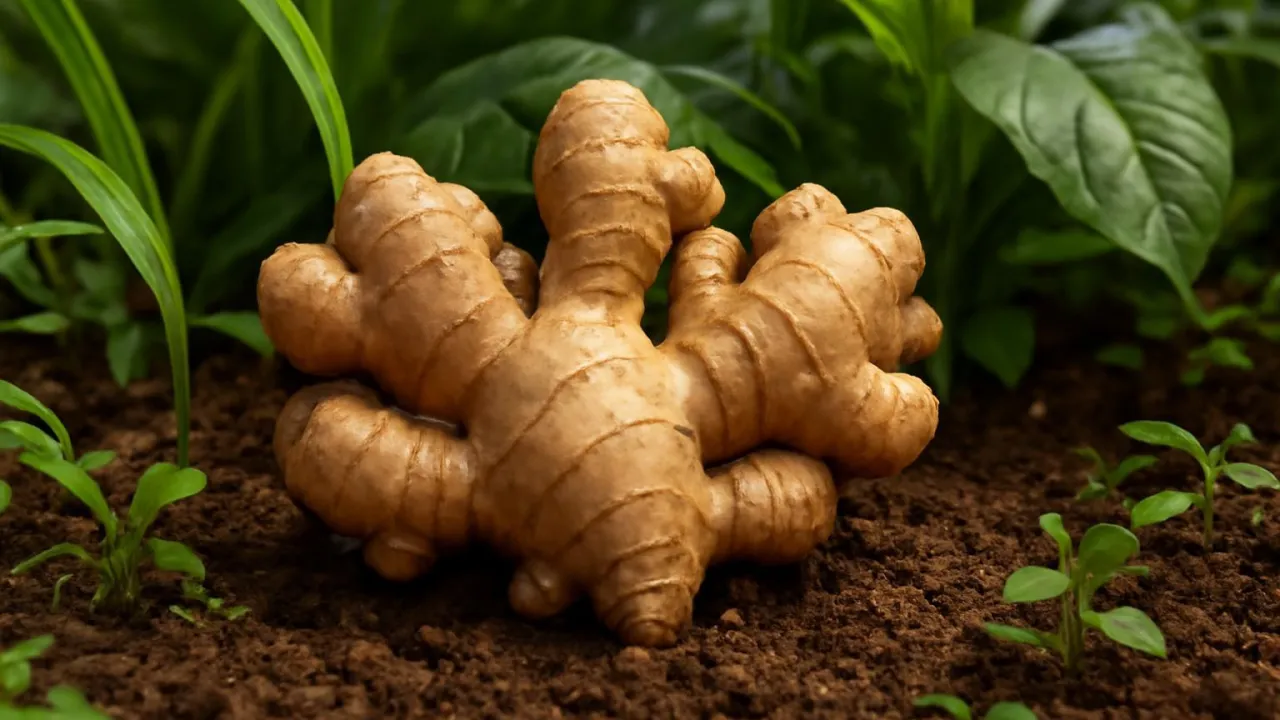
Ginger root has been used for thousands of years to help heal people’s tummies and colds.
✨ Word Sparks (Grade 2 Glossary)
Tap 🔊 to hear
knobby
Having small round lumps or bumps
tropical
Warm places near the equator with lots of rain
soothe
To make pain or discomfort feel better
🪝
Have you ever smelled the spicy scent of fresh ginger root?
1
Ginger’s Appearance and Texture
Ginger root is brown and with bumpy skin. It grows underground in moist soil. The root feels rough and firm when you touch it.
2
Where Ginger Grows and Grows Best
Ginger grows in warm, places with plenty of rain. It needs soft soil that stays wet but not flooded. Farmers plant ginger in gardens or farms.
3
The Spicy Flavor and Uses
Ginger has a spicy, warm flavor that people use in cooking and drinks. It also helps upset stomachs and colds. Many cultures enjoy ginger in their food.
Ginger’s spicy oils protect it underground and help people feel better when sick.
✨ Word Sparks (Grade 3 Glossary)
Tap 🔊 to hear
camouflage
A way to blend in with surroundings to hide
nutrients
Food and minerals plants need to grow strong
adaptation
A special trait that helps living things survive
🪝
Did you know ginger root’s spicy flavor helps protect it from hungry animals?
1
Ginger’s Appearance and Adaptations
Ginger root has a knobby, brown skin that helps it blend into the soil. This protects it from some predators. Its rough texture also helps it stay safe underground.
2
Where Ginger Grows and Thrives
Ginger grows in tropical regions where the soil is moist and warm. These conditions provide the and water the plant needs to grow strong roots. Farmers harvest the root after several months.
3
Ginger’s Role in Nature and People’s Lives
Ginger helps the ecosystem by providing food for some insects and animals. People use ginger for cooking and medicine because of its spicy flavor and healing properties. It is an important crop worldwide.
4
How Ginger’s Structure Solves Problems
The spicy oils inside ginger root act as a natural defense against pests. These oils also help soothe upset stomachs when people eat ginger. This helps both the plant and humans.
1. Why does ginger root have a brown, knobby skin?
2. What do the spicy oils inside ginger do?
🤯 Mind-Blowing Fact • Grade 4
Ginger’s spicy oils serve as both a natural pesticide and a healing remedy for people.
✨ Word Sparks (Grade 4 Glossary)
Tap 🔊 to hear
pesticide
A substance that keeps bugs away from plants
cultivate
To grow plants carefully for food or use
ecosystem
A community of living things and their home
🪝
How does ginger root’s spicy flavor help it survive in tropical ecosystems?
1
Ginger’s Physical Traits and Survival
Ginger root’s knobby, brown skin provides camouflage that helps it avoid predators underground. Its spicy oils act as a natural to deter insects and animals. These traits increase its chances of survival in warm, moist soil environments. The rough texture of the root also protects it from damage when animals dig nearby.
2
Ecosystem Roles and Human Impact
Ginger contributes to tropical by supporting soil health and providing food for some insects. Humans ginger widely for culinary and medicinal uses, which affects local agriculture and economies. Sustainable farming practices help protect ginger’s natural habitats and prevent soil erosion. Ginger farming also provides jobs for many people in tropical countries.
3
Geographic Distribution and Growth Conditions
Native to tropical Asia, ginger thrives in warm, humid climates with rich, well-drained soil. It requires consistent moisture but cannot tolerate waterlogged conditions. These factors limit its natural range but allow successful cultivation worldwide. Ginger plants grow best in temperatures between 68 and 86 degrees Fahrenheit, where rainfall is steady.
4
Cause and Effect of Ginger’s Spicy Oils
The spicy oils in ginger root repel many pests, reducing damage to the plant. This chemical defense allows ginger to grow more successfully underground. Additionally, these oils benefit humans by soothing digestive issues and reducing inflammation. The presence of these oils also influences how farmers harvest and use ginger in medicine.
Gingerol, the spicy compound in ginger, both protects the plant and aids human health.
✨ Word Sparks (Grade 5 Glossary)
Tap 🔊 to hear
rhizome
A thick underground stem that stores food and grows roots
inflammation
Swelling and redness when the body is hurt or sick
genetic diversity
Different types of genes in plants that help them survive
🪝
Did you know ginger root’s spicy compounds evolved to protect it and help humans heal?
1
Scientific Classification and Origin
Ginger root, scientifically named Zingiber officinale, belongs to the Zingiberaceae family. It originated in tropical Asia, where warm and humid climates support its growth. This plant has been cultivated for over 5,000 years for culinary and medicinal uses worldwide. Its long history shows how important ginger is to many cultures.
2
Physiological Mechanics of Ginger Root
The , or underground stem, stores spicy essential oils like gingerol that deter herbivores and pathogens. These compounds also stimulate the human digestive system and reduce . Ginger’s knobby structure increases surface area for nutrient absorption in soil. This helps the plant grow strong and healthy in tropical soils.
3
Conservation and Agricultural History
Historically, ginger cultivation spread along ancient trade routes, influencing many cultures worldwide. Modern farming practices focus on sustainable soil management to prevent erosion and disease. Conservation efforts aim to protect wild ginger species and maintain . These efforts help ensure ginger’s survival for future generations.
4
Quantitative Comparisons and Growth
Ginger roots typically grow 2 to 4 inches long and weigh around 50 to 100 grams each. The plant thrives in temperatures between 68 and 86 degrees Fahrenheit (20 to 30 degrees Celsius). Its spicy oils can vary in concentration depending on soil and climate conditions. These factors affect both flavor and medicinal quality.
5
Ecological and Human Benefits
Ginger root’s chemical defenses reduce pest damage, supporting agricultural productivity in tropical regions. Humans benefit from its anti-inflammatory and digestive properties used in traditional and modern medicine. This dual role highlights ginger’s importance in both ecosystems and human health. Ongoing research explores new ways to use ginger for wellness.