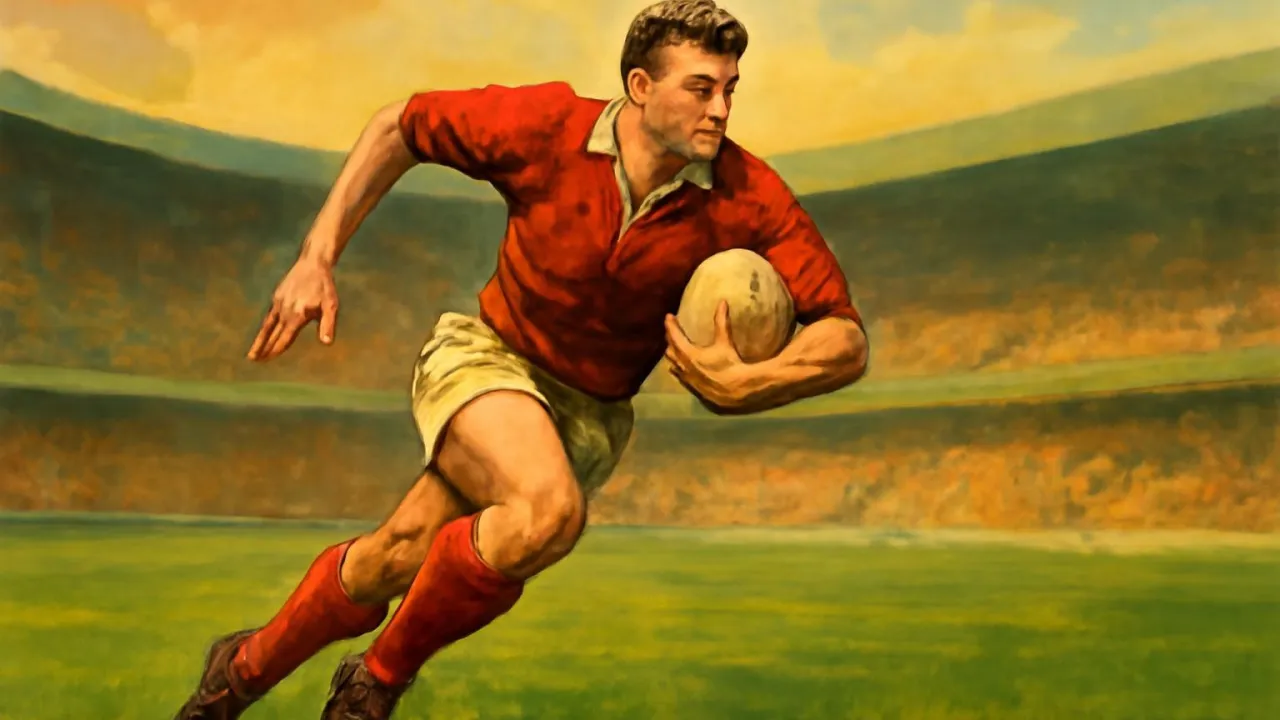
Gareth played 53 games for Wales without missing one!
✨ Word Sparks (Grade 2 Glossary)
Tap 🔊 to hear
defender
A player who stops the other team
teamwork
Working together to win
coach
A person who teaches a team
🪝
What happens when you mix speed, skill, and a rugby ball?
1
Chasing Dreams in Wales
Gareth grew up racing his friends and kicking rugby balls across fields. He loved the feeling of running fast and passing the ball to his teammates. He dreamed of playing for Wales, his country’s famous rugby team.
2
Practice Makes Perfect
Gareth practiced every day, learning to pass quickly with both hands and dodge . His taught him how to think fast and work hard. Gareth’s skills grew as he played more games.
3
A Star on the Field
Gareth became a star for Wales, scoring many tries and making amazing passes. He helped his team win big matches and made fans cheer with excitement. People still remember his famous try against New Zealand.
Gareth was named the best rugby player of the 20th century by Rugby World magazine!
✨ Word Sparks (Grade 3 Glossary)
Tap 🔊 to hear
scrum-half
The player who starts attacks in rugby
agility
Moving quickly and easily
legacy
What someone is remembered for
🪝
What makes a rugby player legendary, even years after his last game?
1
A Spark in Welsh Valleys
As a child in Wales, Gareth Edwards loved sprinting across grassy fields, rugby ball in hand. He admired the teamwork and quick thinking needed to play , a position that starts every attack. Gareth’s curiosity and determination set him apart from other young players. He dreamed of wearing the red jersey of Wales.
2
Training for Greatness
Gareth’s training was intense, with hours spent mastering fast passes and clever footwork. His coach encouraged him to develop both his speed and his mind, teaching him to read the game. Gareth learned resilience by bouncing back from tough matches and mistakes. These skills helped him become a leader on the field.
3
Unforgettable Achievements
Gareth played 53 times for Wales without missing a single international match. He scored 20 tries, each one showing his creativity and . His most famous try, against New Zealand in 1973, is still called the greatest ever. Gareth also helped Wales win three Grand Slams, the highest honor in European rugby.
4
A Lasting Legacy
Gareth Edwards changed how scrum-halves played, inspiring players with his quick passes and smart moves. He became a symbol of Welsh pride and sportsmanship. Even after retiring, Gareth supported young athletes and promoted rugby around the world. His lives on in every fast break and daring pass.
2. Why is Gareth’s try against New Zealand famous?
🤯 Mind-Blowing Fact • Grade 4
Gareth was knighted for his services to sport and charity in 2015!
✨ Word Sparks (Grade 4 Glossary)
Tap 🔊 to hear
Grand Slam
Winning every match in a tournament
ambassador
Someone who represents and promotes something
resilience
Bouncing back after hard times
🪝
How did one Welsh player redefine rugby’s most creative position for future generations?
1
Roots in the Valleys
Growing up in the coal-mining valleys of Wales, Gareth Edwards was surrounded by rugby’s passionate spirit. From a young age, he was fascinated by the fast-paced action and teamwork that rugby demanded. He quickly realized he had a natural talent for the scrum-half position, which required quick thinking and lightning-fast passes. Gareth’s early years were filled with determination, as he practiced daily to sharpen his skills.
2
A Relentless Work Ethic
Gareth’s commitment to training set him apart from his peers, as he spent countless hours improving his passing, footwork, and game awareness. His coach, recognizing Gareth’s potential, pushed him to develop and leadership on and off the field. Gareth’s discipline helped him overcome setbacks, including tough losses and high-pressure matches. By his late teens, he was ready to compete at the highest level of rugby.
3
Historic Triumphs and Iconic Moments
Edwards made his debut for Wales at just nineteen and never missed an international match, earning 53 consecutive caps. He scored 20 tries for Wales, dazzling crowds with his creativity and athleticism. His legendary try for the Barbarians against New Zealand in 1973 is still replayed as one of rugby’s greatest moments. Gareth played a crucial role in Wales’s three victories during the 1970s, cementing his place in rugby history.
4
A Global Influence
Gareth Edwards’s innovative playing style transformed the scrum-half role, inspiring generations of players worldwide. He became an for rugby, promoting sportsmanship and teamwork beyond the field. After retirement, Gareth mentored young athletes and contributed to rugby’s growth in schools and communities. His legacy endures, reminding fans that dedication and creativity can change the world of sports.
Gareth’s iconic try in 1973 was voted the greatest in rugby’s first 100 years!
✨ Word Sparks (Grade 5 Glossary)
Tap 🔊 to hear
caps
Games played for your national team
tempo
The speed or pace of the game
innovate
To create something new or better
🪝
What does it take to become the most celebrated scrum-half in rugby history?
1
Early Passion in Welsh Valleys
In the heart of Wales’s coal-mining valleys, Gareth Edwards discovered his passion for rugby amid a community where the sport was more than just a game—it was a way of life. As a child, Gareth’s remarkable speed and ball-handling skills set him apart, and he quickly gravitated toward the scrum-half position, which demands both physical agility and sharp tactical thinking. Inspired by local heroes and the roar of the crowd, Gareth spent countless hours practicing passes, sprints, and strategic plays. His relentless curiosity about the game’s nuances fueled his determination to improve, even on rainy days when others stayed indoors.
2
Mastering the Scrum-half Role
Gareth’s dedication to mastering the scrum-half position became legendary, as he refined his passing accuracy, footwork, and decision-making under pressure. The scrum-half acts as the crucial link between forwards and backs, initiating attacks and controlling the game’s . Gareth’s quick reflexes and creative vision allowed him to exploit gaps in the defense, while his leadership inspired teammates to elevate their performance. His coach, recognizing Gareth’s extraordinary work ethic, encouraged him to embrace both physical and mental preparation, including analyzing opponents and visualizing match scenarios.
3
Record-Breaking Achievements and Iconic Moments
Gareth Edwards earned 53 consecutive for Wales between 1967 and 1978, never missing an international match—a testament to his resilience and consistency. He scored 20 tries for Wales and played a pivotal role in securing three Grand Slam titles in the Five Nations Championship. His most famous moment came in 1973, when he scored a breathtaking try for the Barbarians against New Zealand, often hailed as the greatest try in rugby history. Gareth’s combination of speed, skill, and creativity set new standards for the scrum-half position and inspired rugby fans around the world.
4
Legacy Beyond the Field
After retiring from professional rugby, Gareth Edwards continued to influence the sport as a broadcaster, mentor, and ambassador for youth development. He devoted significant time to coaching young players, emphasizing the importance of discipline, teamwork, and resilience. Gareth’s contributions extended beyond rugby, as he supported numerous charitable organizations and promoted healthy lifestyles in schools and communities. In recognition of his impact, Gareth was knighted in 2015, becoming Sir Gareth Edwards for his services to sport and charity.
5
Inspiration for Future Generations
Gareth Edwards’s story is a powerful reminder that greatness is built on passion, perseverance, and a willingness to . His groundbreaking approach to the scrum-half role forever changed how the game is played, and his leadership continues to inspire athletes worldwide. Today, young rugby players study his legendary matches, striving to emulate his creativity and sportsmanship. Gareth’s legacy endures not only in record books but in the hearts of fans who believe that with hard work and vision, anyone can achieve extraordinary things.