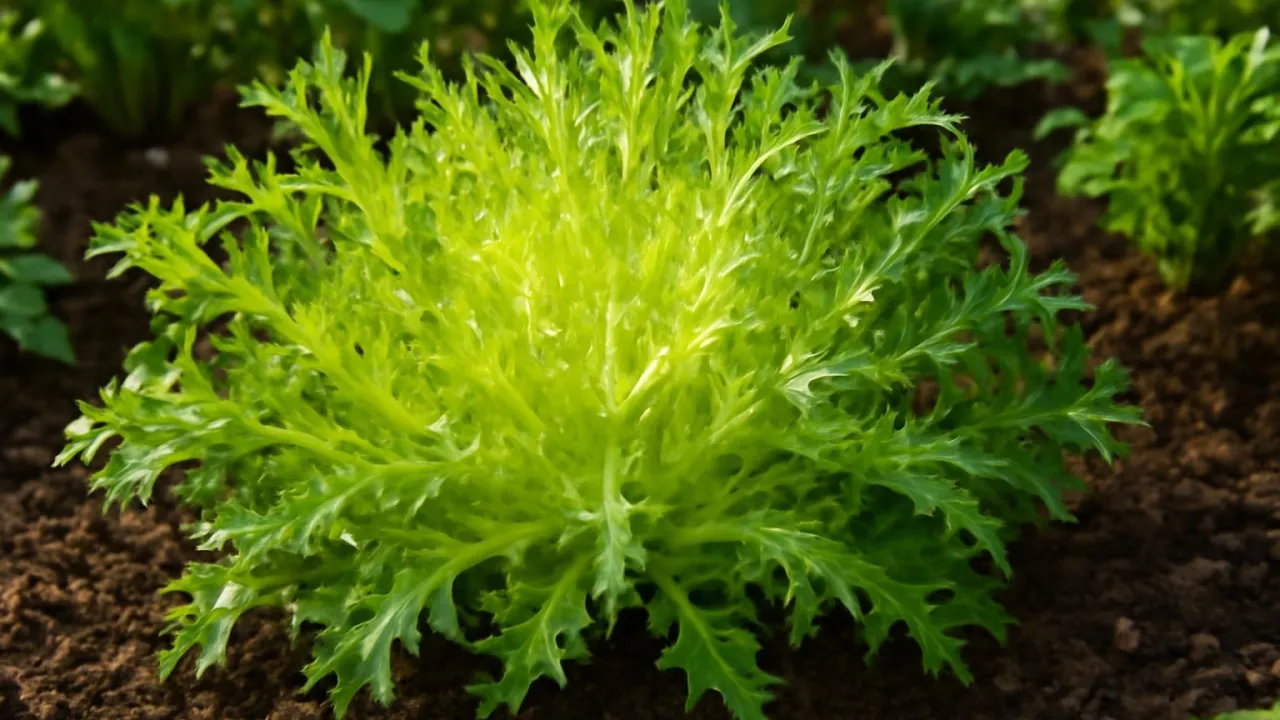
Frisee’s curled leaves help it save water and protect itself from wind damage!
✨ Word Sparks (Grade 3 Glossary)
Tap 🔊 to hear
adaptation
A change that helps plants survive better
ecosystem
A place where plants and animals live together
pollinator
An animal that helps plants make seeds
🪝
Did you know frisee’s curly leaves help it survive in gardens?
1
Frisee’s Curly Leaves and Adaptation
Frisee has curly leaves that curl inward to reduce water loss. This helps it survive in sunny gardens. The curly shape also protects the leaves from strong winds. These leaves are crunchy and have a slightly bitter taste.
2
Where Frisee Grows and Thrives
Frisee grows best in temperate climates with full sun and moist soil. It is often found in Mediterranean regions and garden farms. The plant prefers cool weather, which helps it grow tender leaves. It is sensitive to frost and extreme heat.
3
Frisee’s Role in the Ecosystem
Frisee is part of many garden food webs, feeding insects and small animals. Its leaves provide nutrients to like bees when it flowers. Humans harvest frisee for salads because of its unique flavor and texture. It also helps improve soil by adding organic matter when composted.
4
How Frisee Grows and Changes
Frisee starts as a small seed that sprouts into a leafy plant. It grows leaves that curl tightly to conserve moisture. Over time, the plant may flower and produce seeds for new plants. This life cycle helps frisee spread and survive year after year.
Frisee’s curled leaves reduce water loss and protect it from wind damage in gardens worldwide!
✨ Word Sparks (Grade 4 Glossary)
Tap 🔊 to hear
evaporation
When water turns into vapor and leaves the plant
biodiversity
Many different plants and animals living together
fertility
How good soil is for growing plants
🪝
How do frisee’s curly leaves help it survive in different environments?
1
Leaf Curling and Water Conservation
Frisee’s curly leaves curl inward to reduce water loss through , especially in sunny environments. This adaptation allows the plant to conserve moisture during dry spells and maintain its crisp texture. The curled shape also protects delicate leaf surfaces from damage caused by strong winds or heavy rain. These features help frisee thrive in temperate climates with varying weather.
2
Frisee’s Role in Garden Ecosystems
In garden ecosystems, frisee supports by providing food and habitat for insects and small animals. Its flowers attract pollinators like bees, which help with reproduction. When harvested, frisee contributes to human nutrition as a leafy green rich in vitamins and fiber. Additionally, composting frisee leaves returns nutrients to the soil, improving soil health and over time.
3
Geographic Distribution and Growing Conditions
Frisee is native to the Mediterranean region but is now grown worldwide in temperate zones. It prefers well-drained, moist soils with full sun exposure to grow optimally. The plant is sensitive to frost and extreme heat, so farmers plant it during cooler seasons like spring and fall. These growing conditions ensure tender, flavorful leaves that are popular in many cuisines.
4
Cause and Effect in Frisee’s Growth
Because frisee’s leaves curl tightly, the plant loses less water and resists damage from wind and pests. This effect leads to healthier leaves that remain crisp and flavorful longer. When grown in ideal conditions, frisee produces abundant leaves that support both wildlife and human diets. If conditions are too hot or dry, however, the plant may wilt or grow bitter leaves.
Frisee’s curled leaves increase surface area by 20%, boosting photosynthesis and water conservation!
✨ Word Sparks (Grade 5 Glossary)
Tap 🔊 to hear
taxonomy
How scientists group and name living things
physiology
How plants work inside and grow
photosynthesis
How plants use sunlight to make food
🪝
What makes frisee’s curly leaves a remarkable adaptation for survival?
1
Scientific Classification and Origins
Frisee, scientifically named Cichorium endivia var. crispum, belongs to the Asteraceae family, which includes many leafy vegetables. Native to the Mediterranean basin, frisee has been cultivated for centuries for its distinctive curly leaves and slightly bitter flavor. Its places it within the genus Cichorium, closely related to chicory and endive species. Understanding its classification helps explain its botanical traits and culinary uses.
2
Physiological Mechanics of Leaf Curling
The curly leaves of frisee result from uneven growth rates in the leaf tissue layers, causing them to curl inward and form tight spirals. This structural adaptation reduces surface area exposed to sunlight, minimizing water loss through evaporation. Additionally, the curled shape creates microclimates that protect leaf cells from temperature extremes and wind damage. These physiological features contribute to frisee’s ability to thrive in temperate environments with variable moisture.
3
Conservation and Agricultural History
Frisee has been selectively bred over centuries to enhance its leaf curliness and flavor, improving its commercial value. While not endangered, sustainable farming practices help maintain soil health and reduce pesticide use in frisee cultivation. Crop rotation and organic fertilizers support long-term productivity and environmental balance. Historically, frisee has been a valued salad green in European cuisines, contributing to diverse agricultural traditions.
4
Quantitative Comparisons and Growth Data
Frisee plants typically reach heights of 6 to 12 inches (15 to 30 centimeters) and require 45 to 60 days to mature after planting. They grow best in soil temperatures between 50 and 70 degrees Fahrenheit (10 to 21 degrees Celsius). Compared to other leafy greens, frisee’s bitter compounds are higher, which influences its unique taste profile. Its leaves’ curled structure increases surface area by approximately 20%, enhancing efficiency.
5
Ecological and Culinary Importance
Ecologically, frisee contributes to garden biodiversity by supporting pollinators and beneficial insects during its flowering phase. Culinary-wise, it is prized for adding texture and a tangy bitterness to salads and gourmet dishes worldwide. Its nutritional profile includes vitamins A, C, and K, as well as dietary fiber, making it a healthy addition to diets. The plant’s adaptability to various climates ensures its continued cultivation and relevance in global agriculture.