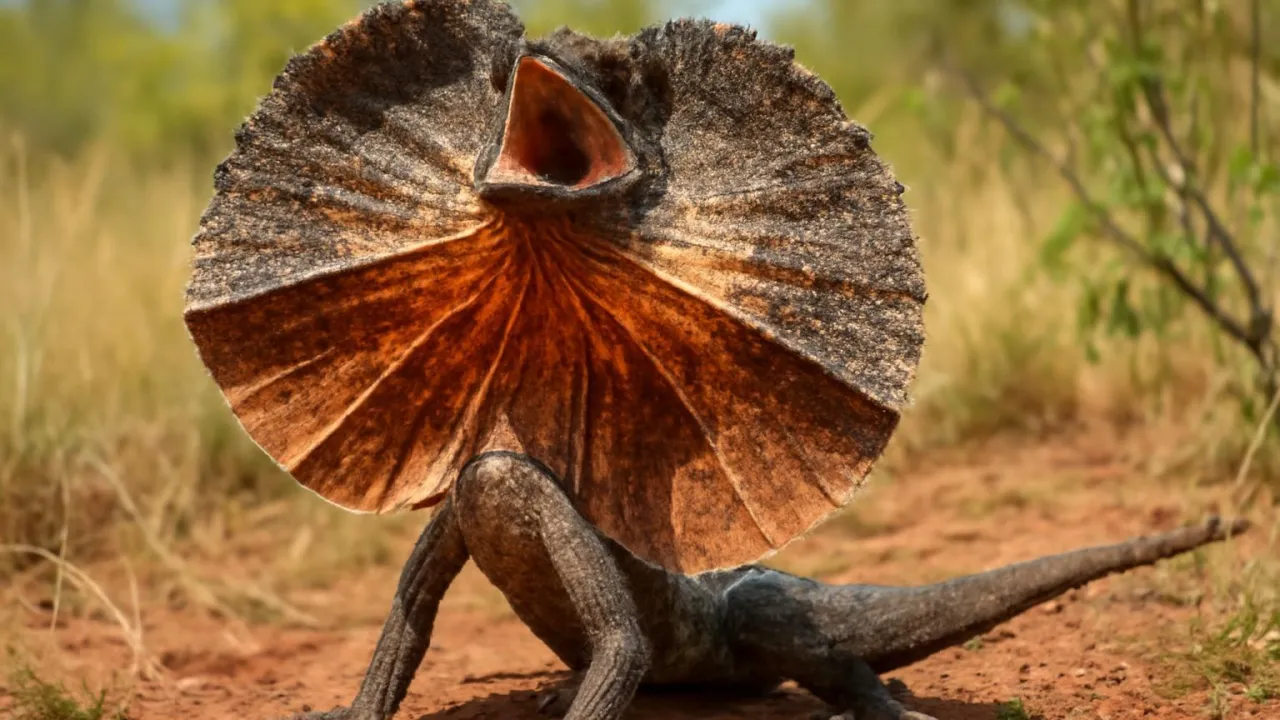
1. What does the frilled-neck lizard use its frill for?
2. Where does the frilled-neck lizard like to live?
🤯 Mind-Blowing Fact • Grade 2
The frilled-neck lizard’s frill can open in less than a second to surprise enemies!
✨ Word Sparks (Grade 2 Glossary)
Tap 🔊 to hear
predator
An animal that hunts other animals for food
frill
A flap of skin around the neck that can open wide
habitat
The place where an animal lives and grows
🪝
Have you ever seen a lizard flash a big colorful frill to stay safe?
1
Amazing Frill Display
The frilled-neck lizard opens its big when it feels scared or threatened. The frill is bright and colorful, and it helps the lizard look bigger to scare away . When the lizard closes its frill, it looks like a normal small lizard.
2
Where It Lives and Grows
This lizard lives in northern Australia and New Guinea, mostly in warm forests and woodlands. It spends time climbing trees and running on the ground. Baby lizards hatch from eggs and grow by eating insects and small animals.
3
How It Catches Food
The lizard uses its sharp eyes to spot insects and small animals. It quickly runs and uses its tongue to catch prey. The frilled-neck lizard needs sunlight to stay warm and active during the day.
1. Why does the frilled-neck lizard open its frill?
2. Where do frilled-neck lizards live?
🤯 Mind-Blowing Fact • Grade 3
The frilled-neck lizard’s frill can open wider than its body to frighten predators instantly!
✨ Word Sparks (Grade 3 Glossary)
Tap 🔊 to hear
camouflage
Colors or shapes that help hide an animal
adaptation
A special trait that helps animals survive
predator
An animal that hunts other animals for food
🪝
Did you know the frilled-neck lizard uses its frill to survive in the wild?
1
The Frill’s Survival Role
The frilled-neck lizard has a large frill that it can quickly open to surprise . This colorful frill acts like by blending with the forest colors, making the lizard look bigger and more threatening. This helps the lizard avoid danger and stay safe.
2
Habitat and Behavior
This lizard lives in the warm forests and woodlands of northern Australia and New Guinea. It spends much time climbing trees and hunting insects on the ground. The lizard’s ability to run fast helps it escape from like birds and snakes.
3
Diet and Hunting
Frilled-neck lizards eat insects, spiders, and small animals to get nutrients. They use sharp eyesight to spot prey and a quick tongue to catch it. This hunting skill is important for their survival in the wild.
4
Life Cycle and Growth
The female lays eggs in warm soil, where baby lizards develop safely. Hatchlings grow by eating insects and learn to use their frill for protection. This life cycle helps the species continue thriving in their habitat.
1. How does the frilled-neck lizard use its frill to survive?
2. What helps the lizard escape predators?
🤯 Mind-Blowing Fact • Grade 4
The frilled-neck lizard’s frill can expand so fast it looks like a colorful fan opening in a blink!
✨ Word Sparks (Grade 4 Glossary)
Tap 🔊 to hear
ecosystem
All living and nonliving things in one place
conservation
Protecting animals and nature from harm
predator
An animal that hunts others for food
🪝
How does the frilled-neck lizard’s frill help it live in Australia’s forests?
1
Frill as a Defense Mechanism
The frilled-neck lizard’s large frill suddenly opens when it feels threatened, making it appear much larger and frightening . This cause-and-effect helps the lizard avoid attacks from animals like birds and snakes. The frill’s bright colors also warn predators that the lizard is not easy prey.
2
Role in the Ecosystem
As an insect eater, the frilled-neck lizard helps control insect populations in its forest habitat. It also serves as prey for larger animals, making it an important part of the food web. Its frill display sometimes confuses , giving the lizard time to escape and maintain balance in the .
3
Geographic Distribution and Habitat
This species lives mainly in northern Australia and New Guinea, favoring warm forests and woodlands with plenty of trees and rocks. The lizard’s ability to climb trees and run on the ground allows it to use different parts of its habitat for food and safety. Human activity can affect its habitat but it remains common in protected areas.
4
Human Impact and Conservation
While the frilled-neck lizard is not endangered, habitat loss from farming and urban growth can threaten local populations. efforts focus on protecting forests and educating people about the lizard’s role in nature. This helps keep the species safe and healthy for the future.
1. What happens when the frilled-neck lizard opens its frill?
2. Why is the frilled-neck lizard important in its ecosystem?
🤯 Mind-Blowing Fact • Grade 5
The frilled-neck lizard can run on two legs and open its frill wider than its body in less than a second!
✨ Word Sparks (Grade 5 Glossary)
Tap 🔊 to hear
bipedal
Walking or running on two legs
intimidation
Scaring others by looking big or strong
diurnal
Active during the daytime, not at night
🪝
What fascinating adaptations allow the frilled-neck lizard to thrive in its environment?
1
Scientific Classification and Unique Traits
The frilled-neck lizard, scientifically named Chlamydosaurus kingii, belongs to the family Agamidae. It is notable for its large, extendable neck frill used for defense and communication. This reptile exhibits running when threatened, a rare behavior among lizards that increases its escape speed.
2
Physiological Mechanics of the Frill
The frill is supported by elongated cartilage bones connected to the jaw and neck muscles, allowing rapid extension. When opened, the frill increases the lizard’s apparent size dramatically, deterring predators through visual . The frill’s bright orange, yellow, and black colors enhance this effect during daylight hours.
3
Habitat, Behavior, and Conservation
Native to northern Australia and New Guinea, the frilled-neck lizard inhabits tropical woodlands and savannas. It is and relies on sunlight to regulate its body temperature. Although not currently endangered, habitat destruction from agriculture and urbanization poses risks, making conservation efforts vital for population stability.
4
Ecological Role and Food Web Position
This lizard plays a dual role as both predator and prey within its ecosystem. It controls insect populations by feeding on ants, spiders, and small vertebrates, while serving as prey for birds of prey and larger reptiles. Its frill display is an effective adaptation that reduces predation risk and maintains ecological balance.
5
Quantitative Comparisons and Adaptations
Frilled-neck lizards can reach up to 3 feet (0.9 meters) in length and run at speeds up to 15 miles per hour (24 kilometers per hour). Their frill can expand to twice the width of their head in less than a second. These adaptations enable rapid predator deterrence and efficient hunting in warm, tropical climates.