2. What natural plant often gives us soft threads for summer T-shirts?
🤯 Mind-Blowing Fact • Grade 2
Silkworms spin a single unbroken silk thread up to half a mile long to build just one tiny cocoon!
✨ Word Sparks (Grade 2 Glossary)
Tap 🔊 to hear
fiber
a thin hair-like strand spun into yarn
dress form
a body-shaped stand used to pin and fit clothes
waterproof
able to block rain and water from soaking through
🪝
How can flat pieces of cloth wrap smoothly around bending knees and elbows?
1
Two Partners in Every Outfit
Look closely at your sleeve—can you see tiny crisscrossing threads? Before any coat or jersey is sewn, a fashion and textile designer plans both the fabric and the fit!
2
Picking the Right Fiber
Textile designers test to match each job. nylon blocks pouring rain, fluffy fleece traps body heat, and breathable cotton keeps runners cool. They also mix dyes and print bold artwork onto bolts of cloth.
3
Puzzle Pieces for the Body
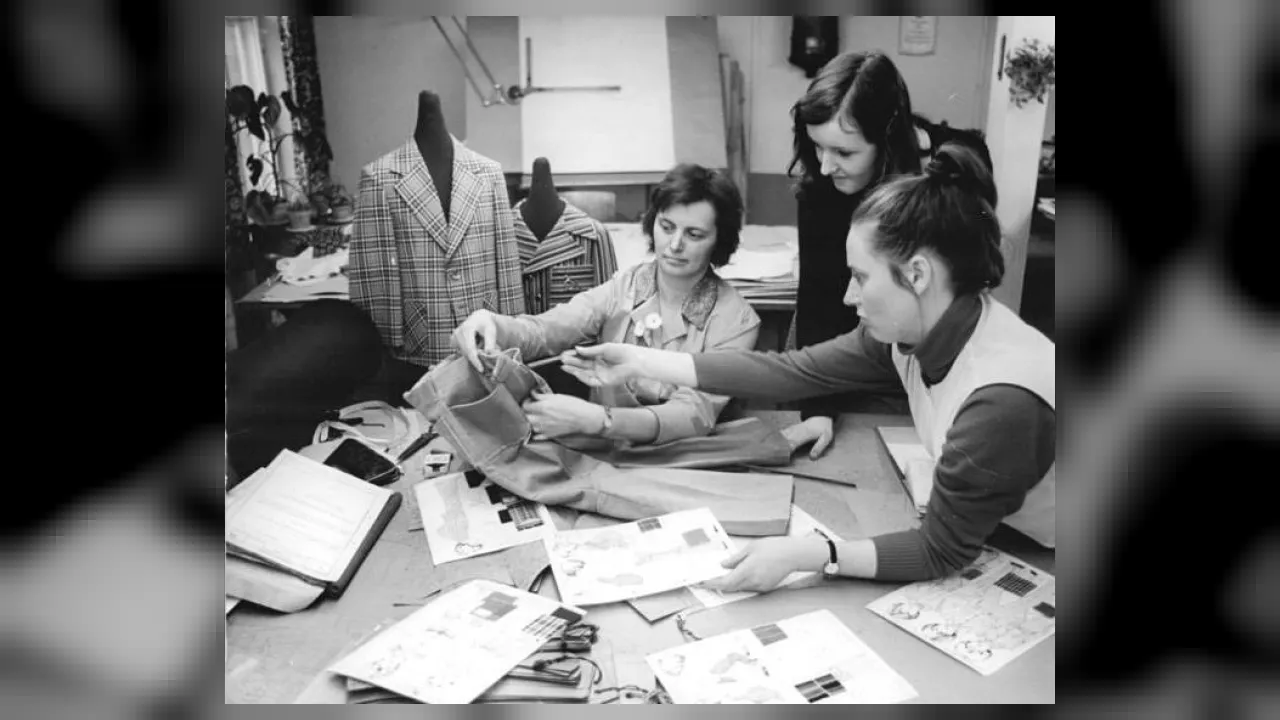
Fashion designers sketch outfits, pin cloth onto padded mannequins called , and trace paper patterns. Skilled sewing turns flat fabric puzzle pieces into 3D clothes that bend easily when you climb and play.
1. Why do fashion designers use paper patterns when making clothes?
2. Which fabric trait would a textile designer choose for a rainy-day jacket?
🤯 Mind-Blowing Fact • Grade 3
Firefighters wear coats woven from aramid fibers five times stronger than steel by weight that will not melt even in roaring heat!
✨ Word Sparks (Grade 3 Glossary)
Tap 🔊 to hear
warp and weft
lengthwise and sideways threads woven together on looms
draping
pinning fabric onto a form to shape clothing
tech pack
a detailed blueprint showing measurements, stitches, and zippers
🪝
What do firefighters' bunker coats, soccer jerseys, and festive holiday outfits have in common?
1
Engineering Every Thread
Whirring looms click rapidly as colorful yarns interlace at right angles—lengthwise warp threads crossing sideways weft threads. Nearby, pinned muslin samples hang beside vibrant mood boards. Every garment on Earth, from everyday hoodies to high-altitude mountaineering parkas, starts with a fashion and textile designer.
2
Weaving Versus Knitting
How threads connect changes how fabric behaves! Woven fabrics like crisp denim crisscross straight yarns for sturdy toughness, while knitted fabrics link tiny yarn loops so soccer jerseys and socks stretch four ways without tearing.
3
Draping, Grading, and Fit
Fashion designers drape test cloth on dress forms, adjust seam lines so arms swing freely, and create technical blueprints called . Pattern makers then scale—or grade—those shapes across many sizes so every child or adult gets a comfortable fit.
4
Smart and Planet-Friendly Fibers
Modern designers even spin eco-friendly textiles from bamboo, pineapple leaves, and recycled ocean fishing nets, proving great style can protect our planet too.
1. Why does a knitted T-shirt stretch much more easily than woven blue jeans?
2. Which unusual materials are modern textile designers turning into eco-friendly fabrics?
🤯 Mind-Blowing Fact • Grade 4
A single square inch of breathable waterproof outdoor jacket membrane contains about nine billion microscopic pores!
✨ Word Sparks (Grade 4 Glossary)
Tap 🔊 to hear
membrane
a paper-thin layer with tiny pores inside fabric
abrasion
surface wear caused by rubbing or scraping
adaptive clothing
garments designed for easy dressing by all abilities
🪝
How can a winter ski jacket block icy howling wind from outside while letting invisible sweat vapor escape from inside?
1
Microscopic Magic in Modern Cloth
Hold a waterproof hiking shell under a microscope and you will spot a riddled with billions of microscopic pores—each 20,000 times smaller than a raindrop, yet 700 times larger than a water-vapor molecule! Inventing high-performance materials and shaping them into functional garments is the creative domain of the fashion and textile designer.
2
Chemistry and Color in the Textile Lab
Textile specialists blend natural cellulose and protein fibers—like cotton, linen, merino wool, and silk—with synthetic polymers such as polyester and elastane. In testing labs, machines rub fabric swatches thousands of times to check resistance, soak them in UV light chambers to prevent sun fading, and calibrate non-toxic plant or reactive dyes.
3
Zero-Waste Pattern Geometry
Traditionally, cutting curved sleeves and collars from rectangular fabric rolls left 15 percent of the cloth on the workshop floor as scraps. Today, fashion designers use 3D virtual garment software to nest pattern pieces together like interlocking tangrams, testing fit and drape on digital avatars before cutting a single yard of cloth.
4
Adaptive Fashion for Everyone
Designers are also transforming accessibility through —replacing tricky tiny buttons with hidden magnetic closures, seated-comfort seams for wheelchair users, and tagless sensory-friendly knits so getting dressed is effortless for everyone.
1. How does a microporous jacket membrane keep hikers dry inside and out?
2. What feature might a designer add to create adaptive clothing?
🤯 Mind-Blowing Fact • Grade 5
Apollo moonwalk spacesuits were hand-sewn to tolerances of 1/64th of an inch out of 21 specialized textile layers by skilled seamstresses!
✨ Word Sparks (Grade 5 Glossary)
Tap 🔊 to hear
bias cut
cutting woven cloth diagonally for graceful, stretchy drape
conductive yarn
thread coated to carry tiny electrical signals safely
closed-loop
a manufacturing cycle that reuses water and materials
🪝
What links an 1804 French silk loom to modern computer programming, NASA spacesuits, and mycelium mushroom leather?
1
The Loom That Sparked Computing
Run your fingers across an intricate brocade tapestry and you are touching the ancestor of modern software. In 1804, French weaver Joseph-Marie Jacquard invented a loom controlled by chains of punched paper cards—where a hole lifted a warp thread and a blank space left it down, binary code in yarn! Centuries later, the fashion and textile designer continues to unite artistic heritage with frontier science.
2
Polymer Engineering and Smart E-Textiles
Modern textile laboratories operate like materials-science hubs. Engineers spin ultra-fine microfibers thinner than spider silk, weave silver-coated into washable shirts that monitor hospital patients' heartbeats, and layer multi-hazard fabrics for NASA astronauts—combining reflective aluminized Mylar, ripstop Nomex, and liquid-cooling tubing to survive 250-degree temperature swings in orbit.
3
Precision Atelier Craft and 3D CAD
On the apparel side, designers translate cultural inspiration and silhouette proportions into manufacturable specifications. Using —slicing woven cloth at a 45-degree diagonal across warp and weft—they unlock fluid drape without elastic. Digital 3D sampling simulators now calculate fabric gravity, shear tension, and seam stress in real time, slashing physical sample shipping across continents.
4
Reinventing a Resource-Heavy Industry
Because conventional dyeing and fast-fashion production consume vast volumes of freshwater and shed synthetic microfibers, pioneering designers are spearheading innovations: waterless supercritical carbon-dioxide dyeing, fermented spider-silk proteins, mushroom-root mycelium leather, and chemical recycling that dissolves worn cotton shirts into virgin lyocell yarn.
5
Culture, Identity, and Protection
From Scottish tartans and Ghanaian kente cloth to solar-harvesting expedition gear, fashion and textile designers weave human identity, history, and protection into every thread we wear.