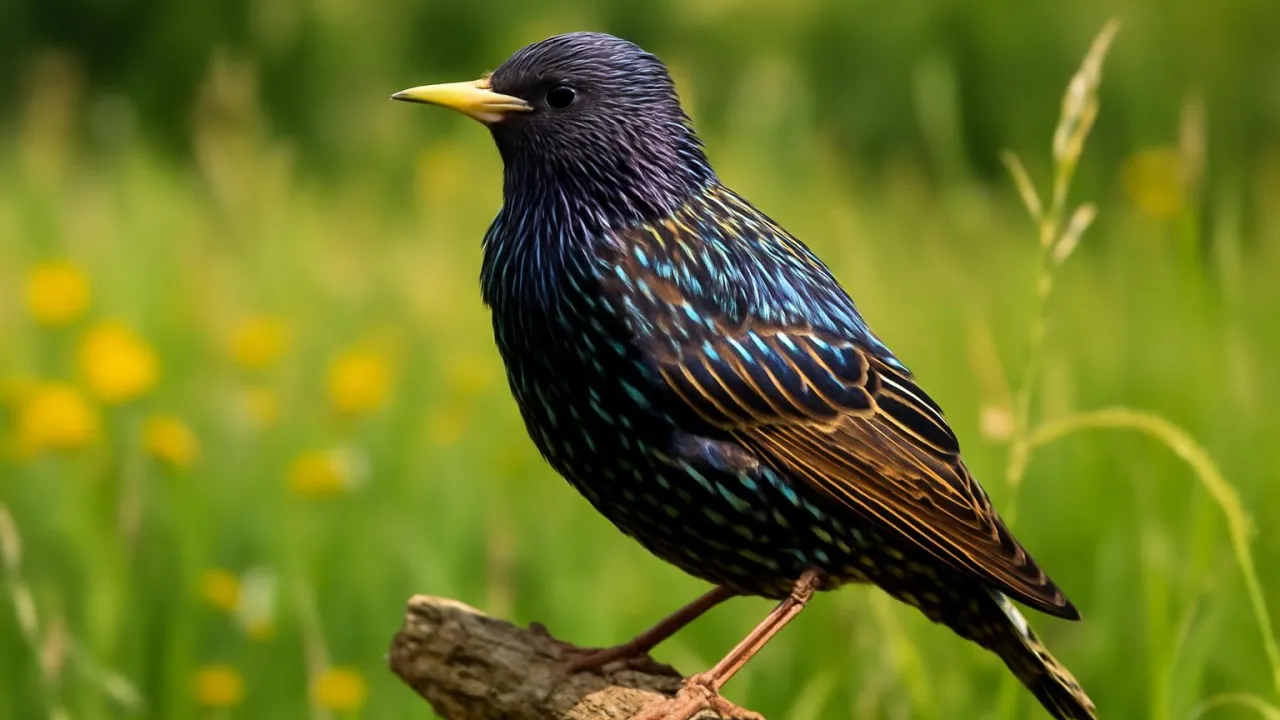
A single European starling can learn and mimic over 20 different sounds in its lifetime!
✨ Word Sparks (Grade 2 Glossary)
Tap 🔊 to hear
mimic
To copy sounds or actions
predator
An animal that hunts other animals
flock
A group of birds flying or resting together
🪝
Have you ever heard a bird copy a car alarm or a whistle?
1
Sparkling Feathers
European starlings have shiny feathers that look black but sparkle with colors in the sunlight. Their feathers are smooth and help them fly fast in the sky. These birds use their bright feathers to attract friends and stay safe from .
2
Mimic Sounds
Starlings can many sounds they hear, like other birds, car alarms, and whistles. They use these sounds to talk to each other and confuse enemies. Their loud and varied songs help them find mates during springtime.
3
Where They Live
These birds live in many places like cities, farms, and woodlands. They build nests in holes or tree branches and eat insects, fruits, and seeds. Starlings often gather in large groups called to stay safe.
1. What do starlings use their shiny feathers for?
2. What is a group of starlings called?
🤯 Mind-Blowing Fact • Grade 3
European starlings can gather in murmurations of up to 100,000 birds, creating amazing flying patterns!
✨ Word Sparks (Grade 3 Glossary)
Tap 🔊 to hear
iridescent
Shiny colors that change with light
murmuration
A large group of birds flying together
adaptation
A change that helps animals survive
🪝
Did you know that European starlings use their shiny feathers as camouflage?
1
Shiny Feathers and Camouflage
European starlings have feathers that shine with green and purple colors in sunlight. These feathers help them blend into shiny leaves and shadows, a form of camouflage that protects them from predators. The feathers also play a role in attracting mates during the breeding season.
2
Mimicking Sounds for Survival
Starlings are excellent mimics and can imitate other birds, animals, and even human noises like car alarms. This ability helps them confuse predators and communicate with others in their flock. Their complex songs are part of their to survive in urban and natural habitats.
3
Life Cycle and Nesting
European starlings build nests in tree holes or buildings, laying four to six eggs each season. The young hatch after about two weeks and grow quickly by eating insects and fruits. This fast growth helps them survive the dangers of their environment.
4
Habitat and Behavior
These birds live in diverse habitats including cities, farmlands, and forests across Europe and North America. They often form large flocks that perform amazing aerial displays called to avoid predators. Their social behavior plays a key role in their survival.
European starlings were introduced to North America by a group who wanted to bring all birds mentioned in Shakespeare’s plays!
✨ Word Sparks (Grade 4 Glossary)
Tap 🔊 to hear
invasive
A species that spreads and harms native plants or animals
biodiversity
Many different kinds of plants and animals living together
territory
An area an animal defends from others
🪝
How do European starlings’ shiny feathers and loud songs help them survive in cities?
1
Iridescent Feathers and Survival
European starlings have iridescent feathers that reflect sunlight, which helps them blend into leafy environments and confuse predators. This camouflage is a key adaptation that increases their chances of survival in both urban and rural habitats. Their feathers also signal health and strength to potential mates, influencing reproductive success.
2
Complex Vocal Mimicry
These birds are known for their remarkable ability to mimic various sounds, including other birds, animals, and even mechanical noises like car alarms. This vocal mimicry serves multiple purposes: attracting mates, defending , and confusing predators. Their loud and varied songs contribute to their success in diverse ecosystems.
3
Ecosystem Roles and Impact
European starlings play important roles in ecosystems by controlling insect populations and dispersing seeds through their diet of fruits and insects. However, in North America, they are considered and can compete with native birds for nesting sites, sometimes disrupting local . Their large flocks can also impact agriculture by feeding on crops.
4
Geographic Spread and Behavior
Originally from Europe and Asia, starlings were introduced to North America in the 1890s and have since spread widely. They thrive in urban, suburban, and rural areas, adapting well to human environments. Their social behavior includes forming large murmurations, which provide safety from predators and help with navigation during migration.
2. What problem do starlings cause in North America?
🤯 Mind-Blowing Fact • Grade 5
European starlings can fly up to 50 miles per hour and form murmurations of over 200,000 birds!
✨ Word Sparks (Grade 5 Glossary)
Tap 🔊 to hear
syrinx
The bird’s voice box that makes sounds
invasive
A species that spreads and harms native plants or animals
murmuration
A large group of birds flying in patterns
🪝
What makes the European starling a master of mimicry and survival across continents?
1
Taxonomy and Scientific Classification
The European starling, scientifically named Sturnus vulgaris, belongs to the family Sturnidae within the order Passeriformes. This species is native to Europe and parts of Asia but has been introduced worldwide, especially in North America. Its adaptability and social behavior have made it one of the most widespread bird species globally.
2
Physiological Adaptations and Mechanics
European starlings possess iridescent feathers that refract light to produce shimmering colors, aiding in camouflage and mate attraction. Their vocal apparatus, the , allows them to produce complex mimicry of sounds including human-made noises. Their strong wings enable agile flight, supporting large that protect against predators.
3
Conservation Status and Historical Introduction
Though abundant in many regions, European starlings are considered in North America where they compete with native species for nesting sites. Their introduction in the 1890s by enthusiasts aiming to introduce all birds from Shakespeare’s works has had lasting ecological impacts. Conservation efforts focus on managing their populations to protect native biodiversity.
4
Ecological Role and Impact Quantified
European starlings consume vast quantities of insects, helping control pest populations in agricultural areas. However, flocks can number up to 200,000 birds, causing significant crop damage and displacing native birds. They can fly at speeds up to 50 miles per hour and migrate thousands of miles, demonstrating remarkable endurance and adaptability.
5
Comparative Behavior and Social Structure
Starlings exhibit complex social behaviors including synchronized involving thousands of individuals. These murmurations create dynamic shapes that confuse predators and improve navigation. Their ability to mimic over 20 different sounds enhances communication within flocks and supports survival in diverse environments.