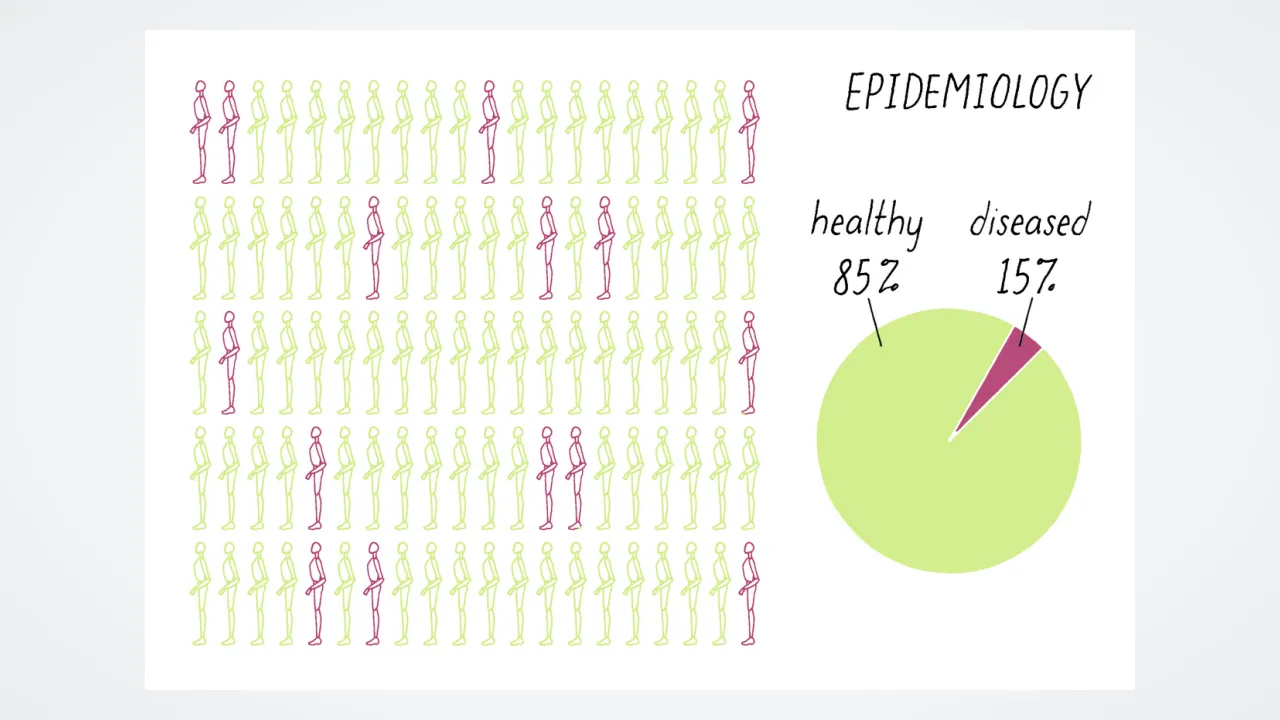
1. How is an epidemiologist's job different from a regular family doctor's job?
2. Why might an epidemiologist place colored dots on a neighborhood map?
🤯 Mind-Blowing Fact • Grade 2
Epidemiologists helped prove that wearing a bike helmet lowers serious head injuries by more than sixty percent!
✨ Word Sparks (Grade 2 Glossary)
Tap 🔊 to hear
Cluster
Group of cases gathered close together
Source
Starting place where a problem began
Public health
Science of protecting whole communities' health
🪝
How did a nineteenth-century doctor use a paper street map to prove dirty water—not smelly air—spread illness?
1
The Famous Broad Street Pump
Draw a black bar on a street map for every sick household! In 1854 London, Dr. John Snow noticed nearly all cholera cases clustered around one public water pump on Broad Street. Removing the pump handle stopped the outbreak and launched modern epidemiology!
2
Clues in Food, Bugs, and Air
Today's epidemiologists investigate flu waves, tick-borne illnesses, and food recalls. If shoppers in three states get sick from bagged lettuce, these detectives interview families and match lab fingerprints to find the exact farm.
3
More Than Just Germs
Epidemiologists also study seatbelts, bike helmets, clean air, and exercise to learn what keeps communities safest!
1. How did Dr. John Snow solve the 1854 London cholera mystery?
2. Besides germs, what other community safety topics do epidemiologists study?
🤯 Mind-Blowing Fact • Grade 3
At the U.S. Centers for Disease Control and Prevention, elite field epidemiologists in the Epidemic Intelligence Service wear a famous emblem showing a shoe sole with a hole worn right through it from walking!
✨ Word Sparks (Grade 3 Glossary)
Tap 🔊 to hear
Exposure
Coming into contact with germs or hazards
Microbiologist
Scientist studying tiny microbes in laboratories
Surveillance
Careful ongoing tracking of health trends
🪝
How do epidemiologists figure out which dish at a giant festival caused food poisoning when guests ate dozens of snacks?
1
Who, What, When, and Where
Phones ring at the state health department: forty festival visitors have sudden stomach illness! Field epidemiologists jump into action, asking four core detective questions—who got sick, what symptoms appeared, when did they start, and where were people exposed?
2
Comparing Two Groups With Math
Guessing is never enough in science. Epidemiologists interview both sick guests and healthy guests who attended the same festival! Comparing percentages—called attack rates—reveals whether people who ate potato salad got sick far more often than people who skipped it.
3
Teaming Up With Lab Scientists
Next, test food samples and run DNA fingerprinting on bacteria like Salmonella. Matching the exact bacterial strain confirms the culprit so grocers can pull unsafe batches off shelves.
4
Tracking Seasons and Vaccines
Year-round, epidemiologists watch hospital trends to forecast winter flu peaks and measure how well vaccines protect neighborhoods.
1. Why do field epidemiologists interview healthy festival guests in addition to sick guests?
2. Why does the Epidemic Intelligence Service badge feature a worn-out shoe sole with a hole?
🤯 Mind-Blowing Fact • Grade 4
The word 'epidemiology' comes from three Greek roots—epi (upon), demos (people), and logos (study)—literally meaning 'the study of what comes upon the people'!
✨ Word Sparks (Grade 4 Glossary)
Tap 🔊 to hear
Vector
Living carrier like ticks spreading germs
Endemic
Regularly present at steady levels locally
Pandemic
Epidemic spreading across multiple continents worldwide
🪝
What are the three corners of the 'Epidemiologic Triangle,' and how does breaking just one corner stop a disease?
1
Breaking the Epidemiologic Triangle
To understand how infectious illnesses spread, epidemiologists picture a triangle with three corners: the Agent (a virus, bacterium, or parasite), the Host (a person or animal who can get sick), and the Environment (conditions like standing water or crowded indoor air—sometimes aided by a like a mosquito or tick). Break just one side of that triangle—by purifying water, draining mosquito puddles, or immunizing hosts—and transmission halts!
2
Endemic, Epidemic, and Pandemic
Precise vocabulary helps Virginia Department of Health and national teams coordinate responses. An illness present at steady, expected levels in a region—like common winter colds—is . When cases surge well above expected numbers in a community or state, it becomes an epidemic; if an outbreak crosses oceans to spread worldwide, it is classified as a .
3
Long-Term Studies That Saved Millions
Not all epidemiology chases sudden germs! Starting in 1948, researchers in Framingham, Massachusetts followed thousands of volunteer townspeople for decades. By analyzing blood pressure, cholesterol, smoking, and exercise data, chronic-disease epidemiologists uncovered the major risk factors for heart disease and stroke.
4
Clean Water, Seatbelts, and Smallpox Victory
Thanks to coordinated epidemiological ring-vaccination strategies, humanity completely wiped out natural smallpox worldwide by 1980—one of history's greatest scientific triumphs.
1. What are the three corners of the classic Epidemiologic Triangle?
2. Which deadly ancient disease was completely eradicated worldwide by 1980 thanks to epidemiological tracking and vaccination?
🤯 Mind-Blowing Fact • Grade 5
By testing tiny viral RNA fragments in city wastewater treatment plants, modern epidemiologists can detect rising community flu or polio activity up to a full week before clinics see sick patients!
✨ Word Sparks (Grade 5 Glossary)
Tap 🔊 to hear
Incidence
Rate of brand-new cases over time
Incubation period
Time between germ exposure and first symptoms
Confounding
Hidden third factor distorting apparent study links
🪝
How do epidemiologists use probability ratios, wastewater genetics, and epidemic curves to outsmart invisible microbes?
1
Incidence, Prevalence, and Epidemic Curves
Armed with Master of Public Health (MPH) or PhD training in biostatistics and infectious-disease dynamics, epidemiologists quantify health across populations with mathematical rigor. They distinguish —the rate of brand-new cases arising over a specific time window—from prevalence, the total proportion of a population living with a condition. Plotting daily symptom-onset times onto a histogram called an 'epi curve' immediately reveals whether cases stem from a single contaminated meal (a sharp point-source peak) or person-to-person spread (waves spaced one apart).
2
Cohort Versus Case-Control Study Designs
Because scientists cannot ethically expose humans to hazards on purpose, observational study design is essential. Prospective cohort studies follow exposed and unexposed groups forward over years to compute Relative Risk. For rare illnesses, case-control studies work backward—comparing past exposures of diagnosed patients against matched healthy controls to calculate an Odds Ratio and rule out variables.
3
The Basic Reproduction Number and Herd Immunity
Mathematical epidemiologists model contagious transmission using R0 ('R-naught')—the average number of secondary infections sparked by a single case entering a fully susceptible group. Airborne measles carries a towering R0 of twelve to eighteen, explaining mathematically why communities require roughly ninety-five percent immunization coverage to build protective herd immunity and interrupt chains of spread before vulnerable infants are exposed.
4
Genomic Epidemiology and Wastewater Surveillance
Twenty-first-century public health laboratories pair shoe-leather contact interviews with rapid whole-genome pathogen sequencing and municipal wastewater quantitative PCR monitoring. By constructing phylogenetic family trees of viral or foodborne bacterial mutations, genomic epidemiologists link multi-state cases to a single processing facility and detect community viral surges a full week before hospital admissions rise.
5
One Health Across Humans, Animals, and Ecosystems
Because more than sixty percent of emerging infectious diseases originate at the wildlife-livestock-human interface, epidemiologists collaborate with veterinarians, entomologists, and environmental scientists under the global 'One Health' framework to safeguard clean water, resilient food systems, and community longevity.