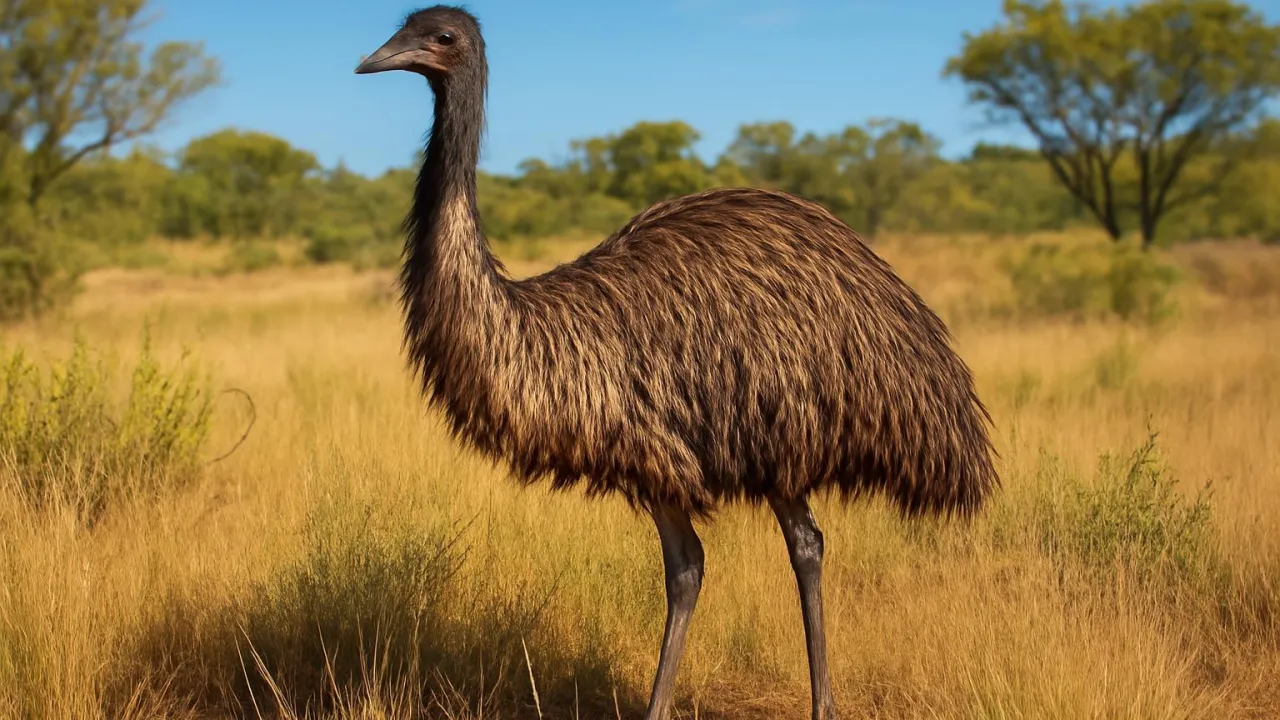
An emu can run nearly as fast as a car driving in a city street!
✨ Word Sparks (Grade 2 Glossary)
Tap 🔊 to hear
predator
An animal that hunts other animals for food
feathers
Soft parts that cover a bird’s body to keep warm
habitat
The natural home where animals live and grow
🪝
Have you ever seen a bird that runs faster than a car in a city?
1
Big Birds That Run
Emus are very tall birds that cannot fly but run very fast. They have long legs and soft that help keep them warm. Their brown feathers also help them hide in the grass.
2
Where Emus Live
Emus live in Australia’s open forests and grasslands where they find food and water. They eat plants, seeds, and insects to stay healthy. Emus need water to drink every day.
3
Amazing Running Skills
Emus can run up to 30 miles per hour to escape danger. Their strong legs help them run fast and far. They use their speed to stay safe from .
Emus are flightless birds that can run faster than many animals in Australia.
✨ Word Sparks (Grade 3 Glossary)
Tap 🔊 to hear
camouflage
Colors or patterns that help animals hide
omnivore
An animal that eats plants and animals
predator
An animal that hunts other animals for food
🪝
Did you know emus use camouflage to hide from predators in the wild?
1
Emu’s Size and Speed
The emu is the second-largest bird in the world and cannot fly. It uses its long, strong legs to run at speeds up to 30 miles per hour. This speed helps the emu escape in its habitat.
2
Habitat and Diet
Emus live in open forests and grasslands across Australia. They are , eating plants, seeds, and insects to get nutrients. Their diet helps them survive in dry environments with little water.
3
Feathers and Camouflage
Emus have soft, brown feathers that provide in dry grasslands. This adaptation helps them blend into their surroundings and avoid . Their feathers also protect them from heat and cold.
4
Life Cycle and Behavior
Emus lay large green eggs, and males take care of the eggs and chicks. The chicks grow quickly and learn to run soon after hatching. This parental care increases the chicks’ chances of survival.
Emus help plants grow by spreading seeds far across Australia’s wide landscapes.
✨ Word Sparks (Grade 4 Glossary)
Tap 🔊 to hear
ecosystem
A community of plants and animals living together
camouflage
Colors or patterns that help animals hide
conservation
Protecting animals and their homes
🪝
How does the emu’s speed and camouflage help it survive in Australia’s wild?
1
Physical Adaptations for Survival
The emu’s large size and powerful legs allow it to run up to 30 miles per hour, which helps it escape predators like dingoes and eagles. Its soft brown feathers provide excellent in the dry grasslands, blending with the environment to avoid detection. This camouflage is a key adaptation that keeps emus safe from many threats.
2
Role in the Ecosystem
Emus play an important role in their by spreading seeds from the fruits and plants they eat, helping new plants grow across wide areas. They are also prey for some predators, which keeps the food web balanced in Australian habitats. Their presence supports both plant life and animal populations in their environment.
3
Habitat and Geographic Range
Emus are found throughout most of Australia, especially in open forests, savannas, and grasslands. Their ability to travel long distances allows them to find food and water in changing seasonal conditions across this vast continent. This wide range helps them survive in many different environments.
4
Human Impact and Conservation
While emus are not endangered, habitat loss and hunting have affected some populations in certain regions. efforts focus on protecting natural habitats and educating people about the importance of emus in Australia’s wildlife. These actions help maintain healthy emu populations for the future.
Emus’ unique double-shafted feathers help regulate body temperature in extreme Australian climates.
✨ Word Sparks (Grade 5 Glossary)
Tap 🔊 to hear
ratite
A group of big flightless birds with strong legs
seed dispersal
How plants spread seeds to new places
habitat fragmentation
When animal homes are broken into smaller parts
🪝
What unique traits make the emu a remarkable bird in Australia’s diverse ecosystems?
1
Taxonomy and Scientific Classification
The emu, scientifically named Dromaius novaehollandiae, belongs to the group of flightless birds, which includes ostriches and kiwis. This classification highlights its evolutionary adaptations such as large body size and strong legs for running instead of flying. Emus share a common ancestor with other ratites that evolved millions of years ago.
2
Physiological Adaptations and Mechanics
Emus possess powerful leg muscles and three-toed feet that provide excellent traction and speed, enabling them to reach speeds up to 30 miles per hour. Their feathers are double-shafted, providing insulation against heat and cold in Australia’s variable climate. The unique feather structure also helps reduce water loss and protects the skin from sun exposure.
3
Conservation Status and Human History
Though emus are currently classified as Least Concern, and hunting have historically reduced some populations. Conservation programs focus on habitat preservation and public education to maintain stable emu numbers across Australia. Indigenous Australians have long respected emus as part of their culture and diet.
4
Ecological Role and Seed Dispersal
Emus contribute significantly to their ecosystems by dispersing seeds through their droppings, which aids in plant regeneration and biodiversity. Their wide-ranging movements across diverse habitats promote genetic diversity among native plants. This helps maintain healthy ecosystems and supports other wildlife species.
5
Quantitative Comparisons and Unique Facts
Standing up to 5.7 feet tall and weighing around 100 to 130 pounds, emus can run faster than most Australian mammals. Their stride length can reach up to 10 feet, allowing them to cover large distances efficiently while searching for food and water. Emus can survive in temperatures ranging from below freezing to over 100 degrees Fahrenheit.