1. Why does electricity stop flowing when you turn a light switch off?
2. Why are power cords wrapped in smooth rubber or plastic?
🤯 Mind-Blowing Fact • Grade 2
A single modern computer microchip smaller than a postage stamp can hold billions of microscopic switches called transistors!
✨ Word Sparks (Grade 2 Glossary)
Tap 🔊 to hear
conductor
Material like copper letting electricity flow easily
insulator
Material like rubber keeping electricity safely blocked
electron
Tiny particle carrying electric charge through wires
🪝
How can one career design both giant power grids for cities and microchips smaller than your fingernail?
1
Guiding Invisible Electrons
Look at a glowing traffic signal at a busy corner, an electric school bus charging quietly, or a smartwatch on a wrist! Designing the pathways that guide electricity through all of them is the job of an electrical engineer.
2
Conductors and Insulators
Engineers know which materials let tiny charges called zoom easily—like copper and gold —and which materials block them safely, like glass and rubber . On green circuit boards, thin copper tracks connect lights, buzzers, and sensors.
3
Testing Waves on Glowing Screens
Using handheld multimeters and wave-measuring screens called oscilloscopes, engineers check every wire so hospital monitors, radios, and home appliances run safely.
1. Which material is a great conductor for carrying electricity inside wires?
2. What tool shows electrical signals as glowing wavy lines so engineers can check them?
🤯 Mind-Blowing Fact • Grade 3
Because a single speck of dust looks like a giant boulder next to microscopic chip wires, microchip cleanrooms stay ten thousand times cleaner than a hospital operating room!
✨ Word Sparks (Grade 3 Glossary)
Tap 🔊 to hear
voltage
Electrical pushing pressure moving electrons through circuits
resistor
A small part limiting how much current flows
electromagnetism
The link between electric currents and magnetic fields
🪝
How do spinning magnets generate almost all the electricity lighting your school right now?
1
The Magic Link: Electricity and Magnetism
Nearly two hundred years ago, scientist Michael Faraday discovered something amazing: spin a magnet inside a coil of copper wire, and an electric current springs to life! Today, an electrical engineer uses to build both power-plant generators and quiet electric motors.
2
Balancing Voltage, Current, and Resistance
Inside a circuit lab, engineers think of electricity almost like water in a hose. is the pushing pressure, current (measured in amps) is how fast electrons flow, and gently slow that flow down so delicate LED lights never burn out!
3
Printed Circuit Boards and Cleanrooms
Engineers lay out green Printed Circuit Boards—tiny cities of , capacitors that store quick bursts of energy, and silicon microchips—inside dust-free cleanrooms where workers wear head-to-toe bunny suits.
4
Radio Waves Through Thin Air
Electrical engineers also design antennas for Wi-Fi, weather radar, GPS satellites, and deep-space probes communicating across the solar system.
1. How do power-plant generators use Michael Faraday's discovery to make electricity?
2. Why must microchip engineers wear full 'bunny suits' inside factory cleanrooms?
🤯 Mind-Blowing Fact • Grade 4
North America's interconnected electric power grid—linking millions of miles of lines, generators, and substations in precise sixty-cycles-per-second harmony—is often called the largest machine ever built!
✨ Word Sparks (Grade 4 Glossary)
Tap 🔊 to hear
transformer
Device stepping electric voltage safely up or down
power grid
Network of lines delivering electricity to communities
semiconductor
Silicon material whose conductivity switches on and off
🪝
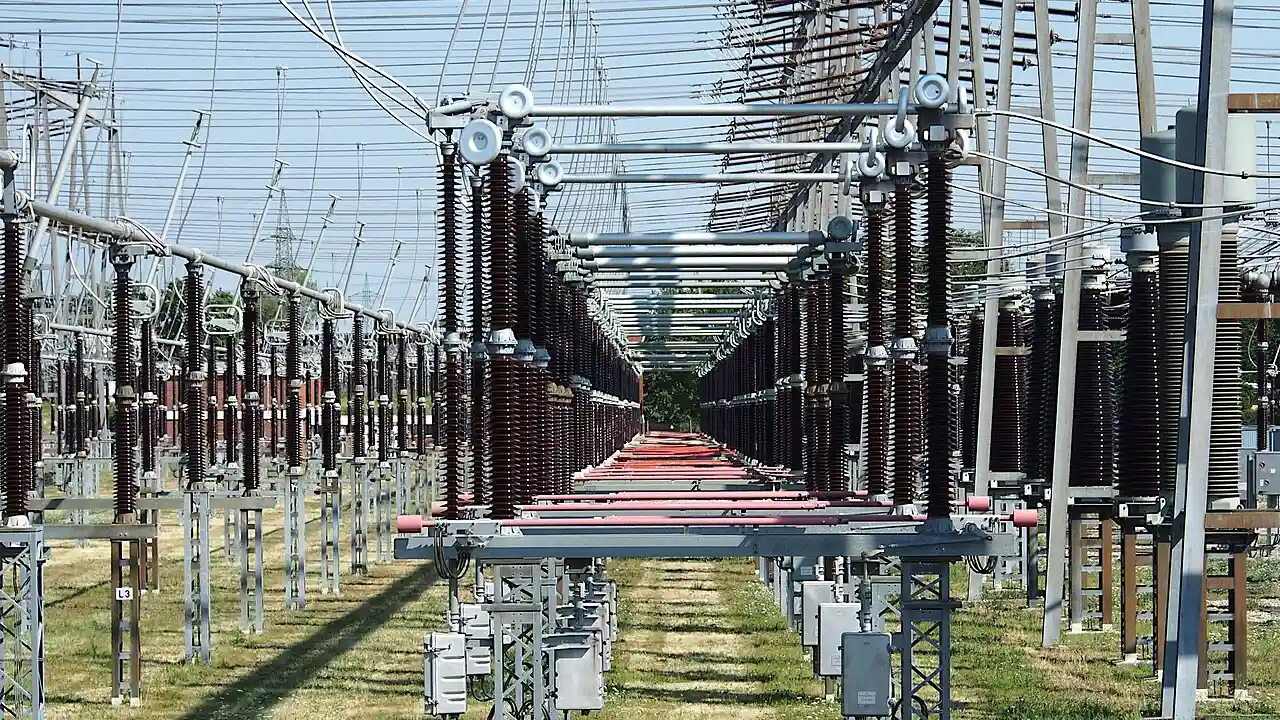
Why does electricity step UP to hundreds of thousands of volts on highway towers, then step DOWN before entering your house?
1
Orchestrating the Power Grid
Electricity has a surprising quirk: unless stored in batteries or pumped water, the exact electricity lighting your classroom right this second was generated milliseconds ago miles away! Keeping supply and demand perfectly balanced across states like Virginia and nationwide is a vital mission of an electrical engineer.
2
Transformers and Ohm's Law
Sending giant currents over hundred-mile wires normally wastes energy as heat. Using electromagnetic and Ohm's Law, power engineers boost transmission lines up to 500,000 volts so less current is needed over long distances. Near neighborhoods, substation transformers step that voltage safely back down to 120 and 240 volts for home outlets!
3
Analog Meets Digital
Not every electrical engineer works on giant transmission towers. Signal-processing and hardware engineers design precision analog-to-digital converters that translate smooth real-world sound waves, heartbeats on hospital EKGs, weather-radar echoes, and faint telescope starlight into binary ones and zeros that microprocessors understand in microseconds.
4
Smart Grids for Clean Energy
As rooftop solar panels, offshore wind farms off Virginia Beach, and electric school buses join the , electrical engineers invent automated smart switches, protective circuit breakers, and grid-scale battery banks. Whenever a falling storm branch trips a neighborhood line, computer-guided relays isolate the fault and reroute electricity down healthy wires in seconds—keeping hospitals, traffic lights, and homes brightly lit.
1. Why do electrical engineers step power-line voltage way UP for long-distance travel?
2. What job does an analog-to-digital converter perform inside medical or audio gear?
🤯 Mind-Blowing Fact • Grade 5
Modern microchip features are etched just two to three nanometers wide—so tiny that a single human fingernail grows about that same distance every two seconds!
Etching nanoscale microchip circuits using focused light
alternating current
Electric flow reversing direction sixty times per second
🪝
How do engineers carve fifty billion nanoscale switches onto a slice of purified beach sand using beams of ultraviolet light?
1
From Maxwell's Equations to Nanoscale Silicon
Every radio broadcast, MRI medical scan, fiber-optic laser, and smartphone processor obeys four elegant formulas united in the 1860s by physicist James Clerk Maxwell. Harnessing those electromagnetic laws across scales spanning nanometers to continents is the craft of an electrical engineer.
2
Photolithography on Silicon Wafers
Inside semiconductor fabrication labs—including growing chip-manufacturing hubs in Northern Virginia—engineers refine ordinary quartz sand into ultra-pure silicon crystals sliced into mirror-smooth wafers. Using Extreme Ultraviolet , lenses project circuit patterns just nanometers wide—only a few dozen atoms across! Billions of MOSFET act as microscopic gates switching billions of times per second to execute binary logic.
3
Synchronizing Alternating Current Grids
At the macro scale, power-systems engineers maintain three-phase (AC) grids oscillating at exactly 60 hertz across North America. If generation drops even slightly below demand, grid frequency dips; smart phasor sensors and high-voltage direct-current (HVDC) converter stations route clean solar and offshore wind power hundreds of miles from windy coasts and sunny plains to cities with minimal heat loss.
4
RF, Photonics, and Biomedical Signals
Other specialists master radio-frequency (RF) phased-array antennas that steer low-Earth-orbit satellite beams electronically in milliseconds without moving parts, design laser photonics for quantum communication, or craft bionic cochlear ear implants that translate spoken voices into gentle electrical pulses stimulating auditory nerves directly so deaf children can hear.
5
Powering an Electrified Future
By pioneering wide-bandgap silicon-carbide power inverters that run cooler in electric vehicles, solid-state grid batteries, and storm-hardened hospital microgrids, electrical engineers build the clean, dependable energetic foundation powering twenty-first-century science, healthcare, and daily community life.