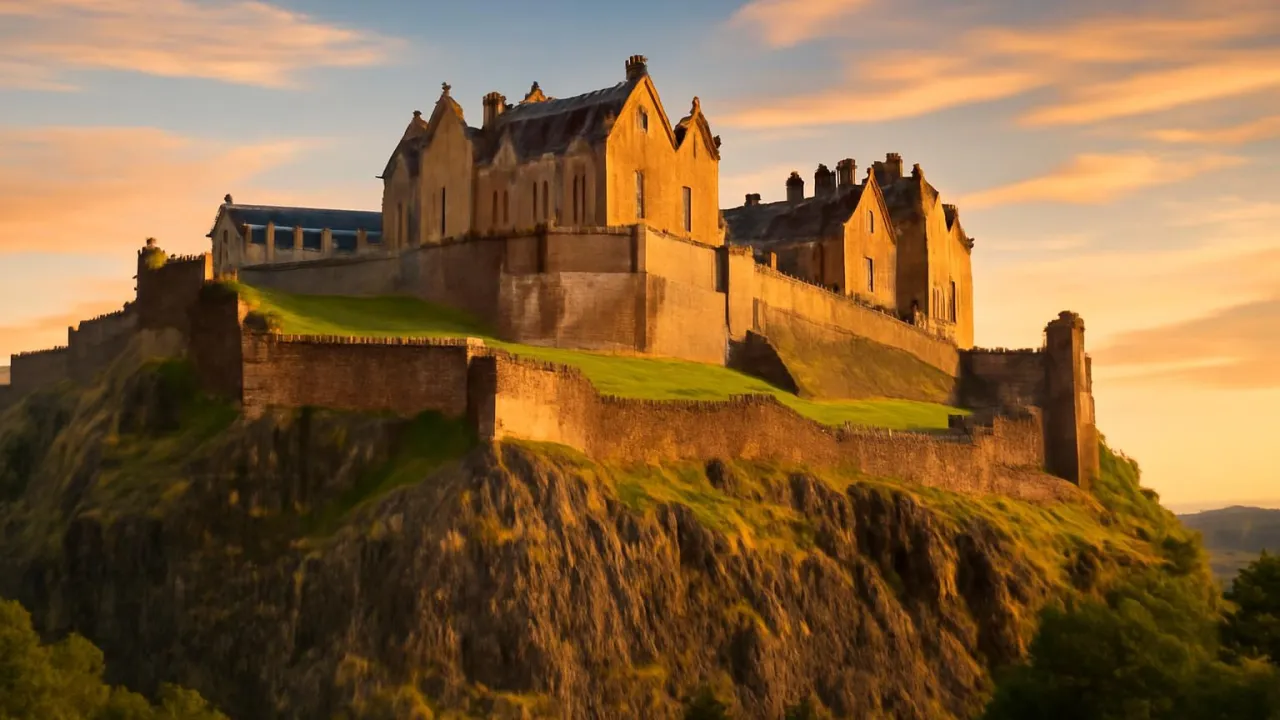
The oldest part of the castle is over 900 years old!
✨ Word Sparks (Grade 2 Glossary)
Tap 🔊 to hear
landmark
A place everyone knows
cannon
A big old gun for defense
echo
A sound that bounces back
🪝
What would it feel like to walk through ancient castle gates?
1
High Above the City
Edinburgh Castle sits on a steep rocky hill, looking over the city below. People climb up winding paths to reach the castle. The stone walls are thick and strong, built to keep people safe.
2
Music and History
Sometimes bagpipes play loud music that across the castle yard. Visitors see old and flags waving in the Scottish wind. There are many rooms and secret places to explore inside.
3
A Famous Place
Edinburgh Castle is famous all over the world for its history and views. Many people visit to learn about kings and queens who lived here. It is one of Scotland’s most special .
The castle’s One O’Clock Gun fires every day except Sunday!
✨ Word Sparks (Grade 3 Glossary)
Tap 🔊 to hear
fortress
A strong building for defense
acoustic
How sound travels in a place
monument
A building that honors history
🪝
What secrets might be hidden inside a castle built on a volcano?
1
A Fortress on a Volcano
Edinburgh Castle rises above the city on Castle Rock, an ancient volcanic plug. The stone walls were built to blend with the rocky cliffs, making it hard for enemies to climb. The castle's high position gave people a clear view of anyone approaching. This clever location made it a strong for hundreds of years.
2
Sounds of Scotland
When you visit, you might hear bagpipes vibrating through the air. The sound bounces off the stone walls, creating a special effect. Soldiers once marched here, and cannons boomed during battles. Today, visitors enjoy music and stories echoing across the castle grounds.
3
Rooms Full of History
Inside, there are grand halls, secret passages, and ancient dungeons to explore. The oldest building, St. Margaret’s Chapel, was built in the 1100s and still stands strong. Royal crowns and swords are displayed in the castle museum. Each room tells a story about Scotland’s kings, queens, and battles.
4
A Symbol of Scotland
Edinburgh Castle is a national and a symbol of Scottish pride. Every year, thousands of people from around the world visit to learn about its history. The castle hosts famous events, like the Royal Edinburgh Military Tattoo. Its powerful walls and volcanic base make it truly unique.
The castle’s oldest building, St. Margaret’s Chapel, survived wars and is nearly 900 years old.
✨ Word Sparks (Grade 4 Glossary)
Tap 🔊 to hear
volcanic plug
Hard rock left from old volcano
hammerbeam roof
A roof with wooden beams for support
resonance
When sound vibrates and grows louder
🪝
Imagine the rumble of a cannon echoing across ancient volcanic stone—what stories does this fortress hold?
1
Built on Ancient Fire
Edinburgh Castle stands atop Castle Rock, a formed over 340 million years ago. Early settlers chose this site for its steep cliffs, which provided natural protection against invaders. The first recorded fort was built here in the 7th century, but most of the stone structures you see today were constructed between the 12th and 16th centuries. The castle’s location made it nearly impossible for enemies to attack from below.
2
Defenses and Design
Thick stone walls, tall towers, and narrow gates were engineered for maximum defense. The castle’s Great Hall features a , an impressive medieval engineering achievement that allows the vast hall to stand without central supports. Cannons, including the famous Mons Meg, were placed to guard every approach. Secret passages and dungeons were built into the volcanic rock, adding to the castle’s mystery.
3
Sounds and Symbols
Bagpipes have echoed through the castle’s courtyards for centuries, their sound amplified by the stone walls’ acoustic . The daily firing of the One O’Clock Gun is a tradition that began in 1861 to help ships in the Firth of Forth set their clocks. The castle is also home to the Stone of Destiny, a symbol of Scottish royalty used in coronations for centuries.
4
A Living Monument
Today, Edinburgh Castle is one of Scotland’s most visited landmarks, drawing more than two million visitors each year. It hosts the Royal Edinburgh Military Tattoo, a world-famous festival of music and marching. The castle’s powerful silhouette is a symbol of Scottish resilience and culture. Its volcanic foundation and centuries-old walls remind us how nature and human engineering can shape history together.
1. How did the volcanic rock help protect the castle?
2. What is the purpose of the One O’Clock Gun?
🤯 Mind-Blowing Fact • Grade 5
Mons Meg, the castle’s giant cannon, could fire stone balls weighing over 300 pounds nearly two miles!
✨ Word Sparks (Grade 5 Glossary)
Tap 🔊 to hear
basaltic plug
A hard core left by old volcano lava
chronometer
A very accurate timekeeping device
siege
A long attack on a castle or city
🪝
What if you could trace the footsteps of kings and soldiers across volcanic stone—how did Edinburgh Castle shape Scotland’s destiny?
1
A Fortress Forged by Fire and Time
Edinburgh Castle’s dramatic setting atop Castle Rock is the result of a volcanic eruption that occurred over 340 million years ago, leaving behind a hard . This unique geological foundation rises 443 feet (135 meters) above sea level, providing a naturally defensible position that early Iron Age settlers recognized as ideal for fortification. Archaeological evidence suggests that human occupation of the site dates back to at least the 2nd century CE, long before the first stone castle was constructed. By the Middle Ages, the site had become the heart of Scotland’s royal power.
2
Engineering Marvels and Military Innovations
The castle’s architecture showcases centuries of evolving military engineering, from its thick curtain walls to its imposing portcullis gates. The Great Hall’s hammerbeam roof, completed in 1511, demonstrates advanced medieval carpentry, allowing for a vast open space without internal columns. Cannons such as Mons Meg, a six-ton bombard built in the 15th century, highlight the shift from traditional archery defenses to gunpowder weaponry. The integration of dungeons, water cisterns, and secret passages into the volcanic rock reveals the ingenuity required to sustain a fortress under .
3
Acoustics, Traditions, and Cultural Resonance
The castle’s stone courtyards and halls create unique acoustic environments, amplifying the vibrations of bagpipes and ceremonial drums during events like the Royal Edinburgh Military Tattoo. The daily firing of the One O’Clock Gun, introduced in 1861, was a technological solution for maritime navigation, enabling ships in the Firth of Forth to synchronize their with remarkable precision. The Stone of Destiny, kept in the castle, remains a powerful symbol of Scottish sovereignty, having been used in the coronation of monarchs for centuries.
4
Historical Turbulence and Enduring Legacy
Throughout its history, Edinburgh Castle has withstood dozens of , making it one of the most besieged places in Britain. It played pivotal roles in the Wars of Scottish Independence, the Jacobite risings, and the turbulent reigns of many Scottish monarchs. The castle’s strategic location allowed its defenders to observe and control movement across central Scotland, influencing the nation’s political and military history. Its survival through centuries of conflict is a testament to both its formidable design and the resilience of the Scottish people.
5
A Living Landmark for the World
Today, Edinburgh Castle welcomes over two million visitors annually, serving as a museum, ceremonial site, and global symbol of Scottish heritage. Its volcanic foundation, medieval architecture, and rich traditions attract historians, engineers, and tourists alike. The castle’s presence dominates the Edinburgh skyline, inspiring artists, writers, and musicians across generations. As both a UNESCO World Heritage site and a living monument, Edinburgh Castle continues to connect Scotland’s ancient past with its vibrant present, inviting all who visit to experience its enduring magic.