1. How do you get dolomite rock to fizz with weak acid?
2. What extra ingredient makes dolomite harder than ordinary limestone?
🤯 Mind-Blowing Fact • Grade 2
Northern Italy's spectacular Dolomite Mountains—named after Déodat de Dolomieu—glow bright rose-pink and fiery orange at sunrise and sunset in a light show locals call 'enrosadira'!
✨ Word Sparks (Grade 2 Glossary)
Tap 🔊 to hear
geologist
A scientist who studies Earth's rocks and history
swap
To trade one thing in place of another
brine
Extra-salty water packed with dissolved minerals
🪝
How did one French scientist discover a mystery mountain rock using a drop of acid?
1
A Mystery in the Alps
Over two hundred years ago, French Déodat de Dolomieu hiked into the towering pale mountains of northern Italy. Everyone thought the jagged peaks were ordinary limestone—until Dolomieu noticed the rock refused to fizz strongly in cold acid!
2
Trading Calcium for Magnesium
Dolomite starts out on warm seafloors as ordinary shell-rich limestone. Later, salty water rich in magnesium seeps through the buried mud and magnesium atoms into half the calcium spots, creating a tougher rock!
3
Curved Saddle Crystals
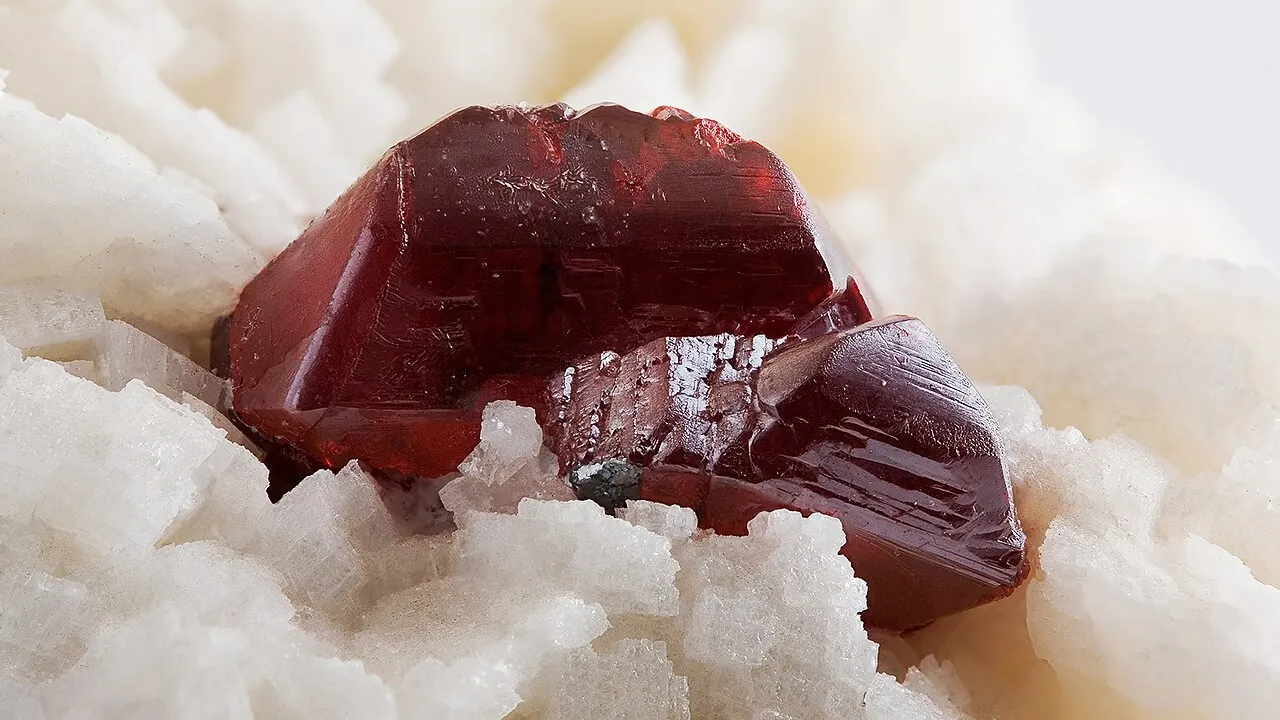
Inside hollow pockets, pure dolomite mineral often grows pretty, pearly pink crystals curved just like tiny horse saddles.
1. What did French scientist Déodat de Dolomieu notice that proved dolomite was different from ordinary limestone?
2. What fun shape do pink dolomite mineral crystals often form inside rock pockets?
🤯 Mind-Blowing Fact • Grade 3
In Scott County, Virginia, an underground stream carved an 850-foot cave passage through tough dolostone so wide that an active railroad line runs right through 'Natural Tunnel' today!
✨ Word Sparks (Grade 3 Glossary)
Tap 🔊 to hear
dolostone
Sedimentary rock composed mostly of the mineral dolomite
caprock
Hard top rock layer protecting softer layers underneath
neutralize
To balance out acid so soil stays healthy
🪝
Why do geologists sometimes call the mineral 'dolomite' and the whole mountain rock 'dolostone'?
1
One Name for Mineral and Rock
Here is a neat geology tip: dolomite is the name of the calcium-magnesium carbonate mineral, and for centuries people used the exact same word for the sedimentary rock made of it! To avoid mix-ups, many geologists call the whole rock while keeping dolomite for the sparkling mineral crystals inside.
2
How Magnesium Remodels Limestone
When seawater evaporates in sun-baked lagoons and tidal flats, magnesium concentrates in warm salty brines. Seeping downward through porous lime mud, magnesium ions replace half the calcium ions. Because magnesium atoms are slightly smaller than calcium atoms, the rock shrinks slightly, leaving tiny sugar-textured pores!
3
Holding Up Niagara Falls and Natural Tunnel
Scoring 3.5 to 4 on the Mohs scale and dissolving more slowly than calcite, tough Lockport forms the lip of Niagara Falls. In southwestern Virginia, Scott County's famous Natural Tunnel—850 feet long and tall enough for freight trains—was carved through ancient ridge-forming dolostone!
4
Helping Gardens Grow
Farmers spread crushed dolomitic lime on acidic soils to acid while feeding crops both calcium and magnesium.
1. Why do many geologists use the word 'dolostone'?
2. Why do farmers spread crushed dolomite on acidic farm fields?
🤯 Mind-Blowing Fact • Grade 4
Replacing larger calcium atoms with smaller magnesium atoms shrinks crystal volume by up to 12 percent, turning dense mud into a porous underground sponge!
✨ Word Sparks (Grade 4 Glossary)
Tap 🔊 to hear
dolomitization
Chemical replacement turning calcium limestone into magnesium-rich dolostone
sabkha
Sun-baked salty coastal flat where evaporite minerals grow
chert
Hard, fine-grained quartz rock often found in dolostone
🪝
Why are giant cliffs of ancient dolomite common, yet almost zero dolomite forms in today's oceans?
1
Earth's Famous 'Dolomite Problem'
Geologists love a good mystery, and for two centuries they have debated 'The Dolomite Problem'! Thick beds of Cambrian and Ordovician dolostone—thousands of feet thick—blanket North America, Europe, and Asia, including Virginia's Shenandoah Valley Beekmantown and Elbrook formations. Yet even though modern seawater holds plenty of magnesium, geologists cannot easily crystallize dolomite at room temperature in a laboratory, and modern oceans barely make any!
2
Sabkha Brines and Microbial Helpers
Today, scientists spot small batches of modern dolomite forming in hypersaline Persian Gulf tidal flats called and Brazilian coastal lagoons. There, sulfate-reducing microbes strip away chemical blockers and strip water shells off magnesium ions, allowing ordered alternating layers of calcium and magnesium carbonate—CaMg(CO3)2—to lock together.
When smaller magnesium ions replace larger calcium ions molecule for molecule in limestone, crystal volume shrinks by up to twelve percent! That shrinkage opens tiny interconnected rhombohedral pores while blurred fossil outlines turn sugary—creating strong, permeable aquifers and deep fluid reservoirs.
4
Chert Nodules and Ridge Knobs
Because dolostone resists humid dissolution better than pure limestone and often holds hard white nodules, Shenandoah Valley dolostone beds stand up as rolling hills above lower limestone valley floors.
1. What do geologists mean by 'The Dolomite Problem'?
2. Why does replacing calcium with magnesium often make dolostone more porous than the original limestone?
🤯 Mind-Blowing Fact • Grade 5
Italy's towering 10,000-foot Dolomite Alps began 230 million years ago as tropical coral reefs in a warm ocean before magnesium-rich waters transformed them into pale dolostone!
✨ Word Sparks (Grade 5 Glossary)
Tap 🔊 to hear
hydration shell
Tight ring of water molecules clinging around dissolved ions
stoichiometric
Having elements in exact, balanced whole-number ratios
refractory
Material able to withstand extreme furnace heat without melting
🪝
How do hydration shells around magnesium ions explain a 500-million-year-old ocean mystery?
1
Ordered Crystal Lattice and Kinetic Hydration Barrier
Unlike calcite, where every cation layer holds calcium, ideal dolomite—CaMg(CO3)2—strictly alternates sheets of calcium ions and magnesium ions separated by planar carbonate (CO3) groups. Why doesn't modern seawater, which carries five times more magnesium than calcium, precipitate dolomite effortlessly? In cool 25-degree-Celsius water, small, strongly charged Mg2+ ions cling tightly to an electrostatic '' of six water molecules. Stripping off that water shield requires high activation energy, kinetically blocking ordered dolomite growth at surface temperatures!
2
Reflux, Burial Fluids, and Anaerobic Microbes
Overcoming that kinetic barrier happens through three main geologic pathways. First, anaerobic sulfate-reducing and methanogenic microbes in hypersaline sabkhas strip away enzymatically to nucleate disordered protodolomite. Second, dense evaporated lagoon brines sink downward ('seepage reflux') through permeable reef platforms—just as happened across the Triassic coral atolls that later rose into Italy's UNESCO Dolomite Alps. Third, warm hydrothermal fluids above 60 degrees Celsius flush deep sedimentary basins, ordering crystal lattices effortlessly.
3
Mississippi Valley-Type Ore Hosts
Vuggy, saddle-dolomite-lined breccias in Paleozoic dolostones host many of North America's richest lead-zinc-fluorite ore districts—including historic Austinville in Wythe County, Virginia, mined continuously for over two centuries!
4
Refractory Bricks and Float Glass
Calcined at extreme kiln temperatures above 1,500 degrees Celsius into dense magnesia-lime bricks, high-purity dolostone lines basic oxygen steelmaking vessels without melting or corroding, while finely milled dolomite supplies essential magnesium and calcium oxides that stabilize molten silica sheets on modern architectural float-glass and solar-panel production lines.
5
Dolomitic Marble Under Metamorphism
Subjected to regional or contact metamorphism inside mountain belts, siliceous dolostone undergoes decarbonation reactions at lower temperatures than pure calcite limestone—growing radiating white tremolite amphibole needles, pale green diopside, forsterite olivine, or silky metamorphic talc alongside interlocking, weather-resistant dolomitic marble.