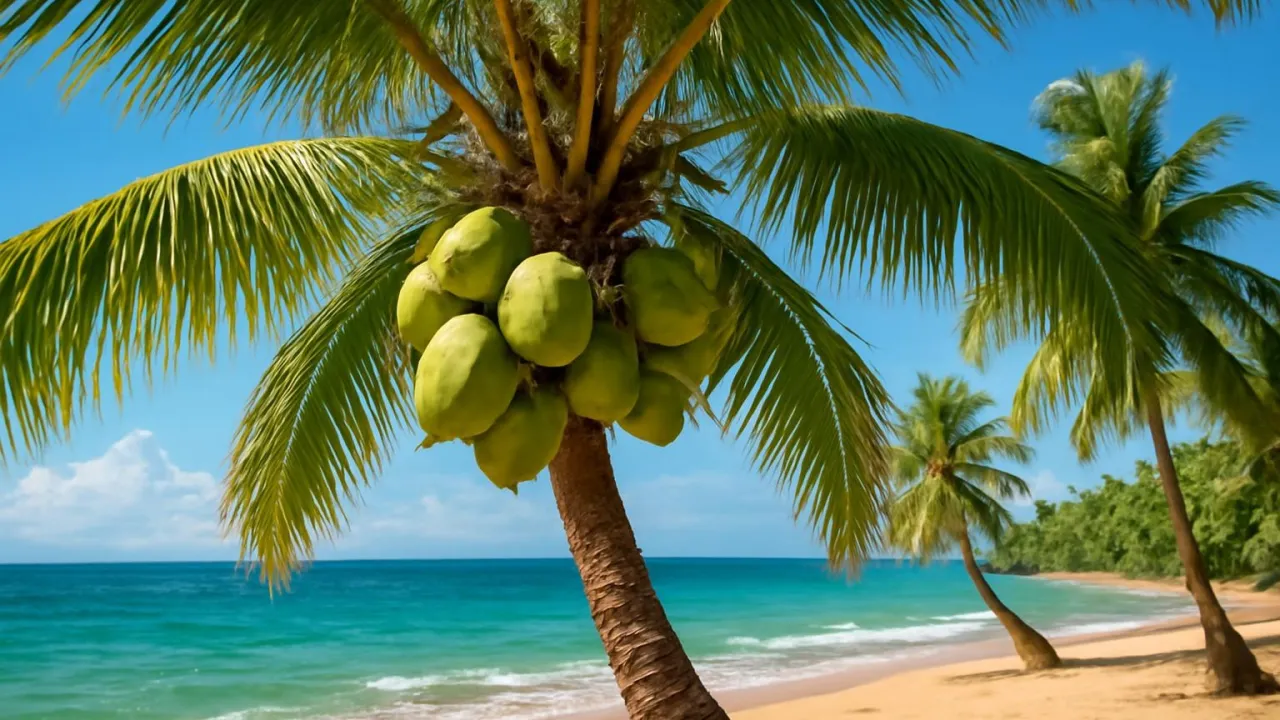
Coconuts can drift across oceans for months and still grow into new trees!
✨ Word Sparks (Grade 2 Glossary)
Tap 🔊 to hear
tropical
Warm places near the equator
shell
Hard outside covering of fruit
float
To stay on water and not sink
🪝
Have you ever seen a coconut tree on a sunny beach?
1
Where Do Coconut Trees Live?
Coconut trees grow near warm, sandy beaches where they get lots of sun and rain. They like places that are hot all year. The trees can grow very tall and strong by the ocean.
2
What Is Inside a Coconut Fruit?
Inside the coconut is white, soft fruit that people eat and drink. The coconut also holds water that tastes sweet and fresh. The hard protects the fruit inside from animals and weather.
3
How Do Coconuts Spread Around?
When coconuts fall from the tree, they can in the ocean for many days. The floating coconuts travel far to new islands where they can grow new trees. This is how coconut trees spread across the world.
Coconuts can survive months floating on saltwater and still grow into strong new trees.
✨ Word Sparks (Grade 3 Glossary)
Tap 🔊 to hear
adaptation
A change that helps plants survive
nutrients
Food that helps plants and animals grow
dispersal
How seeds spread to new places
🪝
Did you know coconuts can float across oceans to find new homes?
1
Coconut Trees in Tropical Ecosystems
Coconut trees grow in tropical regions near warm oceans and sandy beaches. Their tall trunks help them reach sunlight above other plants. These trees provide shade and food for many animals. Their roots help keep the sand and soil stable.
2
Inside the Coconut Fruit
The coconut has a hard shell that protects the white edible fruit inside. The fruit contains coconut water, which is full of . This water helps the seed inside stay alive during long ocean journeys. The fruit’s tough shell is an to protect it from predators.
3
How Coconuts Spread and Grow
Coconuts fall from trees and float on ocean water to new places. This seed helps coconuts colonize distant islands. When they reach land, the seed germinates and grows into a new tree. This natural spreading is important for the coconut’s survival.
4
Coconut’s Role in Nature
Coconut trees provide food and shelter to many animals like crabs and birds. They are part of the coastal food web and help protect shorelines from erosion. Humans also use coconuts for food, drink, and materials. This makes coconuts an important species in tropical ecosystems.
Coconuts can drift across oceans for over 100 days and still sprout into new trees on distant shores.
✨ Word Sparks (Grade 4 Glossary)
Tap 🔊 to hear
erosion
When wind or water wears soil away
buoyant
Able to float on water easily
germinate
When a seed starts to grow
🪝
Have you ever wondered how coconuts travel thousands of miles across oceans?
1
Coconut Trees and Their Tropical Habitat
Coconut palms thrive in tropical coastal regions where warm temperatures and sandy soils prevail year-round. Their tall, slender trunks allow them to compete effectively for sunlight in dense coastal vegetation. These trees stabilize shorelines by preventing soil with their extensive root systems. They also provide habitat and food for numerous coastal animals, including crabs and birds.
2
Physical Adaptations of the Coconut Fruit
The coconut fruit has a tough, fibrous outer husk that protects the seed from saltwater damage during ocean dispersal. Inside, the hard shell safeguards the nutrient-rich white meat and coconut water, which nourishes the seed embryo. This unique structure is an evolutionary adaptation allowing coconuts to survive long ocean voyages and successfully on distant shores. The husk enables the fruit to float for months without losing viability.
3
Ecological Role and Human Uses
Coconuts play a vital role in coastal ecosystems by supporting food webs and providing shelter for wildlife. Humans have long cultivated coconuts for their versatile uses, including food, drink, fiber, and building materials. Coconut farming impacts local economies and cultures in tropical regions worldwide. However, overharvesting and habitat loss threaten some wild coconut populations, highlighting the need for sustainable practices.
4
Global Distribution and Seed Dispersal
Coconuts are found throughout the tropics, from the Pacific Islands to the Caribbean and Indian Ocean coasts. Their seeds disperse naturally by ocean currents, allowing colonization of isolated islands. This seed dispersal method exemplifies an effective evolutionary strategy for wide geographic distribution. The ability to float and resist saltwater damage enables coconuts to spread far beyond their original habitats.
1. What helps coconuts survive long ocean journeys?
2. Why are coconut trees important to coastal ecosystems?
🤯 Mind-Blowing Fact • Grade 5
Coconuts can float in saltwater for more than 110 days and travel over 3,000 miles to new islands.
✨ Word Sparks (Grade 5 Glossary)
Tap 🔊 to hear
endosperm
The food inside a seed for the baby plant
keystone species
An important plant or animal in an ecosystem
monocotyledonous
A plant with one seed leaf inside its seed
🪝
How does the coconut’s unique biology allow it to colonize tropical islands worldwide?
1
Taxonomy and Scientific Classification
The coconut palm, scientifically known as Cocos nucifera, belongs to the Arecaceae family. It is a flowering plant characterized by a single seed leaf. This species is widely distributed throughout tropical coastal regions globally. Its classification reflects evolutionary adaptations to marine dispersal and tropical climates.
2
Physiological Adaptations for Dispersal and Survival
Coconuts possess a fibrous husk called coir that provides buoyancy and saltwater resistance during ocean dispersal. The hard endocarp protects the seed embryo from mechanical damage and microbial invasion. Inside, the supplies nutrients to support early seedling growth after germination. These physiological traits enable coconuts to survive months of saltwater immersion and successfully establish on new shores.
3
Ecological and Economic Importance
Coconut palms contribute significantly to tropical coastal ecosystems by preventing erosion and supporting biodiversity. They serve as in many island food webs, providing habitat and nourishment for various fauna. Economically, coconuts are vital for local communities, supplying food, oil, fiber, and building materials. Sustainable harvesting practices are essential to balance human use with ecosystem health.
4
Botanical History and Cultural Significance
Historical evidence suggests coconuts have been cultivated and dispersed by humans for thousands of years. Their ability to float allowed natural colonization of remote islands before human intervention. Coconuts hold cultural importance in many tropical societies, symbolizing life and sustenance. Their botanical history intertwines with human migration and trade across the tropics.
5
Quantitative Comparisons and Growth Metrics
Coconut palms can reach heights of up to 98 feet (30 meters) and live for 60–80 years. The fruit weighs between 2 to 3 pounds (0.9 to 1.4 kilograms) and can float for over 110 days in saltwater. Optimal growth occurs in temperatures ranging from 70 to 85 degrees Fahrenheit (21 to 29 degrees Celsius). These quantitative traits highlight the coconut’s remarkable adaptation to tropical environments.