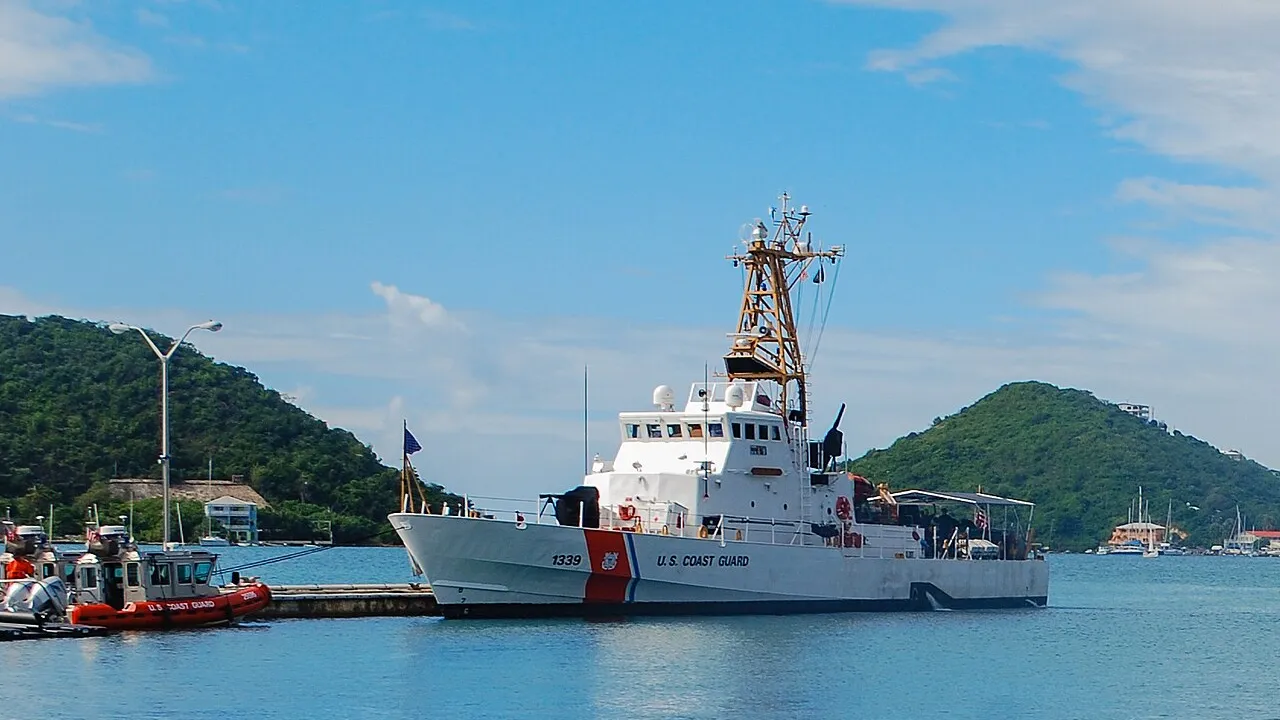
🏢 WorkplaceOpen Oceans, Stormy Coastlines, Cutters & Coastal Air Stations
⚡ Everyday Impact SparkLeaps into icy, towering storm waves from hovering helicopters and unsinkable boats to save sailors
🤯 Mind-Blowing Fact • Grade 1
Special Coast Guard motor lifeboats can flip completely upside down in huge waves and pop right back upright in seconds!
✨ Word Sparks (Grade 1 Glossary)
Tap 🔊 to hear
coast
land right beside the salty ocean shore
lifeboat
a tough boat built for ocean rescues
waterproof
made so water cannot soak inside
🪝
Who jumps right into big ocean waves to help a boat stuck in a storm?
1
Splash Into Big Waves!
Crash! White ocean waves toss a small fishing boat up and down. Overhead, a bright orange helicopter roars across the windy sky. Down splashes a brave swimmer wearing fins and a mask!
2
Warm Suits and Strong Boats
Thick suits keep ocean rescuers warm in cold sea water. Fast rescue boats also zoom out from shore to tow broken boats back.
3
Safe Back on Shore
One by one, sailors ride up a strong steel cable into the dry cabin. Soon everyone is safe and warm on land!
1. What keeps an ocean rescue swimmer warm in chilly sea water?
2. What amazing trick can a special Coast Guard motor lifeboat do?
🤯 Mind-Blowing Fact • Grade 2
Every single day across America, the U.S. Coast Guard saves an average of ten to twelve lives in danger on the water!
✨ Word Sparks (Grade 2 Glossary)
Tap 🔊 to hear
Mayday
urgent radio call asking for immediate rescue
dry suit
sealed suit keeping cold seawater off skin
lighthouse
tall coastal tower shining warning lights seaward
🪝
Why are Coast Guard helicopters and lifeboats painted bright orange-red instead of blue like the sea?
1
Easy to Spot in Stormy Seas
Crackles sound over a coastal radio: ', Mayday! Our engine stopped near the rocks!' Within minutes, an orange-and-white helicopter lifts off from the air station. That bright color stands out sharply against dark blue waves and gray storm fog so stranded boaters see help coming!
2
Rescue Swimmers Leap In
Hovering fifteen feet above churning foam, an aviation survival technician—better known as a rescue swimmer—jumps feet-first into the sea! Wearing fins, snorkel, and a thermal , the swimmer guides frightened boaters into a metal rescue basket.
3
Guarding Harbors Every Day
On sunny days, crews check , clear floating hazards from shipping lanes, and remind families to buckle life jackets before leaving the dock.
1. Why are Coast Guard aircraft painted bright orange-red and white?
2. What word do boaters call over marine radios during a life-threatening emergency?
🤯 Mind-Blowing Fact • Grade 3
Coast Guard 'surfmen' earn one of the rarest badges in maritime service only after mastering steering rescue boats through breaking waves up to twenty feet tall!
✨ Word Sparks (Grade 3 Glossary)
Tap 🔊 to hear
coxswain
the skilled crew member steering a boat
buoyant
able to float easily upward in water
keel
heavy bottom backbone keeping a boat balanced
🪝
How does a boat flip completely upside down in a thirty-foot wave and pop upright without sinking?
1
Masters of the Surf Zone
Few places on Earth are rougher than coastal sandbars where ocean swells rear up into roaring thirty-foot breakers! Specially trained —expert boat drivers—steer forty-seven-foot motor lifeboats straight through crashing surf while strapped securely to the helm.
2
Engineering an Unsinkable Boat
If a monster wave rolls a motor lifeboat completely upside down, nobody panics. Sealed watertight hatches keep ocean water out of the engines, while a heavy weighted on the bottom and air chambers on top flip the vessel upright in under ten seconds!
3
Free-Falling From Helicopters
Farther offshore, Jayhawk and Dolphin helicopters sprint over open water faster than 150 miles per hour. Aviation Survival Technicians train for months in giant wave pools before earning their wings, learning to free-fall fifteen feet into stormy seas, untangle rigging, and give first aid in floating rafts.
4
Protecting Coasts and Marine Life
From Virginia's busy Chesapeake Bay to icy Alaskan waters, crews also break river ice for cargo ships, clean up oil spills, and protect migrating whales.
1. What helps a self-righting lifeboat flip back upright after rolling over?
2. What is the official title of a Coast Guard helicopter rescue swimmer?
🤯 Mind-Blowing Fact • Grade 4
Cold ocean water pulls heat away from the human body about twenty-five times faster than air of the exact same temperature!
✨ Word Sparks (Grade 4 Glossary)
Tap 🔊 to hear
hypothermia
dangerous drop in core human body temperature
cutter
any large commissioned Coast Guard ocean vessel
buoy
anchored floating marker guiding boats through channels
🪝
Why did Congress merge brave beach lifesavers and lighthouse keepers to create America's oldest continuous seagoing service?
1
From Wooden Surfboats to Modern Cutters
Long before helicopters existed, shipwrecked sailors off stormy coasts like Virginia Beach and Cape Hatteras depended on the U.S. Life-Saving Service, whose fearless crews rowed wooden surfboats from beach stations with an unofficial motto: 'You have to go out!' In 1915, Congress merged those surfmen with the Revenue Service—founded in 1790—forming today's United States Coast Guard under the motto Semper Paratus, Latin for 'Always Ready.'
2
Listening on Channel 16
Inside twenty-four-hour Command Centers, watchstanders monitor international distress Channel 16 on VHF marine radios alongside satellite Emergency Position-Indicating Radio Beacons (EPIRBs). Using computerized drift software called SAROPS, specialists enter ocean currents, tide tables, and wind speeds to predict exactly where a disabled sailboat or floating life raft will drift over time.
3
Fighting Cold-Water Shock
On open water, icy temperature is often more dangerous than waves because cold water drains human body heat twenty-five times faster than cold air! Aviation Survival Technicians—graduates of one of the toughest rescue schools in the world—deploy insulated wraps, splint fractures inside tossing rafts, and clip survivors into stainless-steel hoist baskets beneath MH-60 Jayhawk helicopters.
4
Eleven Missions Serving Every Port
Beyond dramatic storm rescues, Coast Guard crews maintain tens of thousands of and channel beacons across American rivers, bays, and ports—including busy Hampton Roads—ensuring ferries, fishing boats, and cargo ships navigate safely home.
1. What does the official Coast Guard Latin motto 'Semper Paratus' mean?
2. How does computer drift software help rescue planners find a missing raft?
🤯 Mind-Blowing Fact • Grade 5
During cold-water rescues, lifting a severely chilled survivor horizontally in a basket prevents sudden blood-pressure drops caused by losing surrounding water pressure!
✨ Word Sparks (Grade 5 Glossary)
Tap 🔊 to hear
bulkhead
upright watertight wall dividing a ship's hull
leeway
sideways push of wind on floating vessels
capsize
when a boat overturns upside down in water
🪝
How do Monte Carlo probability models, naval architecture, and cold-water physiology unite during a hurricane rescue two hundred miles offshore?
1
Dual Humanitarian and Maritime Authority
Unique among the armed services of the United States, the Coast Guard operates within the Department of Homeland Security as simultaneously a humanitarian lifesaving force, a federal maritime regulator, and a military branch tracing its lineage to Alexander Hamilton's 1790 Revenue-Marine. Across 95,000 miles of U.S. coastline, Great Lakes, and inland river systems—plus millions of square miles of international search-and-rescue zones—crews stand continuous watch over global commerce and human life at sea.
2
Monte Carlo Search Drift Modeling
When an Automated Mutual-Assistance Vessel Rescue (AMVER) alert or 406-megahertz satellite EPIRB triggers at a Sector Command Center, search planners launch the Search and Rescue Optimal Planning System (SAROPS). Because wind '' pushes a high-profile sailboat cabin differently than a low-floating swimmer, SAROPS runs ten thousand Monte Carlo computer simulations blending NOAA ocean-current vectors and atmospheric forecasts to generate high-probability heat maps for incoming aircraft.
3
Naval Architecture of the 47-Foot Motor Lifeboat
Close to jagged headlands and shallow inlet bars, certified Surfmen command 47-foot aluminum Motor Lifeboats engineered to withstand eight-G wave impacts. Built with a low center of gravity, watertight , and a completely enclosed survivor compartment, the hull restores positive stability in less than ten seconds after a 360-degree —while twin turbocharged diesel engines automatically maintain lubrication through roll-over valves.
4
Aviation Survival Technicians and Immersion Medicine
Two hundred nautical miles out to sea, long-range HC-130J Hercules turboprops drop flare patterns and inflatable rafts while guiding MH-60T Jayhawk helicopters to the scene. Deploying from a fifteen-foot free-fall into confused hurricane swells, the Aviation Survival Technician manages 'circum-rescue collapse': hoisting a cold-immersed survivor vertically can cause blood pressure to plummet once water pressure disappears, so rescuers lift hypothermic patients horizontally in specialized litters to protect cardiac stability.
5
Environmental Stewardship, Icebreaking, and Port Security
Between offshore emergencies, Coast Guard teams maintain more than 45,000 aids to navigation, crew polar icebreakers supporting scientific research in Antarctica and the Arctic, contain hazardous maritime spills, and inspect international merchant vessels—ensuring the world's oceans remain safe, clean, and navigable.