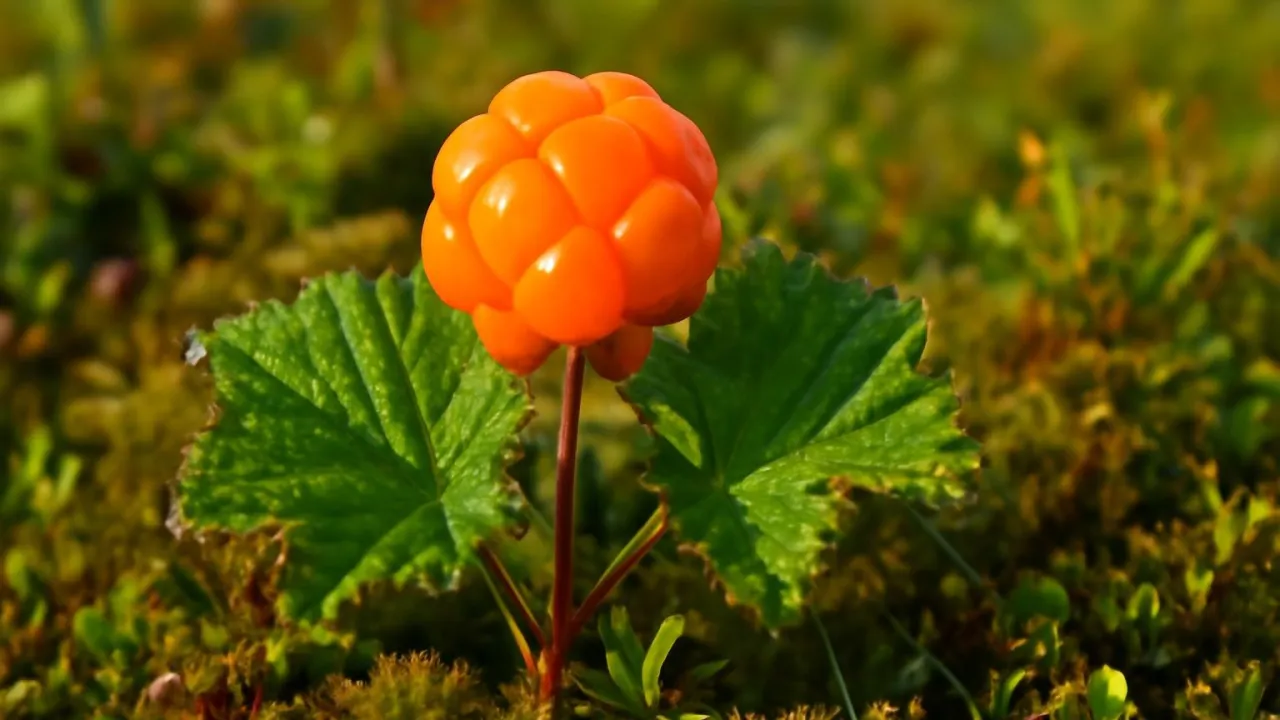
1. What color are cloudberries when they are ripe?
2. Where do cloudberries like to grow?
🤯 Mind-Blowing Fact • Grade 2
Cloudberries are one of the few berries that change from red to golden as they ripen!
✨ Word Sparks (Grade 2 Glossary)
Tap 🔊 to hear
wetlands
Land that is always wet or soggy
tundra
A cold, treeless land with frozen soil
ripen
When fruit becomes ready to eat
🪝
Have you ever seen a berry that changes color as it ripens?
1
What Are Cloudberries?
Cloudberries are small fruits that grow in cold northern areas and . They start red and turn golden when ripe. People enjoy their sweet and tart flavor in jams and desserts.
2
Where Do They Live?
Cloudberries grow in wet, cold places like boreal forests and regions. They need moist soil and plenty of sunlight to thrive. These berries are found in places like Scandinavia, Canada, and Alaska.
3
Special Features
Cloudberries have soft, juicy fruits that are about half an inch wide. Their leaves help protect the berries from cold winds. The plants grow low to the ground to stay safe from harsh weather.
1. What color do cloudberries turn when they ripen?
2. Which places do cloudberries grow in?
🤯 Mind-Blowing Fact • Grade 3
Cloudberries are one of the few fruits that change color to signal ripeness to animals!
✨ Word Sparks (Grade 3 Glossary)
Tap 🔊 to hear
camouflage
Colors or shapes that help hide something
pollination
How plants get pollen to make fruit
ecosystem
A community of plants and animals living together
🪝
Did you know cloudberries use their color to protect themselves from predators?
1
Cloudberry Basics
Cloudberries are small, soft fruits that grow in cold northern regions. Their bright golden color helps attract animals that spread their seeds. These berries grow on low plants in wet, mossy soil.
2
How They Survive
Cloudberry plants grow close to the ground to avoid cold winds and frost damage. Their leaves help them among moss and grasses. This adaptation protects the berries from predators and harsh weather.
3
Pollination and Growth
Cloudberries rely on insects like bees for during short summer seasons. After pollination, the berries start red and slowly ripen to golden yellow. This color change signals animals that the fruit is ready to eat.
4
Ecosystem Role
Cloudberries provide nutrients for many animals, including birds and bears. They are part of the food web in tundra and boreal forest . Humans also harvest cloudberries for jams and traditional foods.
2. What helps cloudberries make fruit during summer?
🤯 Mind-Blowing Fact • Grade 4
Cloudberries’ color change from red to golden helps animals find ripe fruit and spread seeds efficiently.
✨ Word Sparks (Grade 4 Glossary)
Tap 🔊 to hear
symbiotic
Two living things helping each other survive
peat bog
Wet, spongy land made of dead plants
dispersal
Spreading seeds far from the parent plant
🪝
How does the cloudberry’s color change help it survive in cold northern ecosystems?
1
Cloudberry’s Unique Color Shift
Cloudberries begin as red fruits and gradually turn golden as they ripen, signaling readiness to animals. This color change attracts birds and mammals that help spread seeds, ensuring the plant’s survival. The bright golden hue also makes cloudberries stand out against mossy tundra backgrounds. This adaptation increases the chances of seed in harsh northern climates.
2
Ecosystem Importance
Cloudberries play a vital role in boreal forests and tundra food webs by providing nutrition to bears, birds, and small mammals. Their presence supports predator-prey relationships and helps maintain ecosystem balance. Humans harvest cloudberries sustainably for jams and traditional dishes, showing a relationship with nature. Overharvesting could harm local ecosystems, so careful management is important.
3
Adaptations to Cold
The cloudberry plant grows low to the ground to avoid damage from cold winds and frost, which are common in its habitat. Its leaves have hairs that reduce water loss and protect from freezing temperatures. These adaptations help cloudberries survive in wet, nutrient-poor soils of the tundra and boreal forests. The plant’s shallow roots spread widely to absorb scarce nutrients efficiently.
4
Geographic Range
Cloudberries are native to northern parts of Europe, Asia, and North America, thriving in Arctic and subarctic regions. They prefer wet , tundra, and boreal forests where cool temperatures prevail. Seasonal changes in daylight and temperature influence their growth and fruiting cycles. Climate change may impact cloudberry habitats by altering temperature and moisture levels.
1. Why is the golden color important for cloudberries?
2. What is one way cloudberries adapt to cold climates?
🤯 Mind-Blowing Fact • Grade 5
Cloudberries are dioecious plants requiring both male and female flowers for fruit, a rare trait among berries.
✨ Word Sparks (Grade 5 Glossary)
Tap 🔊 to hear
dioecious
Plants with separate male or female flowers
peat
Partly decayed plants making wet soil
keystone species
A species that supports many others
🪝
What makes the cloudberry’s physiology and ecology uniquely suited for Arctic survival?
1
Taxonomy and Scientific Context
Cloudberries, scientifically named Rubus chamaemorus, belong to the Rosaceae family, which includes roses and many fruit-bearing plants. This species is a perennial herbaceous plant adapted to cold climates and nutrient-poor soils. Unlike many Rubus species, cloudberries produce aggregate fruits that change color from red to golden yellow when ripe. Their reproductive biology includes plants, meaning individual plants are either male or female, requiring cross-pollination for fruit production.
2
Physiological Adaptations
Cloudberries have shallow, extensive root systems that efficiently absorb nutrients from wet, acidic soils common in Arctic and subarctic regions. Their leaves are covered with fine hairs that reduce transpiration and protect against freezing temperatures. The plants grow low to the ground, minimizing exposure to cold winds and frost damage, while their flowers bloom during short Arctic summers to maximize pollination opportunities. The color change in fruit signals ripeness to animals, facilitating seed dispersal.
3
Ecological Role and Conservation
Cloudberries are a in boreal and tundra ecosystems, providing essential nutrition to a variety of animals such as bears, birds, and small mammals. Their seed dispersal by animals supports genetic diversity and ecosystem resilience. Traditional harvesting by Indigenous peoples is culturally significant and generally sustainable, but increased commercial harvesting and climate change threaten some populations. Conservation efforts focus on habitat protection and monitoring climate impacts.
4
Botanical History and Human Use
Historically, cloudberries have been valued for their unique flavor and high vitamin C content, especially in northern cultures. They have been used to make jams, juices, and preserves, contributing to local economies and traditions. Scientific studies have explored their antioxidant properties and potential health benefits. The plant’s slow growth rate and specialized habitat requirements make cultivation challenging outside native regions.
5
Quantitative Comparisons
Cloudberries typically measure about 1.3 centimeters in diameter and weigh approximately 0.5 grams each. They grow in regions where summer temperatures rarely exceed 15 degrees Celsius and where soil moisture remains high year-round. The berries ripen over several weeks, changing from red to golden, which signals animals to eat them and disperse seeds. Compared to other Rubus species, cloudberries have a shorter growing season but are uniquely adapted to Arctic environments.