Celeriac
The Knobby Root with a Secret Crunch
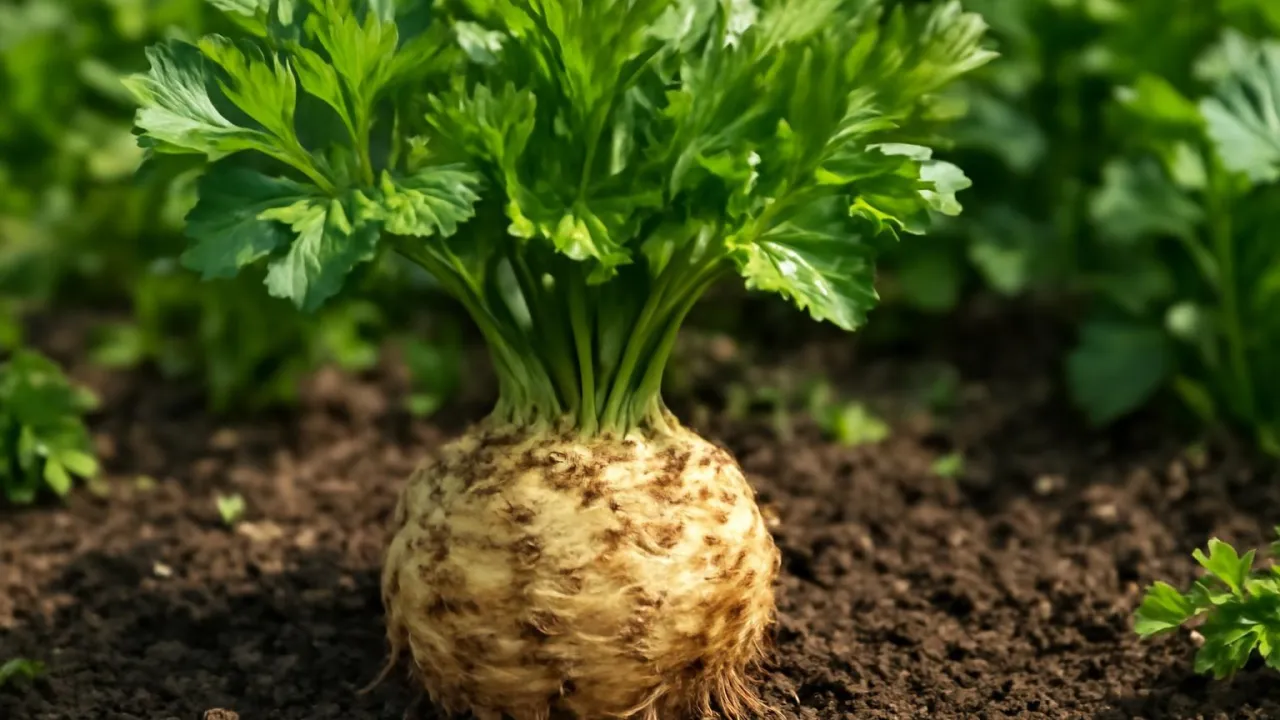
Celeriac can grow as big as a softball!
Have you ever seen a vegetable with a bumpy beard?
1 Funny-Looking Root
Celeriac is round and bumpy. Its skin is brown and rough. Green leaves grow on top. The hides under dirt.
2 Crunchy Surprise
Inside, celeriac is white and . People eat it raw or cooked. It tastes a little like celery. It can be mashed or sliced.
3 How It Grows
Celeriac needs lots of sun. It likes wet, soft . The grows bigger all summer. People pick it in fall.
1. What color is celeriac inside?
2. When do people pick celeriac?
Some celeriac roots can be as heavy as a soccer ball!
Did you know some roots can taste like celery and apples?
1 A Root That Hides a Crunch
Imagine pulling a bumpy, brown ball from the ground and finding a crisp, white inside. Thatâs celeriac! Its outside looks rough, but its inside is and fresh. Some people say it tastes like celery mixed with apples.
2 Where and How It Grows
Celeriac grows best in sunny gardens with soft, wet soil. The plant grows green leaves above ground, but the root is the part we eat. It takes many months to get big enough to pick, and farmers celeriac in the cool fall weather.
3 Why People Like It
Celeriac can stay tasty for months if it is kept cool and dry. People eat it raw in salads or cook it in soups and stews. Its crunch stays even after boiling, making it special for winter meals.
1. What part of celeriac do people eat?
2. How long can celeriac stay fresh?
Celeriac can stay crunchy for months after itâs picked!
What if you dug up a vegetable that looked like a bumpy alien ball?
1 A Hidden Crunch Below the Dirt
Imagine pulling a strange, knobby ball from the soil and finding a crisp, white inside. Thatâs celeriac! Its rough, brown skin hides a crunchy root that people love to eat. The leafy green tops wave above ground, but the treasure is buried below. Celeriac tastes like a mix of celery and parsley, with a hint of nuttiness.
2 How Celeriac Grows Strong
Celeriac needs full sunlight and moist, rich soil to grow well. It starts as a tiny seed and slowly grows a thick, round root over many months. Farmers plant it in spring and it in the fall, after the root has stored up lots of nutrients. The long growing season helps celeriac become big and full of flavor.
3 Crunchy Power in the Kitchen
People eat celeriac raw for a crisp snack or cook it for a softer taste. Its crunchy texture makes it popular in salads, while its mild flavor is great in soups and stews. Unlike many vegetables, celeriac stays firm even after boiling. Its unique taste comes from special plant chemicals called that help keep us healthy.
4 A Root with a Story
Celeriac has been grown in Europe for hundreds of years and is especially popular in France and Germany. It can be stored for months in a cool place, making it valuable in winter when fresh vegetables are rare. Even though it looks strange, celeriac is packed with vitamins and . It is related to both celery and parsley, making it part of a tasty plant family.
1. Why does celeriac need a long growing season?
2. What makes celeriac taste unique?
Celeriac can stay fresh for up to six months after harvest if stored properly!
Could a lumpy root be the secret star of winter meals?
1 Bumpy but Brilliant
Celeriac, also called celery root, is a knobby, round root vegetable grown for its edible underground stem. Its rough, brown skin hides a crisp, white inside that tastes like a mix of celery and parsley. The plantâs leafy tops look similar to regular celery, but it is the root that people eat. Celeriac is packed with fiber, vitamin C, and important minerals that help keep our bodies strong.
2 How and Where It Grows
Celeriac thrives in cool climates with full sun and moist, fertile soil. It is planted in early spring and grows slowly through the summer, developing a large, dense root by autumn. Farmers in Europe, especially France and Germany, have grown celeriac for centuries because it stores well and provides food during winter. In the United States, it is less common but becoming more popular in farmersâ markets and gardens.
3 Survival Tricks Underground
The celeriac root acts as a , collecting and water to help the plant survive dry times. Its thick, bumpy skin protects it from insects and disease. Once harvested, celeriac can be kept in cool, dry storage for months without spoiling, making it a valuable food during colder seasons. Its crunchy texture and mild flavor make it useful in many recipes, from salads to mashed dishes.
4 Ecosystem and Human Impact
Celeriac is part of the family, which includes carrots, parsley, and regular celery. It plays a role in crop rotation, helping to keep soil healthy by breaking disease cycles. Because celeriac needs rich soil and plenty of water, farmers must care for the land and use resources wisely. As more people discover celeriac, it is being grown in new regions and helping to add variety to healthy diets.
1. Why do farmers like growing celeriac in winter?
2. What family does celeriac belong to?
A single celeriac root can weigh more than a pineapple and last all winter in storage!
What if the ugliest vegetable in the market was actually a nutritional powerhouse?
1 A Root with a Secret Identity
Celeriac, scientifically known as Apium graveolens var. rapaceum, is a fascinating member of the Apiaceae family, which includes carrots, parsley, and traditional celery. Unlike the familiar green celery stalks, celeriac is grown for its swollen, knobby root, which is technically a modified stem called a . This root develops just below the soil surface and is covered in rough, brown skin that protects its crisp, white flesh. Though it may look peculiar, celeriac is prized for its unique flavor and impressive nutritional content.
2 How Celeriac Grows and Survives
Celeriac thrives in temperate regions with cool summers, requiring at least six hours of full sun daily and consistently moist, nutrient-rich soil. The plant begins as a tiny seed in early spring and spends five to six months developing its large, round root. The thick skin and dense flesh help the root retain water and resist pests, while the leafy tops perform to fuel growth. Farmers often rotate celeriac with other crops to maintain healthy soil and prevent disease buildup.
3 From Field to Table: Culinary Versatility
Celeriac offers remarkable versatility in the kitchen, as it can be eaten raw, roasted, boiled, or mashed. Its flavor is described as a blend of celery, parsley, and mild nuttiness, making it a favorite in European cuisine. In fact, a single celeriac root can weigh up to 2 pounds (almost 1 kilogram), providing enough for several recipes. Unlike potatoes, celeriac remains firm when cooked, and its high fiber content supports healthy digestion. Chefs value celeriac for its ability to absorb flavors and add texture to both hot and cold dishes.
4 Ecological Importance and Conservation
Celeriac plays a significant role in sustainable agriculture by improving soil structure and supporting crop diversity. Its deep roots help aerate the soil, while crop rotation with celeriac reduces the spread of soil-borne diseases common in farming. As demand for diverse, nutritious vegetables grows, celeriac is being cultivated in more regions, including North America and Asia. However, celeriac is sensitive to drought and pests, so responsible farming practices and water conservation are essential for its continued success.
5 Fun Science and Surprising Facts
Botanically, celeriac is considered a root vegetable, but it is actually the plantâs enlarged stem base, not a true root. It contains significant amounts of vitamin K, vitamin C, and potassium, which support bone health and immunity. When stored at 32â40°F (0â4°C) in a humid environment, celeriac can last up to six months without losing its crunch. Historically, celeriac was used in ancient Mediterranean diets and was even mentioned in Homerâs Odyssey as 'selinon.' Today, it is celebrated by chefs for its ability to transform simple dishes with its earthy, aromatic flavor.
1. Why is celeriac important for sustainable farming?
2. What is the main difference between celeriac and regular celery?