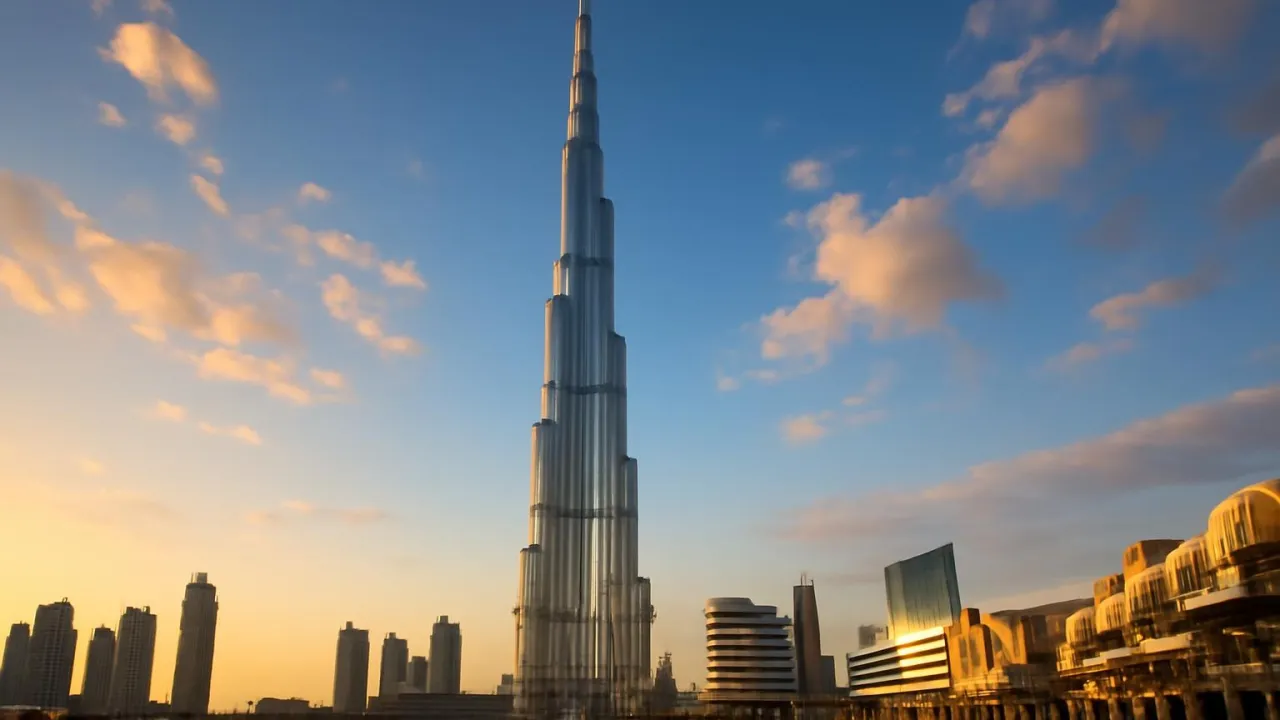
The Burj Khalifa is so tall, you can watch the sunset twice—once from the ground and again from the top!
✨ Word Sparks (Grade 2 Glossary)
Tap 🔊 to hear
steel
A super strong metal
desert
A dry, sandy place
skyscraper
A very tall city building
🪝
Have you ever seen a building taller than a mountain?
1
Reaching for the Sky
The Burj Khalifa stretches high above Dubai, shining brightly in the sun. Its top seems to touch the clouds, and its shiny sides glow in the sun. The building is so tall that you can see it from many miles away, even before you reach the city.
2
Built with Strength
Builders used strong and glass to make this amazing tower, and it stands tall even when the wind blows hard. The Burj Khalifa does not shake because it was designed to be strong and steady, even during storms. It took thousands of workers and many years to finish building this record-breaking .
3
Amazing Views
Visitors ride super-fast elevators to the top floors, and their ears can pop because of how high they go. From up high, they see the whole city, tiny cars, and even the wide, sandy all around. At night, the tower glows with colorful lights, and people love to watch the sparkling shows from far away.
1. What keeps the Burj Khalifa strong in the wind?
2. What can you see from the top?
🤯 Mind-Blowing Fact • Grade 3
The Burj Khalifa’s elevators travel up to 22 miles per hour!
✨ Word Sparks (Grade 3 Glossary)
Tap 🔊 to hear
engineer
A person who designs and builds things
reinforced
Made extra strong with more material
landmark
A famous place people recognize
🪝
Imagine standing on a floor so high, clouds drift below your feet!
1
Touching the Clouds
The Burj Khalifa towers above Dubai, shining in the desert sun. Its 163 floors reach so high, it looks like it pokes the sky. Visitors love to ride the elevator that zooms up in less than a minute. From the top, you can see the city, the sand, and even the sea.
2
How Was It Built?
used a special Y-shaped design to keep the building steady. The strong steel and concrete help it resist strong winds. Its shape lets the wind flow around it, so it does not sway too much. The Burj Khalifa is a marvel of modern engineering.
3
A Shining Wonder
The outside is covered in shiny glass panels that reflect the sunlight. At night, colorful lights make the tower glow for everyone to see. The building uses special elevators that travel at amazing speeds. People from all over the world come to visit this famous .
4
Why Is It Important?
The Burj Khalifa shows what people can build with creativity and teamwork. It is a symbol of Dubai’s growth and dreams. The tower brings visitors and new ideas to the city every year. Its record-breaking height inspires architects and everywhere.
1. What shape helps the Burj Khalifa stand strong?
2. Why do people visit the Burj Khalifa?
🤯 Mind-Blowing Fact • Grade 4
The Burj Khalifa’s spire alone is taller than most skyscrapers in the world!
✨ Word Sparks (Grade 4 Glossary)
Tap 🔊 to hear
facade
The outside face of a building
dampers
Devices that reduce shaking or vibration
panoramic
A wide, all-around view
🪝
What secrets help the world’s tallest building stay safe in desert winds?
1
A Tower Like No Other
Soaring above Dubai, the Burj Khalifa is the tallest structure ever built by humans. Its 828-meter height means it can be seen from miles away, even across the desert sands. The building’s shimmering glass reflects sunlight, making it sparkle brightly both day and night. Visitors from around the world marvel at its breathtaking views and futuristic design.
2
Engineering Against the Elements
Engineers designed the Burj Khalifa with a unique Y-shaped floor plan, which distributes weight evenly and resists twisting from strong desert winds. The structure uses reinforced concrete and steel, providing both flexibility and strength against powerful gusts. Special inside the building help absorb vibrations caused by wind or earthquakes. This careful engineering keeps the skyscraper stable and safe for everyone inside.
3
A City in the Sky
With 163 floors, the Burj Khalifa is almost like a vertical city, containing offices, homes, and even a hotel. High-speed elevators whisk people to observation decks in under a minute, offering views of Dubai, the Persian Gulf, and the vast desert. At night, the tower’s LED lights create dazzling shows, turning the building into a glowing beacon.
4
A Symbol of Innovation
The Burj Khalifa stands as a symbol of Dubai’s ambition and creativity, attracting millions of visitors every year. Its construction pushed the limits of architecture and inspired new skyscraper designs worldwide. The building also encourages sustainable practices, using recycled water and energy-saving glass. As the tallest landmark on Earth, it reminds us of what people can achieve through teamwork and innovation.
1. How does the Y-shaped design help the Burj Khalifa?
2. What makes the Burj Khalifa a symbol around the world?
🤯 Mind-Blowing Fact • Grade 5
The Burj Khalifa’s tip can sway up to 5 feet during strong winds, but you barely feel it inside!
✨ Word Sparks (Grade 5 Glossary)
Tap 🔊 to hear
torsional
A twisting force acting on a structure
setback
Step-like shape that reduces wind force
low-emissivity
Glass that blocks heat but lets in light
🪝
Could you engineer a building so tall that it pierces the clouds and stands strong against desert storms?
1
A Record-Breaking Giant
Rising 2,717 feet (828 meters) above the sands of Dubai, the Burj Khalifa is the tallest man-made structure ever constructed. Completed in 2010, this architectural marvel dominates the city skyline and can be seen from nearly sixty miles away on a clear day. Its shimmering glass and aluminum facade reflects the ever-changing desert light, making it a beacon both day and night. The building’s 163 floors contain luxury residences, offices, restaurants, and the world’s highest observation deck. Every year, millions of visitors travel from around the globe to experience its breathtaking height.
2
Engineering for the Extreme
The Burj Khalifa’s stability depends on its innovative Y-shaped floor plan, which distributes the building’s immense weight and resists (twisting) forces from high winds. Engineers used over 430,000 cubic yards of reinforced concrete and 39,000 tons of steel rebar to construct the core and supporting wings. The tower’s —steps in the building’s profile—help reduce wind vortex effects, minimizing dangerous oscillations. Massive tuned mass dampers and deep foundation piles anchor the structure, allowing it to withstand both desert storms and seismic vibrations. These advanced engineering solutions ensure the skyscraper’s safety and longevity.
3
Vertical City Life
Inside, the Burj Khalifa functions like a vertical city, offering everything from luxury apartments and corporate suites to the Armani Hotel and fine dining restaurants. High-speed double-deck elevators travel at up to 22 miles per hour, transporting people to the 124th and 148th floor observation decks in under a minute. The building’s smart systems recycle water for landscaping and use glass to reduce heat from the desert sun. At night, thousands of LED lights illuminate the tower, creating spectacular light shows visible across Dubai.
4
Cultural and Global Impact
The Burj Khalifa has become a global symbol of human ambition, technological achievement, and Dubai’s rapid transformation into a world city. Its construction required collaboration among architects, engineers, and workers from over 100 countries, demonstrating the power of international teamwork. The building’s record-breaking height has inspired a new generation of skyscrapers and set new standards for urban design and sustainability. Events like the annual New Year’s Eve fireworks display draw millions of viewers worldwide, cementing the Burj Khalifa’s place in popular culture.
5
Pushing the Limits of Possibility
From its deep foundations to its gleaming spire, the Burj Khalifa represents the cutting edge of architectural science and engineering. Its design draws inspiration from the Hymenocallis desert flower, combining beauty with structural efficiency. The tower’s innovative technologies—such as high-performance concrete, wind tunnel testing, and advanced dampers—have influenced skyscraper construction globally. As cities continue to grow upward, the Burj Khalifa stands as a testament to what can be achieved when vision, science, and creativity unite. Its legacy encourages future engineers to dream even higher.