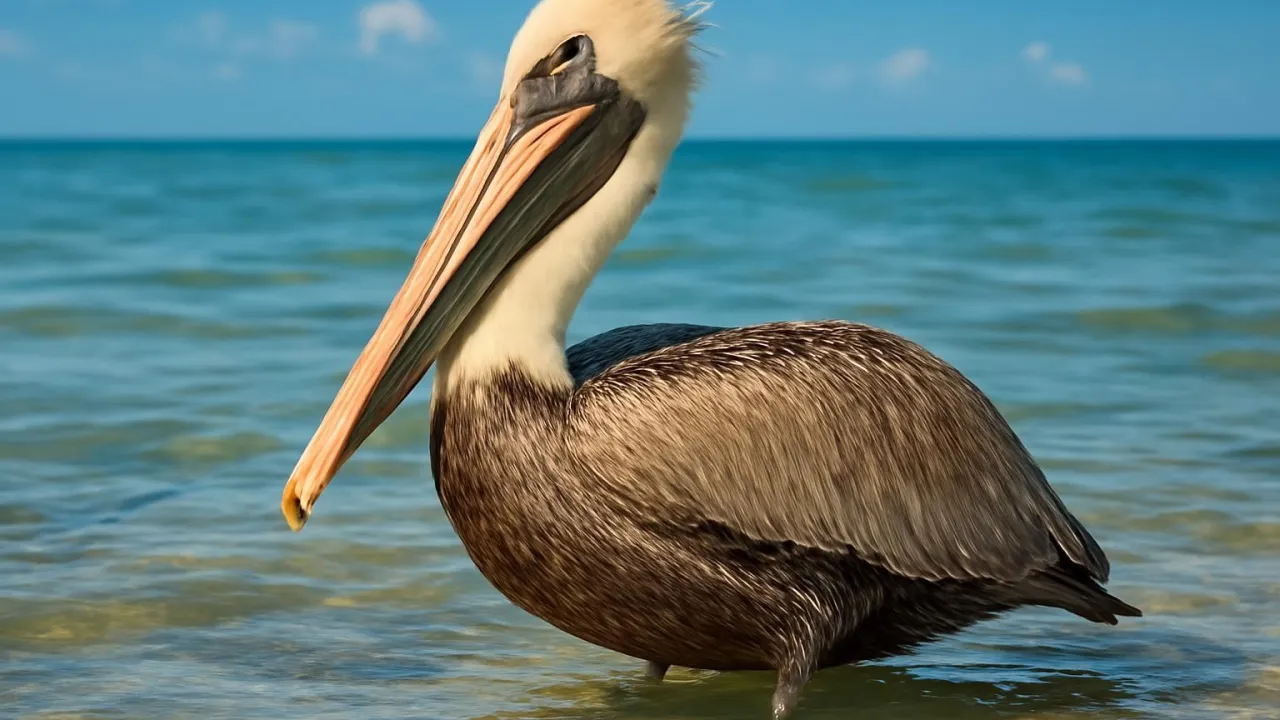
Brown pelicans can dive at speeds up to 40 miles per hour to catch fish!
✨ Word Sparks (Grade 2 Glossary)
Tap 🔊 to hear
webbed feet
Feet with skin between toes for swimming
nest
A home birds build for their babies
pouch
A special skin bag under the pelican’s beak
🪝
Have you ever seen a bird dive from the sky to catch fish?
1
What Brown Pelicans Look Like
Brown pelicans are large birds with long beaks and big . Their feathers are brown and gray. They have to swim well. Their wings are wide for flying long distances.
2
Where They Live and Grow
These birds live along warm coasts near oceans and bays. They build in trees or on the ground. Baby pelicans grow feathers slowly before they can fly. They eat fish from the water to get energy.
3
Their Special Fishing Skill
Brown pelicans dive from the air to catch fish in their . They spot fish from high above the water. When they dive, they fold their wings back tightly. This helps them enter the water smoothly and catch fish quickly.
Brown pelicans can hold up to three gallons of water in their pouch while fishing!
✨ Word Sparks (Grade 3 Glossary)
Tap 🔊 to hear
camouflage
Colors that help animals hide from enemies
plunge-diving
Diving headfirst into water to catch food
ecosystem
All living things and places in one area
🪝
What makes the brown pelican’s fishing dive so special and effective?
1
Physical Features Help Survival
The brown pelican has a large beak with an expandable pouch for catching fish. Its webbed feet help it swim powerfully in water. The bird’s feathers provide among coastal rocks. Its wingspan can reach up to seven feet, aiding long flights.
2
Habitat and Life Cycle
Brown pelicans live in coastal marine environments from North to South America. They build nests in mangroves or on sandy islands. After hatching, chicks rely on parents for food and protection. As they grow, chicks develop waterproof feathers for diving.
3
Diving Adaptations
Brown pelicans use to catch fish near the ocean surface. Their eyes have special membranes to protect against water impact. They fold wings back tightly to reduce splash and increase speed. This adaptation helps them catch fast-swimming fish efficiently.
4
Role in Ecosystem
Brown pelicans are important predators that help control fish populations. They also serve as indicators of healthy coastal . Human activities like pollution can harm their habitats. Conservation efforts help maintain their populations and coastal balance.
1. Why do brown pelicans fold their wings when diving?
2. What role do brown pelicans play in their ecosystem?
🤯 Mind-Blowing Fact • Grade 4
Brown pelicans can dive from heights over 60 feet, reaching speeds near 40 miles per hour!
✨ Word Sparks (Grade 4 Glossary)
Tap 🔊 to hear
predator
An animal that hunts other animals for food
estuaries
Where rivers meet the sea with mixed water
pollution
Harmful waste that hurts nature and animals
🪝
How does the brown pelican’s amazing dive affect its coastal ecosystem?
1
Physical and Behavioral Adaptations
The brown pelican has a large, flexible pouch under its beak that expands to hold fish and water. Its long wings allow it to soar above the ocean for hours searching for prey. When it spots fish, it dives headfirst, folding its wings back to reduce water resistance and increase speed. This specialized behavior evolved to improve hunting success in coastal habitats.
2
Ecosystem Role and Food Web
As a top in coastal food webs, brown pelicans help regulate fish populations, maintaining balance in marine ecosystems. They rely on healthy fish stocks and clean water to survive. Their presence indicates a thriving ecosystem, but and overfishing can disrupt this balance. Humans impact pelicans both positively through conservation and negatively through habitat disturbance.
3
Geographic Range and Habitat
Brown pelicans inhabit warm coastal regions from the southern United States to South America, including the Gulf of Mexico and Caribbean Sea. They prefer , bays, and mangrove islands for nesting and feeding. Seasonal migrations occur to find food and suitable breeding sites. Habitat loss from coastal development threatens their nesting areas.
4
Conservation and Human Impact
Conservation efforts include protecting nesting sites and reducing in coastal waters. Brown pelican populations declined in the past due to pesticide use, but they have rebounded after bans on harmful chemicals. Educating people about pelicans’ role in ecosystems helps promote coexistence. Continued habitat preservation is vital for their future survival.
1. Why is the brown pelican important in coastal food webs?
2. What human action helped brown pelicans recover from decline?
🤯 Mind-Blowing Fact • Grade 5
Brown pelicans can hold three gallons of water in their pouch while catching fish underwater!
✨ Word Sparks (Grade 5 Glossary)
Tap 🔊 to hear
nictitating membrane
A clear eyelid that protects eyes underwater
DDT
A harmful pesticide once used on farms
plunge-diving
Diving headfirst into water to catch prey
🪝
How do the brown pelican’s unique anatomy and behavior support its survival and ecological role?
1
Taxonomy and Scientific Classification
The brown pelican, scientifically named Pelecanus occidentalis, belongs to the family Pelecanidae. It is one of eight pelican species worldwide and is the only pelican found along the Atlantic and Pacific coasts of the Americas. Its evolutionary adaptations distinguish it from other seabirds, particularly its hunting technique.
2
Physiological Mechanics of Diving
Brown pelicans dive from heights up to 60 feet, folding their wings tightly to minimize drag and impact with water. Their eyes have a that protects them underwater while maintaining visibility. The expandable throat pouch can hold up to three gallons of water and fish, allowing efficient catch and drainage before swallowing.
3
Conservation History and Human Influence
In the mid-20th century, brown pelican populations declined sharply due to pesticide contamination causing eggshell thinning. Following bans on DDT and habitat protection, populations have rebounded significantly. Conservation programs monitor nesting sites and educate coastal communities to reduce human disturbances and pollution.
4
Ecological Role and Quantitative Comparisons
As a top coastal predator, the brown pelican regulates fish populations, influencing ecosystem health. It can dive at speeds near 40 miles per hour and has a wingspan averaging 7.5 feet. Compared to other seabirds, its is unique, allowing it to exploit near-surface fish unavailable to others. Its weight ranges between 6 and 12 pounds.
5
Habitat Range and Migration Patterns
Brown pelicans inhabit subtropical and tropical coastal regions from the southern United States through Central and South America. Seasonal migrations help them find optimal breeding and feeding grounds, often traveling hundreds of miles. Coastal development and climate change pose ongoing threats to their habitats and migratory routes.