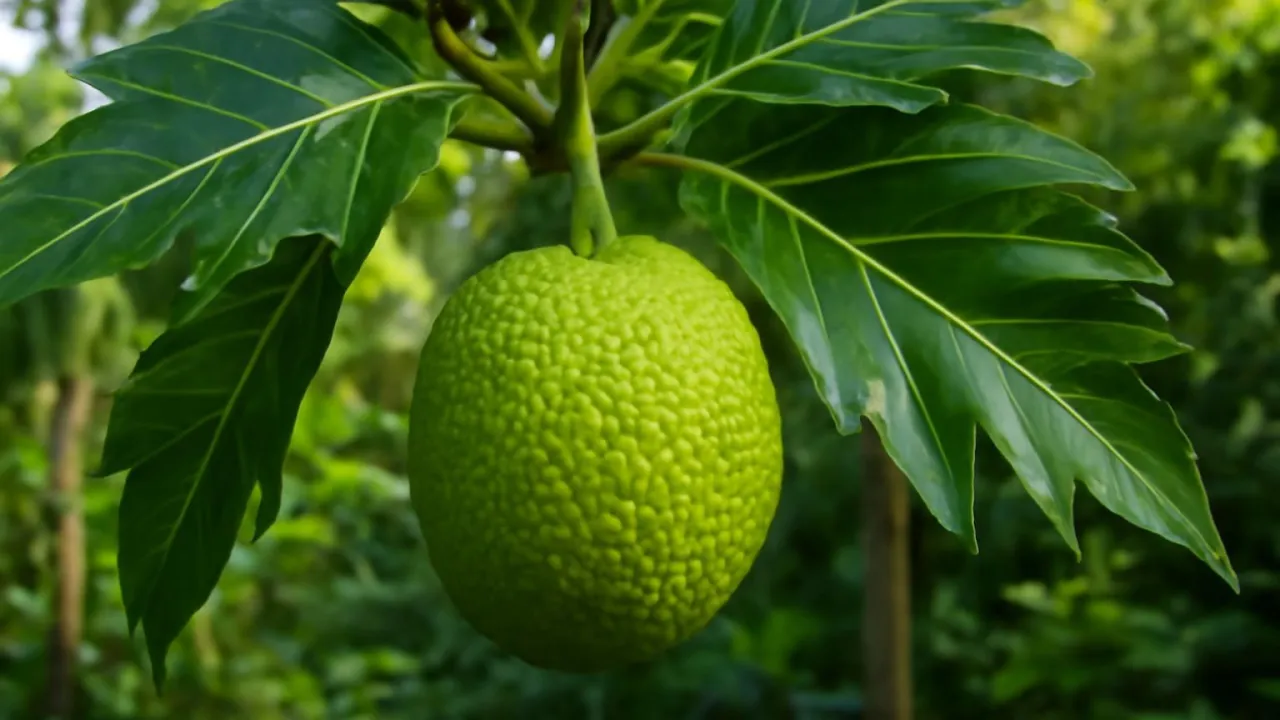
Breadfruit trees can produce hundreds of fruits every year for people to eat!
✨ Word Sparks (Grade 2 Glossary)
Tap 🔊 to hear
tropical
Warm places near the equator
starchy
Food with lots of energy like bread
protects
Keeps something safe from harm
🪝
Have you ever seen a fruit that looks like bread dough?
1
Breadfruit Tree and Fruit
Breadfruit grows on tall trees in warm places. The fruit is large and green. It has a bumpy skin that it well from animals and weather.
2
Where Breadfruit Lives
This tree grows best in islands and forests. It needs lots of sun and water to grow healthy and strong. Birds and insects help spread its seeds far away.
3
How People Use Breadfruit
People cook breadfruit like potatoes or bread. It tastes soft and when cooked and is very filling. Many families eat it as a main food every day.
Breadfruit trees can live and produce fruit for over 50 years in tropical climates.
✨ Word Sparks (Grade 3 Glossary)
Tap 🔊 to hear
pollination
When pollen helps flowers make fruit
nutrients
Good stuff in food that helps us grow
adaptation
A change that helps plants survive better
🪝
Did you know breadfruit is a tropical fruit that feeds many people?
1
The Breadfruit Tree
Breadfruit trees grow tall in tropical climates near the equator. Their large leaves help catch sunlight for photosynthesis. The tree produces many fruits that hang from strong branches. This helps the fruit grow safely.
2
Fruit Features and Growth
Breadfruit has a thick, bumpy skin that protects it from predators and weather. Inside, the fruit is starchy and soft when cooked, providing important . The fruit grows from flowers that rely on by insects and bats. This process helps the tree reproduce.
3
Ecosystem and Survival
Breadfruit trees provide food and shelter for many animals, including birds and insects. Their large fruits are a food source for predators and humans alike. The tree’s ability to grow in poor soil helps it survive in many environments. This is an important for tropical ecosystems.
4
Human Use and Importance
People harvest breadfruit to cook as a starchy staple similar to potatoes or bread. It is a vital food in many island cultures and helps prevent hunger. The fruit can be cooked in many ways, including roasting and boiling. This versatility makes it valuable for food security.
Breadfruit trees can produce up to 200 fruits per year, feeding entire communities.
✨ Word Sparks (Grade 4 Glossary)
Tap 🔊 to hear
photosynthesis
How plants use sunlight to make food
pollination
Transfer of pollen to make seeds grow
sustainable
Using resources without harming the earth
🪝
How does breadfruit help people and animals in tropical ecosystems?
1
Breadfruit Tree’s Role in Nature
Breadfruit trees grow in tropical regions where they provide shelter and food for many animals, including birds and insects that help with . Their large leaves capture sunlight effectively, supporting that fuels growth and fruit production. The thick, bumpy fruit skin protects the seeds inside from predators and harsh weather. This protective feature ensures the seeds can grow into new trees, continuing the species.
2
Growth and Environmental Needs
These trees thrive in warm, humid climates with plenty of rainfall and sunlight, which are essential for their survival and fruit production. Breadfruit trees can tolerate poor soils, making them valuable in areas where other crops struggle to grow. Their deep root systems help stabilize soil and prevent erosion, benefiting the entire ecosystem. Because of their resilience, they are often planted to support agriculture in tropical regions.
3
Human Uses and Cultural Importance
Breadfruit is a staple food in many island cultures, where it is harvested and cooked in various ways, such as roasting, boiling, or frying. Its starchy flesh provides essential carbohydrates, helping to reduce food insecurity in remote areas. The tree’s ability to produce large quantities of fruit annually supports local economies and traditional diets. Additionally, breadfruit wood is sometimes used for building and crafting, showing its multifaceted value.
4
Global Distribution and Impact
Originally native to Southeast Asia and the Pacific Islands, breadfruit has been introduced to tropical regions worldwide, including the Caribbean and parts of Africa. Its spread has helped diversify food sources and improve nutrition in many developing countries. However, climate change poses challenges to its growth by altering rainfall patterns and increasing temperatures. Conservation efforts focus on preserving diverse breadfruit varieties to maintain this vital resource.
1. Why is breadfruit important to tropical ecosystems?
2. What helps breadfruit trees survive in poor soils?
🤯 Mind-Blowing Fact • Grade 5
Breadfruit can produce up to 200 large fruits yearly, each weighing nearly 10 pounds.
✨ Word Sparks (Grade 5 Glossary)
Tap 🔊 to hear
syncarp
Fruit made from many flowers joined together
carbohydrates
Nutrients that give energy to living things
genetic diversity
Different kinds of plants in one species
🪝
What makes breadfruit a vital tropical fruit with unique botanical and ecological traits?
1
Scientific Classification and Origins
Breadfruit belongs to the Moraceae family, genus Artocarpus, scientifically named Artocarpus altilis. It originated in the Indo-Malay region and was spread by Polynesian voyagers across the Pacific Islands. This species is closely related to jackfruit and breadnut, sharing similar reproductive traits. Its botanical classification highlights its importance in tropical agroforestry systems worldwide.
2
Physiological Adaptations and Growth
Breadfruit trees can grow up to 85 feet tall, with large, deeply lobed leaves that maximize photosynthesis efficiency. The fruit develops from multiple fused flowers, creating a structure with a thick, protective rind. Its starchy flesh contains complex , making it an energy-rich food source. The tree’s extensive root system supports water uptake and soil stabilization in tropical environments.
3
Ecological and Cultural Importance
Breadfruit trees provide critical ecosystem services by supporting diverse animal species through food and habitat. They play a key role in tropical food webs, feeding humans and wildlife alike. Culturally, breadfruit is a staple in Pacific Island diets and traditional ceremonies, symbolizing sustenance and community resilience. Its wood is also valued for construction and craftwork in many island cultures.
4
Conservation and Agricultural History
Historically, breadfruit was introduced to the Caribbean in the late 18th century as a cheap food source for enslaved people. Modern conservation efforts focus on preserving through seed banks and community orchards. Climate change threatens breadfruit cultivation by affecting flowering and fruiting cycles. Sustainable agricultural practices aim to protect this crop’s future and maintain food security in tropical regions.
5
Quantitative Comparisons and Impact
Breadfruit trees can yield between 100 and 200 fruits annually, each weighing up to 10 pounds (4.5 kilograms). The fruit’s carbohydrate content rivals that of potatoes, making it a vital energy source. Breadfruit thrives in temperatures from 60 to 100 degrees Fahrenheit (16 to 38 degrees Celsius). Its ability to grow rapidly and produce large yields makes it crucial for feeding growing tropical populations.