Booker T. Washington
Virginia-Born Educator Who Built Tuskegee University
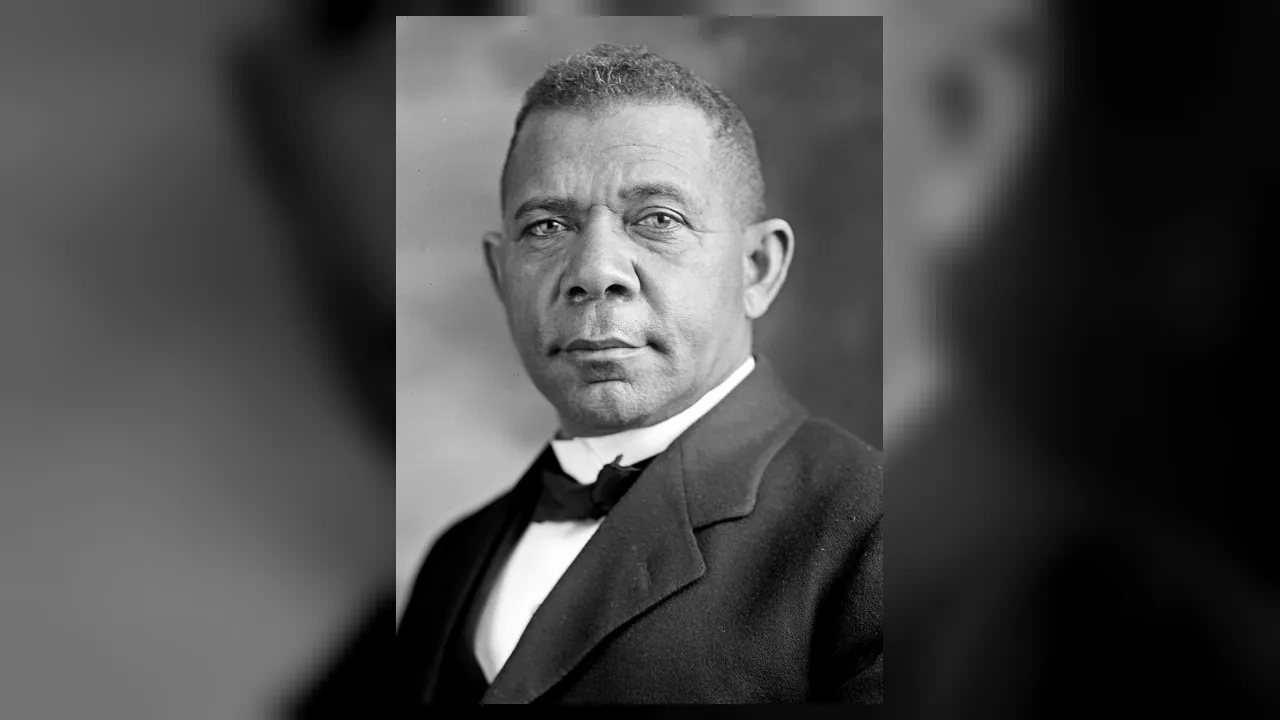
Historians studying Booker T. Washington's private papers after his death discovered that while speaking cautiously in public to protect southern schools, he had secretly used code names and personal funds to finance Supreme Court lawsuits against unfair voting and labor laws!
1 Virginia Emancipation and the 500-Mile Odyssey to Hampton
Stand beside the reconstructed log kitchen cabin on the Burroughs tobacco plantation in Franklin County, Virginia—preserved today as Booker T. Washington National Monument—where Booker was born enslaved in April 1856. Freed at age nine upon Union victory in 1865, he trekked across the Alleghenies with his mother, Jane Ferguson, to join his stepfather in Malden, West Virginia. Packing salt and mining coal from 4:00 a.m. while mastering literacy by lamplight, sixteen-year-old Booker overheard miners praising Hampton Normal and Agricultural Institute in coastal Virginia. In autumn 1872, walking, riding stagecoaches, and unloading pig iron along Richmond's James River wharves—sleeping beneath a raised boardwalk to conserve coins—he reached Hampton, passed head teacher Mary F. Mackie's famous classroom-sweeping character test, and graduated with honors in 1875.
2 Founding Tuskegee Institute From Scratch (1881)
Recommended by Hampton Principal Samuel Chapman Armstrong when former craftsman Lewis Adams and banker George Campbell secured a $2,000 Alabama legislative appropriation for teacher salaries at Tuskegee, twenty-five-year-old Washington arrived in June 1881 to find neither land nor buildings. Opening classes on July 4, 1881, inside a leaky shanty beside Butler Chapel AME Zion Church, he borrowed $250 to buy the abandoned 100-acre Weythumpka plantation. Insisting students combine classical with architectural drafting, foundry work, farming, and brickmaking—even pawning his personal gold watch after three collapsed kilns—Washington enabled students to erect forty major campus structures while manufacturing bricks prized by white and Black builders across Macon County.
3 Atlanta Exposition Address, Carver, and Institutional Scale
In 1895, amid escalating Jim Crow violence and across the South, Washington delivered his famous 'Atlanta Compromise' address at the Cotton States and International Exposition, urging economic cooperation ('Cast down your bucket where you are') to protect fledgling Black schools and businesses from white backlash. The following year, he recruited Iowa State botanist George Washington Carver to direct Tuskegee's Agricultural Experiment Station, dispatching the 'Jesup Agricultural Wagon' to teach with nitrogen-fixing peanuts and sweet potatoes to sharecroppers. By Washington's death in 1915, Tuskegee commanded 2,000 acres, over 100 buildings, and a $2 million endowment.
4 Up from Slavery, Debate With Du Bois, and Covert Litigation
Washington's 1901 memoir Up from Slavery became a global bestseller translated into dozens of languages, and his October 1901 White House dinner with President Theodore Roosevelt marked an unprecedented milestone. While Northern intellectuals led by W.E.B. Du Bois in The Souls of Black Folk (1903) sharply critiqued Washington's public accommodation for ceding immediate suffrage and higher liberal education, archival letters discovered after Washington's death revealed a dual strategy: behind the scenes, Washington secretly financed and coordinated federal lawsuits challenging grandfather clauses, jury exclusion, and peonage laws (such as Bailey v. Alabama, 1911).
5 The Rosenwald School Revolution
In 1912, partnering with Sears, Roebuck president Julius Rosenwald and Tuskegee architects, Washington launched a matching-grant initiative that constructed 4,977 modern rural schools, shops, and teachers' homes across fifteen states by 1932—educating more than 660,000 children, including future leaders Maya Angelou and Congressman John Lewis.
1. What surprising discovery did historians make when examining Booker T. Washington's private archives after his death in 1915?
2. How many rural schools and educational buildings grew out of the matching-grant partnership Booker T. Washington launched with Julius Rosenwald in 1912?