👷 CAREERS
💼 Skilled Trades, Metallurgy & Sculptural Forging
VA Economics, Civics & Career Readiness SOL K.8, 1.8, 2.8, 3.9
Blacksmith & Metal Artist
Shaping Glowing Iron With Fire and Hammer
Grade 4 • Expanding • 209 words
🧭 Career FieldMetalworking Trades, Architectural Ironwork & Fine Arts
🛠️ Key Tools & SkillsCoal or propane forge, heavy steel anvil, tongs, cross-peen hammers, and quenching tanks
🏢 WorkplaceGlowing smithy workshops, historic living museums, and metal sculpture studios
⚡ Everyday Impact SparkHeats stubborn cold iron until it glows orange-yellow and hammers it into gates, tools, hardware, and art
🤯 Mind-Blowing Fact • Grade 1
The 'black' in blacksmith comes from the dark layer of fire scale that forms on hot iron, while 'smith' comes from an old word meaning to strike!
✨ Word Sparks (Grade 1 Glossary)
Tap 🔊 to hear
Forge
A special fireplace that heats metal
Anvil
A heavy steel block for hammering metal
Tongs
Long gripping tool for holding hot metal
🪝
How can hard cold metal bend like warm taffy?
1
Glowing Orange Metal
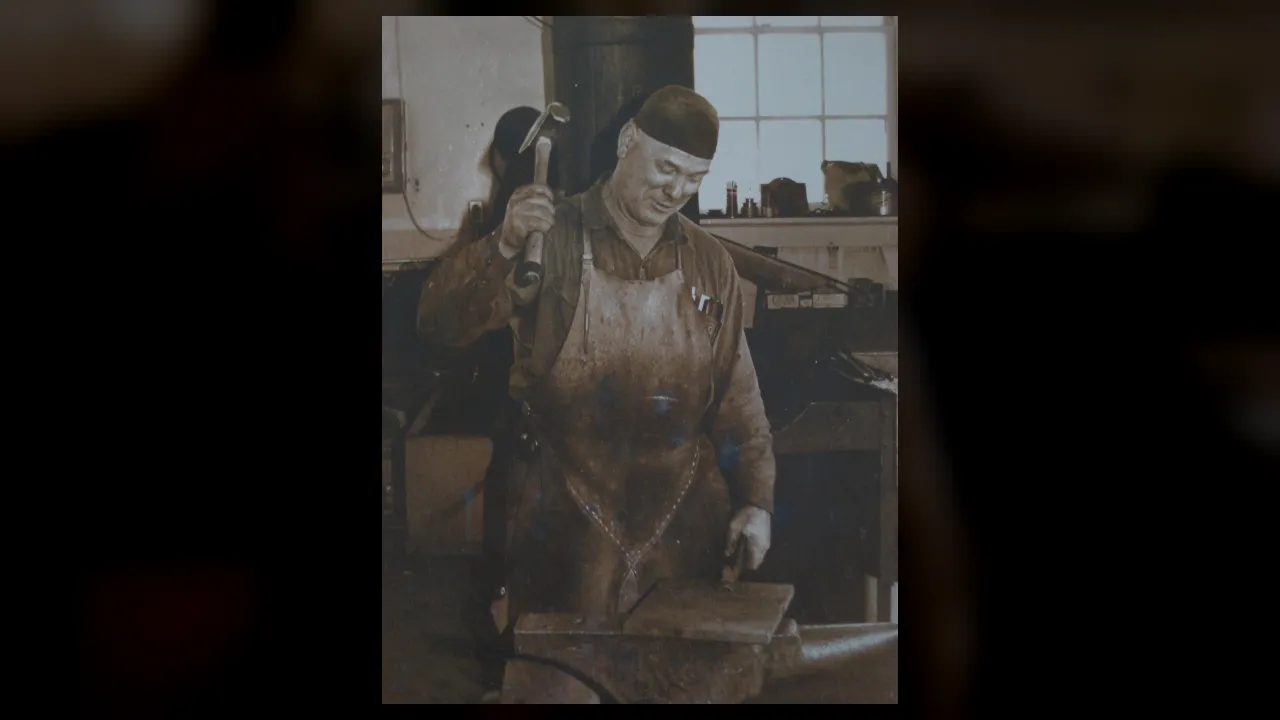
Clang, clang, hiss! Bright fire roars inside a hot stone hearth called a . A blacksmith holds a steel bar with long until the metal glows bright orange.
2
Hammer on the Anvil
Hot metal turns soft enough to bend! The smith sets it on a heavy steel block called an . Strong hammer taps flatten, twist, and curve the bar.
3
Cool and Strong
Dip! Into a bucket of water goes the finished hook or gate scroll. Steam puffs up, and the cool metal stays strong for years.
1. Why does a blacksmith heat steel in a forge before hammering it?
2. Which tool keeps a blacksmith's hands safe from the glowing metal?
🤯 Mind-Blowing Fact • Grade 2
A good steel anvil bounces a hammer right back up like a trampoline, saving the blacksmith's arm energy on every strike!
✨ Word Sparks (Grade 2 Glossary)
Tap 🔊 to hear
Horn
Curved cone end of a smith's anvil
Scroll
Graceful spiral curl forged in metal
Hearth
Fire-resistant floor area inside a forge
🪝
Why does an anvil have a pointed horn on one end and a flat face on top?
1
Reading the Colors of Heat
Whoosh goes the air blower as flames dance inside the forge! A blacksmith watches the steel change color from dull red to bright orange-yellow. That bright glow shows the metal is soft enough to shape.
2
Shaping on the Anvil
Quickly, the metal artist moves the glowing bar onto the anvil. Hammering on the flat top stretches the metal straight, while tapping around the curved anvil bends smooth rings, horseshoes, and swirling leaves.
3
Art and Everyday Hardware
Modern blacksmiths craft sturdy garden gates, fireplace tools, door hinges, and public sculptures. Safety glasses, leather aprons, and thick gloves protect them from flying sparks.
1. How does a blacksmith tell when steel in the forge is hot enough to hammer?
2. What part of the anvil helps a metal artist bend smooth curves and rings?
🤯 Mind-Blowing Fact • Grade 3
Unlike foundry workers who pour melted liquid metal into molds, blacksmiths shape steel at around two thousand degrees Fahrenheit while it is still completely solid!
✨ Word Sparks (Grade 3 Glossary)
Tap 🔊 to hear
Drawing out
Hammering hot metal longer and thinner
Upsetting
Compressing hot metal to thicken one section
Quenching
Cooling hot steel fast in water or oil
🪝
How can metal artists join two solid iron bars together without melting them into liquid or using glue?
1
Masters of Fire and Force
Sparks leap like tiny fireflies each time a hammer strikes glowing steel. Blacksmiths and metal artists shape iron and steel while the metal is solid yet plastic—hot enough to flow under hammer blows without melting into liquid.
2
Drawing Out, Upsetting, and Twisting
Every project uses classic forging moves. '' lengthens and thins a bar, while '' pushes hot metal back into itself to make one end thicker. Clamping a glowing square bar in a vise and turning a wrench creates dramatic corkscrew twists.
3
Forge Welding and Quenching
At dazzling lemon-yellow heat, two clean iron surfaces hammered rapidly together fuse into one solid piece in a process called forge welding. Plunging hot high-carbon steel into water or oil—called —locks its crystals into extra-hard tool edges.
4
Living History and Modern Design
From historic Colonial Williamsburg smithies in Virginia to contemporary sculpture studios, blacksmiths craft custom railings, chisels, chandeliers, and botanical metal art.
1. What forging technique makes a glowing metal bar longer and thinner?
2. What happens during forge welding?
🤯 Mind-Blowing Fact • Grade 4
Blacksmiths have an old saying that theirs is the 'king of trades,' because the blacksmith is the uniquely skilled artisan who can forge every single tool needed to make more tools!
✨ Word Sparks (Grade 4 Glossary)
Tap 🔊 to hear
Ductile
Able to bend and stretch without breaking
Brittle
Hard material that snaps or shatters easily
Tempering
Gentle reheating that makes hardened steel tougher
🪝
Why did every early American town need a blacksmith before carpenters, farmers, or wagon makers could do their jobs?
1
The Toolmaker Behind Every Trade
Step into an eighteenth-century Virginia crossroads, and the loudest building on Main Street was the smithy. Before factories stamped out hardware, blacksmiths were the community's essential engineers, forging plowshares for farmers, axes and nails for carpenters, iron tires for wooden wagon wheels, and cooking cranes for family hearths. Today, artist-blacksmiths blend those ancestral skills with modern power hammers and architectural blueprints.
2
Carbon Content and Crystal Structure
To a blacksmith, not all steel behaves the same. Mild steel contains less than three-tenths of one percent carbon, making it forgiving and for ornamental gates, rose petals, and spiral handrails. High-carbon tool steel contains closer to one percent carbon, allowing smiths to heat-treat chisels and carving blades so they hold razor-sharp edges.
3
Hardening Versus Tempering
Quenching red-hot tool steel in oil traps carbon atoms in a rigid crystal structure that is super hard—yet like glass! Drop a freshly quenched chisel and it might snap. To fix that, the smith gently reheats the polished steel until thin oxide colors—straw gold, bronze, or peacock blue—creep across the surface. This step, called , trades a tiny bit of hardness for tough springiness.
4
Monumental Metal Art
Contemporary metal artists combine traditional anvil joinery—mortise-and-tenon joints, hot-punched eyes, and rivets—with TIG welders and bronze patinas to build museum sculptures and historic restorations.
1. Why must a blacksmith temper a high-carbon steel chisel right after quenching it?
2. Which metal choice is best for forging intricate ornamental garden gates that need easy bending?
🤯 Mind-Blowing Fact • Grade 5
Blacksmiths often keep a simple magnet next to the forge because steel abruptly stops sticking to a magnet at around 1,414 degrees Fahrenheit—signaling the exact atomic shift needed before hardening!
✨ Word Sparks (Grade 5 Glossary)
Tap 🔊 to hear
Austenite
High-heat non-magnetic crystal phase of steel
Martensite
Ultra-hard crystal structure formed during rapid quenching
Cross-peen
Wedge-shaped hammer end that spreads metal
🪝
How do shifting atomic lattices inside glowing steel let a blacksmith control whether metal behaves like soft clay or unyielding armor?
1
Solid-State Metallurgy at the Anvil
At room temperature, iron atoms in steel lock into a tight body-centered cubic lattice called ferrite, resisting hammer blows with stubborn rigidity. When a blacksmith feeds forced air into a bituminous coal or propane forge, temperatures climb past one thousand three hundred thirty-three degrees Fahrenheit—the critical transformation point where steel loses its magnetic pull! Above this threshold, atoms rearrange into a face-centered cubic structure called , allowing slip planes to glide smoothly under the hammer.
2
Conservation of Volume and Tooling Geometry
Forging obeys strict conservation of volume: hot steel never disappears under the hammer, save for thin flakes of iron oxide scale. Instead, directional hammer faces steer metal flow. A rounded wedges steel perpendicular to the handle, spreading a narrow bar into an oak leaf, while fullers, swages, and pneumatic power hammers let modern metal artists sculpt massive structural beams with fluid grace.
3
Martensite, Quenching, and Oxide Thermometry
When high-carbon plunges into warm quenching oil, cooling happens too rapidly for carbon atoms to diffuse out, trapping them in a strained, needle-like crystal phase called . Because martensite is glass-brittle, the smith polishes the steel bright and reheats it between four hundred and six hundred degrees Fahrenheit. Nanometer-thin oxide films refract light into pale straw (ideal for stone chisels) or deep blue (suited for springs), visibly tracking exact toughness.
4
Pattern Welding and Mixed Metals
Metal artists also layer alternating alloys of nickel-steel and high-carbon steel, forge-welding, folding, and acid-etching billets to reveal wood-grain ripples known as pattern-welded steel, alongside repoussé sheet embossing in copper and bronze.
5
Architectural Restoration and Civic Sculpture
Today's blacksmiths restore historic wrought-iron gates at national landmarks, fabricate custom hardware for green architecture, and erect soaring public sculptures that anchor city plazas for centuries.