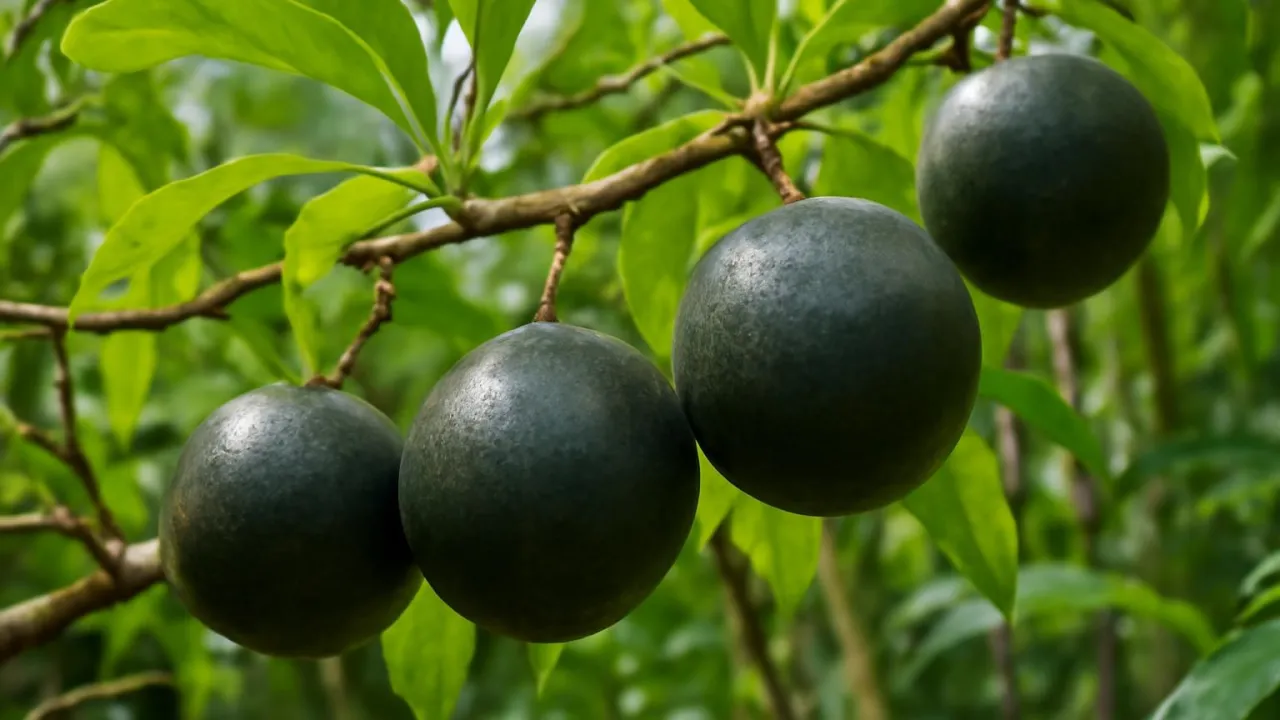
2. What does the inside of a ripe black sapote taste like?
🤯 Mind-Blowing Fact • Grade 3
Black sapote’s dark, pudding-like fruit is an adaptation that helps spread its seeds by attracting animals.
✨ Word Sparks (Grade 3 Glossary)
Tap 🔊 to hear
adaptation
A change that helps plants or animals survive
pollination
How plants make seeds with help from animals
seed dispersal
How seeds move to new places to grow
🪝
Did you know the black sapote uses its dark color to attract animals that help spread seeds?
1
Black Sapote Tree and Fruit
The black sapote tree grows up to thirty feet tall in tropical climates. Its round fruit starts green and ripens to a dark brown color. This color change helps animals see when the fruit is ready to eat. The fruit’s soft texture is an that makes it easy for animals to eat and spread seeds.
2
How the Fruit Grows
Black sapote fruit develops on trees that need full sun and regular water to thrive. The fruit’s skin is thin but tough enough to protect the soft inside. When ripe, the fruit’s flesh looks like chocolate pudding and is rich in nutrients. This helps the plant survive by attracting animals that help with and .
3
Ecosystem Role
In its native tropical forests, the black sapote plays a role in the food web by feeding animals like birds and mammals. These animals act as predators and seed dispersers, helping the tree reproduce. The fruit’s sweet taste is an that encourages animals to eat it and spread its seeds. This mutual relationship helps keep the forest healthy.
4
Human Uses
People enjoy eating black sapote fresh or using it in desserts because of its sweet flavor. It is sometimes called the chocolate pudding fruit because of its creamy texture. Farmers cultivate black sapote trees in Central America and Mexico for their tasty fruit. This fruit is a unique example of how plants can adapt to attract animals and humans alike.
1. Why does the black sapote fruit turn dark when ripe?
2. What role do animals play with black sapote fruits?
🤯 Mind-Blowing Fact • Grade 4
Black sapote fruit’s sweet, pudding-like flesh helps spread seeds by attracting many tropical animals.
✨ Word Sparks (Grade 4 Glossary)
Tap 🔊 to hear
ecosystem
All living things and their homes working together
habitat
The natural home of a plant or animal
agriculture
Farming plants and animals for food
🪝
How does the black sapote’s chocolate-like fruit help it survive in tropical forests?
1
Growing Conditions and Habitat
The black sapote tree thrives in tropical forests of Central America and Mexico where warm temperatures and high humidity prevail. It requires full sun exposure and regular watering to produce its unique fruit. The tree can grow up to thirty feet tall, adapting well to the moist, fertile soils of its native . These conditions help the tree develop healthy leaves and abundant fruit.
2
Fruit Adaptations and Seed Dispersal
The fruit’s dark brown color and soft, pudding-like texture attract many animals, including birds and mammals, which eat the fruit and disperse its seeds. This cause-and-effect relationship benefits both the tree and the animals by providing food and spreading seeds to new locations. The thin skin protects the fruit while allowing animals to access the sweet flesh easily. This adaptation increases the tree’s chances of reproduction.
3
Ecosystem Role and Food Web
Within its , the black sapote serves as a food source for various wildlife, playing an important role in the tropical forest food web. Animals that consume the fruit act as seed dispersers, helping maintain forest diversity and health. The tree also contributes to soil nutrients through leaf litter. Human cultivation of black sapote has expanded its presence beyond its native range, impacting local positively.
4
Human Uses and Cultural Importance
Humans value black sapote for its unique flavor and nutritional benefits, often using it in desserts and fresh eating. It is sometimes called the chocolate pudding fruit due to its creamy texture and sweet taste. The fruit has cultural significance in Central American communities where it is traditionally cultivated. Sustainable farming practices help preserve the tree and its role.
2. How does black sapote farming affect local areas?
🤯 Mind-Blowing Fact • Grade 5
Black sapote’s unique dark, sweet fruit is a rare botanical berry that tastes like chocolate pudding.
✨ Word Sparks (Grade 5 Glossary)
Tap 🔊 to hear
botanical
Related to plants and how they grow
mutualism
A helpful relationship between two living things
nutrients
Good stuff plants and animals need to live
🪝
What makes the black sapote’s fruit a unique example of botanical adaptation and human use?
1
Taxonomy and Botanical Classification
The black sapote, scientifically named Diospyros digyna, belongs to the Ebenaceae family, which includes persimmons. It is a tropical fruit tree native to Central America and Mexico, where it plays an important ecological role. Unlike many fruits, black sapote’s edible pulp is dark and sweet, a rare characteristic among its genus. This fruit is botanically classified as a berry, despite its unique texture and flavor.
2
Physiological Characteristics and Growth
Black sapote trees can grow up to thirty feet tall and require full sun and moderate watering to thrive in tropical climates. The fruit develops from flowers pollinated by insects, and its skin transitions from green to dark brown as it ripens. The soft, pudding-like flesh contains high levels of vitamin C and dietary fiber, contributing to its nutritional value. Its thin skin protects the fruit while allowing easy access for seed dispersers.
3
Ecological Role and Seed Dispersal Mechanisms
The black sapote’s sweet, dark flesh attracts various tropical animals such as birds, bats, and mammals that consume the fruit and disperse its seeds through their droppings. This mutualistic relationship enhances genetic diversity and forest regeneration. The fruit’s adaptation of resembling chocolate pudding helps entice animals to eat it, increasing the likelihood of seed dispersal over distances up to several kilometers.
4
Conservation and Agricultural History
While black sapote is not currently endangered, habitat loss and deforestation in Central America threaten its natural populations. Agricultural cultivation has helped preserve the species by providing economic value to local farmers. Historically, indigenous peoples valued the fruit for its nutritional and medicinal properties. Modern efforts focus on sustainable farming to protect both the species and its tropical ecosystem.
5
Quantitative Comparisons and Interesting Metrics
Black sapote fruit typically weighs between 200 and 500 grams and measures about 2 to 4 inches in diameter. The tree grows at an average rate of one to two feet per year under ideal conditions. The fruit’s vitamin C content can reach up to 30 milligrams per 100 grams, comparable to oranges. Its ripening process takes approximately 3 to 4 months after flowering, and it thrives in temperatures between 70 and 90 degrees Fahrenheit.