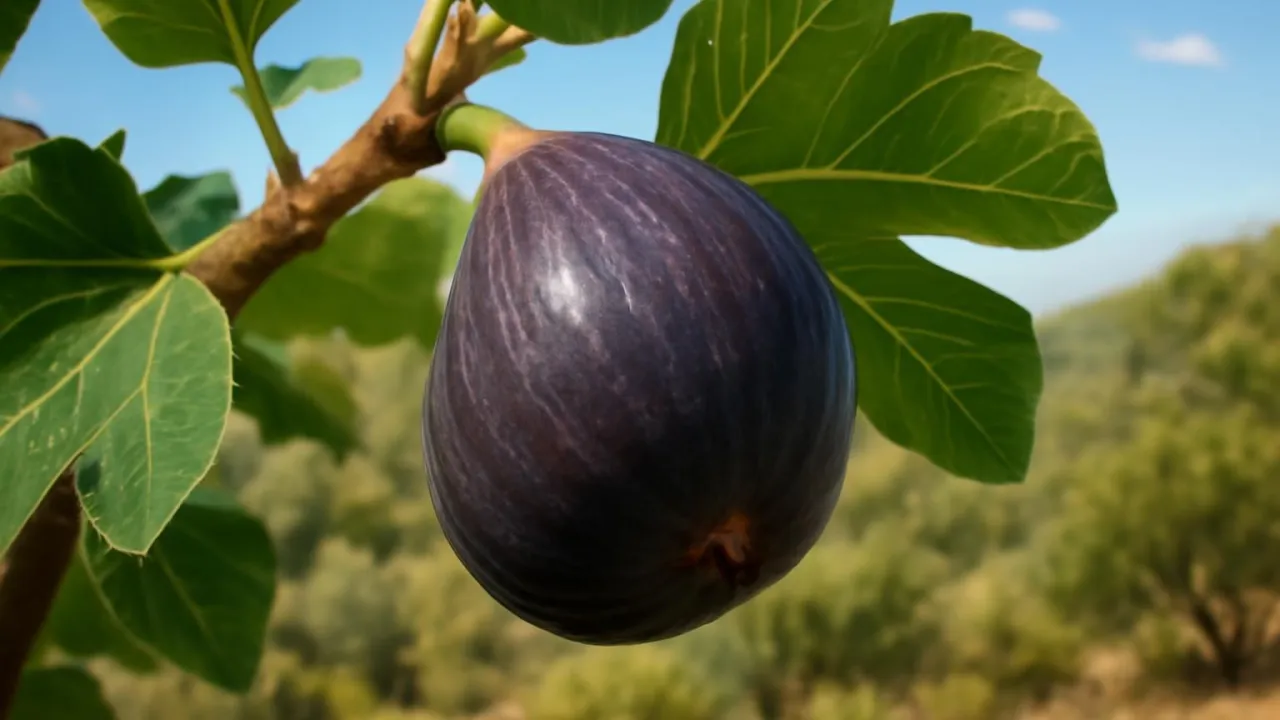
1. What color is the outside of a Black Mission fig?
2. Who likes to eat figs besides people?
🤯 Mind-Blowing Fact • Grade 2
Black Mission figs are one of the sweetest fig varieties and have been grown for over 200 years!
✨ Word Sparks (Grade 2 Glossary)
Tap 🔊 to hear
ripe
Ready to eat and sweet
sunlight
Light from the sun plants need
seed
Small part that grows into a plant
🪝
Have you ever seen a fruit that is purple on the outside and sweet inside?
1
What Black Mission Figs Look Like
Black Mission figs have dark purple skin and a soft, pink inside that is very sweet. They grow on medium-sized trees that can reach about thirty feet tall. The skin is smooth and shiny, making the fruit easy to spot on the tree.
2
Where They Grow and Live
These figs grow best in warm places like California and the Mediterranean region. They need plenty of and moderate water to grow well. Farmers pick the figs when they are and soft to eat fresh or dry.
3
Why They Are Special
The Black Mission fig has tiny inside that give it a crunchy texture when eaten. Birds and insects help spread the seeds by eating the fruit and dropping the seeds elsewhere. This helps new fig trees grow in nature.
Black Mission figs use camouflage and sweet fruit to protect themselves and spread seeds far away!
✨ Word Sparks (Grade 3 Glossary)
Tap 🔊 to hear
camouflage
Colors that help hide from animals
pollination
Helping flowers make seeds and fruit
dispersal
Spreading seeds to new places
🪝
Did you know the Black Mission fig is both a fruit and a clever plant survivor?
1
Appearance and Adaptation
The Black Mission fig has dark purple skin that helps it blend in with shadows, a form of . Inside, the fruit is soft and pink with many tiny seeds, which attract animals that help with seed . This adaptation helps the fig spread its seeds far from the parent tree.
2
Growth and Habitat
Black Mission fig trees grow in warm, sunny climates like California and the Mediterranean. They need well-drained soil and moderate water to thrive. Their roots absorb nutrients efficiently to support the tree’s height, which can reach up to thirty feet.
3
Role in the Ecosystem
Figs provide food for many animals, including birds and insects, which act as pollinators. This is crucial for fig reproduction and helps maintain the balance of the ecosystem. The fig tree also offers shelter to small animals in its branches.
4
Fruit and Seed Survival
The tiny seeds inside the fig are tough and can survive passage through animal digestive systems. This helps the seeds spread to new locations where they can germinate. The fig’s sweet taste encourages animals to eat it, aiding seed .
1. How does the Black Mission fig’s skin help it survive?
2. Why do animals eat figs?
🤯 Mind-Blowing Fact • Grade 4
Black Mission figs and pollinating wasps rely on each other to survive, showing a unique symbiosis!
✨ Word Sparks (Grade 4 Glossary)
Tap 🔊 to hear
symbiosis
When two living things help each other
ecosystem
All living things in one place
pollinator
An animal that helps plants make seeds
🪝
What makes the Black Mission fig a key player in its warm ecosystem?
1
Physical Traits and Survival
The Black Mission fig’s dark purple skin provides camouflage that protects it from some predators, while its sweet pink interior attracts animals. This cause-and-effect relationship helps the fig survive and spread its seeds effectively. The tree’s height and root system allow it to access sunlight and water efficiently in warm climates.
2
Ecosystem Role and Food Web
Figs are an important food source for birds, insects, and mammals, making them a vital part of the food web. Pollinating wasps have a symbiotic relationship with fig trees, helping them reproduce while gaining shelter. This mutual benefit supports biodiversity and health.
3
Geographic Distribution and Growth
Native to the Mediterranean, Black Mission figs have adapted well to California’s climate, where they are widely cultivated. Their growth depends on full sun exposure and moderate watering, which farmers provide to maximize fruit production. Human cultivation has expanded their range beyond their original habitat.
4
Human Impact and Uses
People harvest Black Mission figs fresh or dry them for long-term storage, which supports local economies. However, overharvesting or habitat loss could threaten wild fig populations. Sustainable farming practices help protect these trees and maintain their important role in .
1. What animal helps pollinate Black Mission figs?
2. Why is it important to farm figs sustainably?
🤯 Mind-Blowing Fact • Grade 5
Black Mission figs depend entirely on tiny fig wasps for pollination, showcasing a remarkable ecological partnership.
✨ Word Sparks (Grade 5 Glossary)
Tap 🔊 to hear
syconium
A fig’s fruit with many tiny flowers inside
mutualism
Both species help each other survive
cultivar
A plant variety grown by people
🪝
How does the Black Mission fig’s biology and ecology make it a fascinating fruit tree?
1
Taxonomy and Scientific Context
The Black Mission fig, scientifically named Ficus carica, belongs to the Moraceae family and is a deciduous tree native to the Mediterranean basin. It is one of several of the common fig species, distinguished by its dark purple skin and sweet pink flesh. This species has been cultivated for over two millennia for its edible fruit.
2
Physiological Mechanics and Growth
Black Mission fig trees can grow up to thirty feet tall, with a broad canopy and deeply lobed leaves that maximize photosynthesis. The tree’s root system efficiently absorbs water and nutrients from well-drained soils, supporting fruit development in warm climates. The fig’s unique structure houses numerous tiny flowers inside that require pollination by fig wasps.
3
Ecological Relationships and Conservation
Black Mission figs exhibit an obligate with fig wasp species, which pollinate the internal flowers while using the fruit for reproduction. This symbiotic relationship is crucial for the fig’s lifecycle and maintaining biodiversity in Mediterranean and Californian ecosystems. Conservation efforts focus on protecting habitat and promoting sustainable agriculture to prevent genetic erosion.
4
Botanical History and Human Use
Introduced to California by Spanish missionaries in the 18th century, the Black Mission fig became a staple crop due to its sweet flavor and adaptability. It is harvested fresh or dried and used in various culinary dishes worldwide. Its cultivation has influenced agricultural practices and local economies significantly.
5
Quantitative Comparisons and Facts
The Black Mission fig’s fruit weighs about 30 to 50 grams and can measure up to 2 inches in diameter. The tree thrives in temperatures ranging from 60 to 85 degrees Fahrenheit and requires at least six hours of sunlight daily. Its sugar content can reach up to 20 percent, making it one of the sweetest fig varieties cultivated globally.