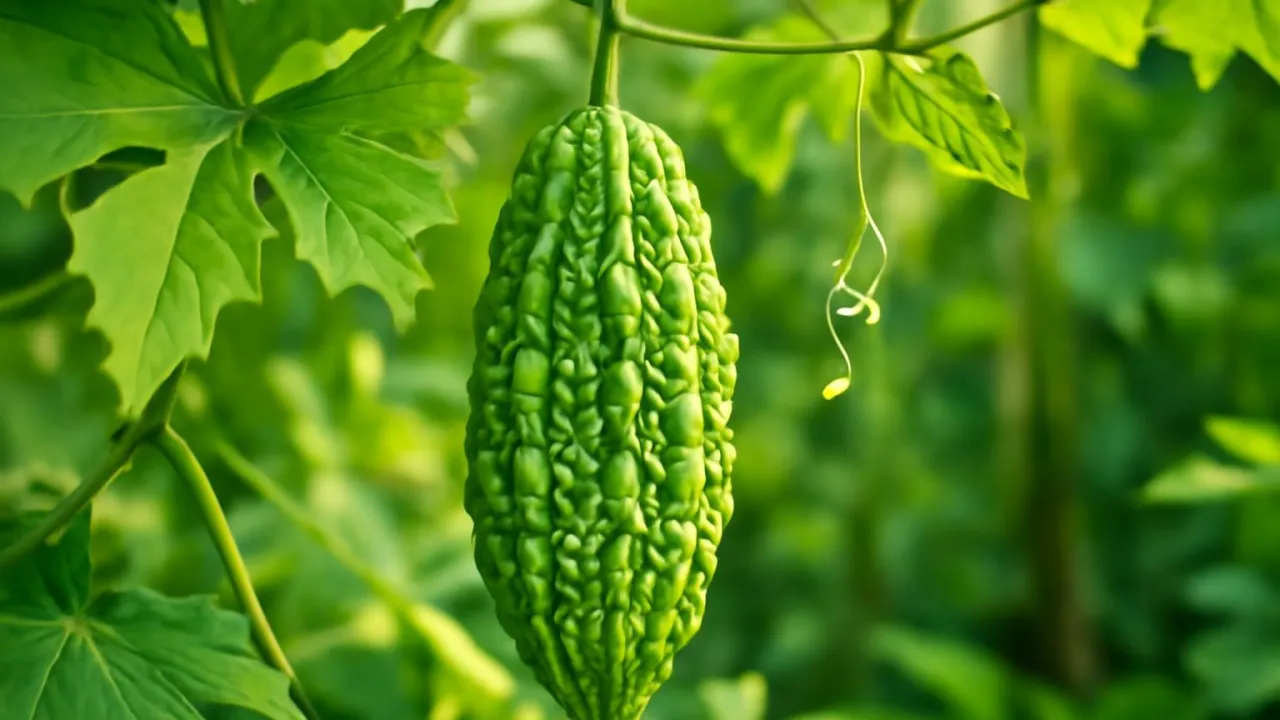
Bitter melon’s bitter taste helps protect it from insects and animals.
✨ Word Sparks (Grade 2 Glossary)
Tap 🔊 to hear
tropical
Warm places near the equator where plants grow well
vitamins
Good things in food that help your body stay healthy
defense
A way to protect yourself from danger or harm
🪝
Have you ever tasted a fruit that is very bitter and healthy?
1
What Does Bitter Melon Look Like?
Bitter melon is green and covered with spikes. It grows on long vines in gardens. The fruit looks like a bumpy cucumber. People pick it when it is about six to twelve inches long.
2
Where Does It Grow and Live?
Bitter melon grows best in warm, places. It needs full sunlight and plenty of water to grow well. Farmers in Asia and Africa often grow this fruit in their fields. It climbs on trellises or fences as it grows.
3
What Makes Bitter Melon Special?
This fruit tastes very bitter, which helps keep bugs away. People eat it cooked because it is healthy. It has that help the body fight sickness. The bitter taste is a natural for the plant.
Bitter melon’s bitter taste is a natural shield against hungry animals.
✨ Word Sparks (Grade 3 Glossary)
Tap 🔊 to hear
camouflage
A way to blend in with surroundings to hide
predator
An animal that hunts other animals for food
nutrients
Good stuff in soil or food that helps living things grow
🪝
Can you imagine a fruit that uses its bitter taste to stay safe from hungry animals?
1
Bitter Melon’s Look and Feel
Bitter melon is green and covered with sharp, spiky bumps. Its rough texture helps it hide among green leaves. The fruit grows on vines that climb and twist around supports. It can grow from six to twelve inches long.
2
Where Bitter Melon Grows
This fruit grows in warm tropical places where sunlight is strong. It needs rich soil and lots of water for . Bitter melon climbs on trellises or fences to get sunlight. You can find it in Asia and Africa.
3
How Bitter Melon Protects Itself
The bitter taste helps keep animals from eating the fruit. Many animals do not like its strong bitterness. This taste also stops many insects from biting it. The spiky skin gives extra protection from some animals.
4
Bitter Melon and People
People cook bitter melon because it is healthy and full of vitamins. It is used in medicines to help fight sickness. Farmers grow it as food and for health benefits. It also helps insects that can live with its bitterness.
Bitter melon’s bitterness helps it survive by keeping many animals from eating it.
✨ Word Sparks (Grade 4 Glossary)
Tap 🔊 to hear
herbivores
Animals that eat only plants
photosynthesis
How plants use sunlight to make food
ecosystem
A community of living things and their environment
🪝
How does bitter melon’s bitterness affect its place in nature’s food web?
1
Bitter Melon’s Physical Features and Growth
Bitter melon is covered with spiky bumps that protect it from many , which helps it survive. It grows on climbing vines that twist around supports to reach sunlight needed for . The fruit’s green color and rough texture provide camouflage among leaves, making it less visible to predators. It thrives in tropical climates where warm temperatures and moisture support its growth.
2
The Role of Bitterness in Defense
The bitter compounds in the fruit act as a chemical defense that deters insects and animals from eating it. This bitterness reduces damage from predators and helps the plant reproduce successfully. Because of this natural defense, bitter melon can survive in with many hungry animals. The spiky skin also provides a physical barrier that complements the chemical protection.
3
Bitter Melon in Ecosystems and Human Use
Bitter melon contributes to food webs by providing nutrients to certain insects that can tolerate its bitterness. Humans cultivate it for food and traditional medicine, benefiting from its health-promoting properties. Its cultivation supports local farmers and can improve biodiversity in gardens. However, overharvesting or habitat loss could reduce wild populations, affecting balance.
4
Geographic Distribution and Cultivation
Native to tropical Asia and Africa, bitter melon is now grown in many warm regions worldwide. It prefers well-drained, fertile soils and requires full sun and regular watering. Farmers often use trellises to support the climbing vines and improve air circulation. Its adaptability to different tropical environments makes it a valuable crop in many countries.
2. What role does bitterness play in bitter melon’s survival?
🤯 Mind-Blowing Fact • Grade 5
Bitter melon’s cucurbitacin chemicals act as natural pesticides protecting it from many animals.
✨ Word Sparks (Grade 5 Glossary)
Tap 🔊 to hear
cucurbitacin
A bitter chemical that protects plants from insects
herbivory
When animals eat plants for food
photosynthesis
How plants use sunlight to make food
🪝
How does bitter melon’s unique biology help it thrive in tropical ecosystems and support human health?
1
Scientific Classification and Botanical Features
Bitter melon, scientifically named Momordica charantia, belongs to the Cucurbitaceae family, which includes cucumbers and melons. It is a fast-growing, climbing vine that produces oblong, warty fruits measuring 6 to 12 inches in length. The fruit’s spiky exterior and intense bitterness are distinctive adaptations that protect it from . Its leaves are deeply lobed, and the plant produces yellow flowers that attract pollinators essential for reproduction.
2
Physiological Mechanisms and Chemical Defenses
The bitter taste of bitter melon results from compounds called , which are toxic to many insects and animals. These chemicals act as a natural pesticide, reducing predation and increasing the plant’s survival chances. The spiky surface provides a physical defense that discourages feeding by larger herbivores. Additionally, the plant’s climbing habit allows it to access sunlight efficiently, optimizing in dense tropical environments.
3
Ecological Role and Geographic Distribution
Native to tropical Asia and Africa, bitter melon thrives in warm, humid climates with well-drained soils. It plays a role in local ecosystems by supporting specialized insect species that tolerate its bitterness. Its cultivation has spread globally to tropical and subtropical regions due to its nutritional and medicinal value. Bitter melon contributes to biodiversity and helps maintain ecological balance within its habitat.
4
Cultural Importance and Conservation Status
Bitter melon has been used for centuries in traditional medicine to treat diabetes and digestive issues. Its health-promoting compounds have attracted scientific research exploring potential pharmaceutical applications. While widely cultivated, wild populations face threats from habitat loss and overharvesting. Conservation efforts focus on sustainable farming practices and preserving genetic diversity to ensure its continued availability.
5
Quantitative Comparisons and Growth Conditions
Bitter melon fruits typically weigh between 150 and 300 grams and grow best in temperatures ranging from 75 to 85 degrees Fahrenheit. The vines can reach lengths of up to 10 feet when supported by trellises. Compared to other cucurbits, bitter melon has a higher concentration of bitter compounds, which slows herbivore damage. Its growth requires full sun exposure and consistent watering to maintain fruit quality and yield.