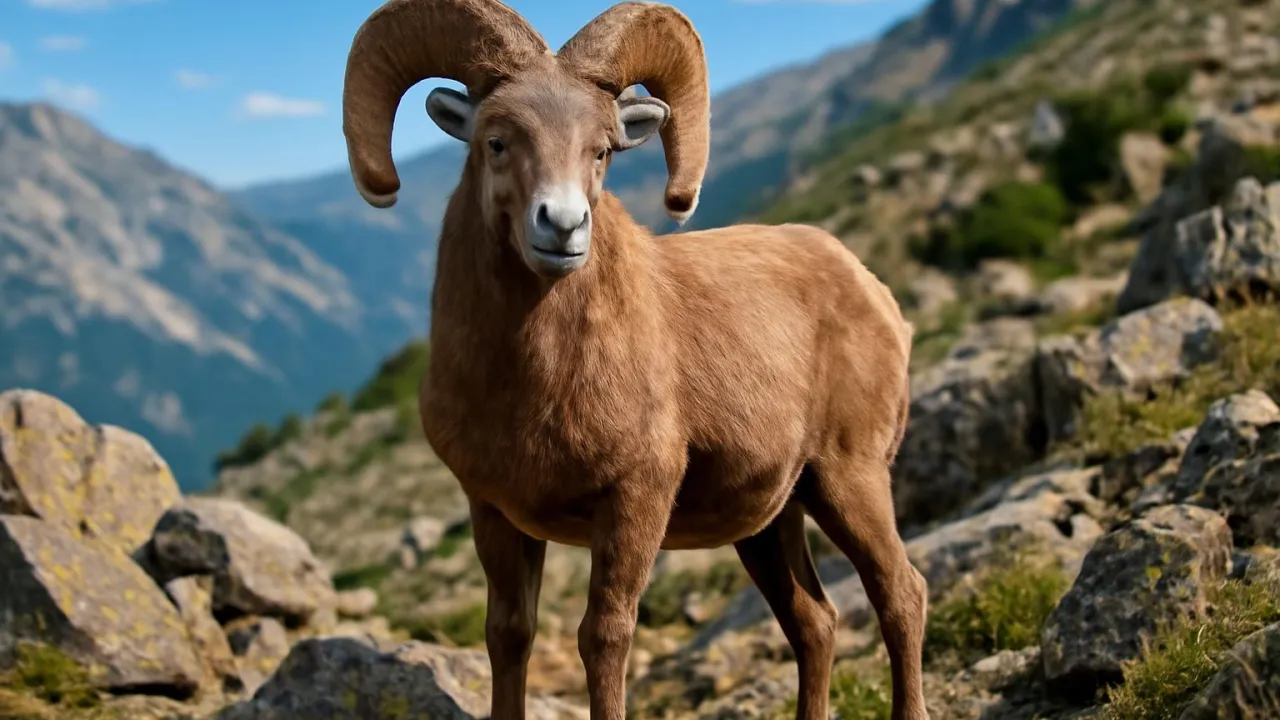
Bighorn sheep can jump over 12 feet across rocky gaps to escape predators!
✨ Word Sparks (Grade 2 Glossary)
Tap 🔊 to hear
curved
Bend or arc shape, not straight
predator
Animal that hunts other animals for food
hooves
Hard feet of animals like sheep and horses
🪝
How do bighorn sheep climb steep cliffs without falling?
1
Big Horns for Fighting
Bighorn sheep have large horns that grow all their life. They use these horns to fight and show strength. Males but heads to compete for mates. The horns are very heavy and strong.
2
Rocky Mountain Homes
They live in rocky mountains where few animals can climb. These steep cliffs help protect them from . They eat grass, shrubs, and plants found on mountain slopes. Water is very important for their survival every day.
3
Amazing Climbers
Bighorn sheep have rough that grip rocks tightly. Their strong legs help them jump and climb steep cliffs easily. They can leap very far to escape danger. Their climbing skill keeps them safe from many threats.
Bighorn sheep can leap across gaps over 12 feet wide to escape predators quickly!
✨ Word Sparks (Grade 3 Glossary)
Tap 🔊 to hear
camouflage
Colors or patterns that help hide animals
nutrients
Food parts that help animals grow strong
adaptation
Body changes that help animals survive
🪝
What special features help bighorn sheep survive in rocky mountains?
1
Powerful Horns and Battles
Bighorn sheep have massive, curved horns used for fighting rivals during mating season. These horns protect their skulls when they clash head-to-head. The battles help decide which male is strongest and gets to mate. Horns continue growing throughout their lives.
2
Adapted to Rocky Terrain
Their hooves have rough pads that provide excellent grip on rocky surfaces, preventing slips. This helps them climb steep cliffs to escape predators. Their muscular legs give them strong jumping ability. These traits allow survival in harsh mountain environments.
3
Diet and Nutrient Intake
Bighorn sheep mainly graze on grasses and shrubs found on mountain slopes. They obtain needed for energy and horn growth from these plants. Water sources are scarce, so they drink from mountain streams when available. Their diet supports their active lifestyle.
4
Camouflage and Protection
Their brownish-gray fur blends with rocky backgrounds, providing from predators. This natural coloring helps them avoid being seen by mountain lions and wolves. Camouflage is vital for survival in open rocky habitats. Their keen eyesight also warns them of danger early.
Bighorn sheep can survive at elevations above 14,000 feet where oxygen is very thin!
✨ Word Sparks (Grade 4 Glossary)
Tap 🔊 to hear
ecosystem
All living and nonliving things in one place
dominance
Being the strongest or most important animal
trophic
Relating to eating and energy in food chains
🪝
How do bighorn sheep’s features and behaviors affect their mountain ecosystem?
1
Horn Battles and Social Structure
Male bighorn sheep engage in fierce horn battles to establish and mating rights, which maintains social order in their herds. These clashes can last for hours and show the strength of each ram. The size and shape of horns influence reproductive success. This behavior impacts population genetics.
2
Mountain Habitat and Distribution
Bighorn sheep inhabit rugged mountain ranges across western North America, including the Rockies and Sierra Nevada. Their preference for steep cliffs offers protection from predators like mountain lions and wolves. Seasonal migrations occur to find food and water sources. Human activities sometimes fragment their habitats.
3
Role in the Food Web
As herbivores, bighorn sheep graze on grasses and shrubs, influencing plant community composition and nutrient cycling. They serve as prey for large carnivores, linking levels in the . Their grazing helps maintain open habitats beneficial for other species. Predation pressures shape their behavior and distribution.
4
Adaptations for Survival
Their specialized hooves with rough pads and split toes provide traction on rocky terrain, preventing falls and injuries. Camouflage fur colors blend with the environment, reducing detection by predators. Strong legs and excellent balance enable quick escapes. These adaptations evolved over thousands of years to suit mountainous life.
2. What role do bighorn sheep play in their ecosystem?
🤯 Mind-Blowing Fact • Grade 5
Bighorn sheep can live and thrive above 14,000 feet where oxygen levels are 40% lower than at sea level!
✨ Word Sparks (Grade 5 Glossary)
Tap 🔊 to hear
taxonomy
The science of naming and grouping living things
physiological
How body parts and systems work together
fragmentation
When habitats break into smaller pieces
🪝
What scientific traits and ecological roles make bighorn sheep unique mountain dwellers?
1
Taxonomy and Scientific Classification
Bighorn sheep belong to the family Bovidae and genus Ovis, scientifically named Ovis canadensis. They are closely related to domestic sheep but adapted to wild mountainous environments. This taxonomic classification helps scientists study their evolution and behavior. Subspecies vary across different mountain ranges.
2
Physiological Adaptations for Mountain Life
Their hooves have a hard outer rim and a soft, concave pad that provides exceptional grip on rocky surfaces. Bighorn sheep have large lungs and a high red blood cell count to efficiently use oxygen at high altitudes. Their muscular legs enable powerful jumps up to 12 feet horizontally. These traits allow survival in thin air and steep terrain.
3
Conservation History and Challenges
Once hunted nearly to extinction in the early 1900s, conservation efforts have helped bighorn sheep populations recover. Habitat and diseases from domestic sheep remain threats today. Wildlife agencies monitor populations and protect critical habitats to ensure their survival. Public education supports ongoing conservation success.
4
Ecological Role and Food Web Impact
As primary herbivores, bighorn sheep influence vegetation structure by grazing on grasses and shrubs, affecting nutrient cycling in mountain ecosystems. They serve as prey for apex predators like mountain lions and wolves, linking multiple trophic levels. Their seasonal movements also impact seed dispersal and plant community dynamics.
5
Quantitative Comparisons and Records
Adult male bighorn sheep can weigh up to 300 pounds (136 kilograms) and stand about 40 inches (1 meter) tall at the shoulder. They can leap horizontally over 12 feet (3.7 meters) and climb slopes exceeding 60 degrees. These physical feats exceed many other mountain mammals. Their horns can weigh up to 30 pounds (14 kilograms), showcasing remarkable strength.