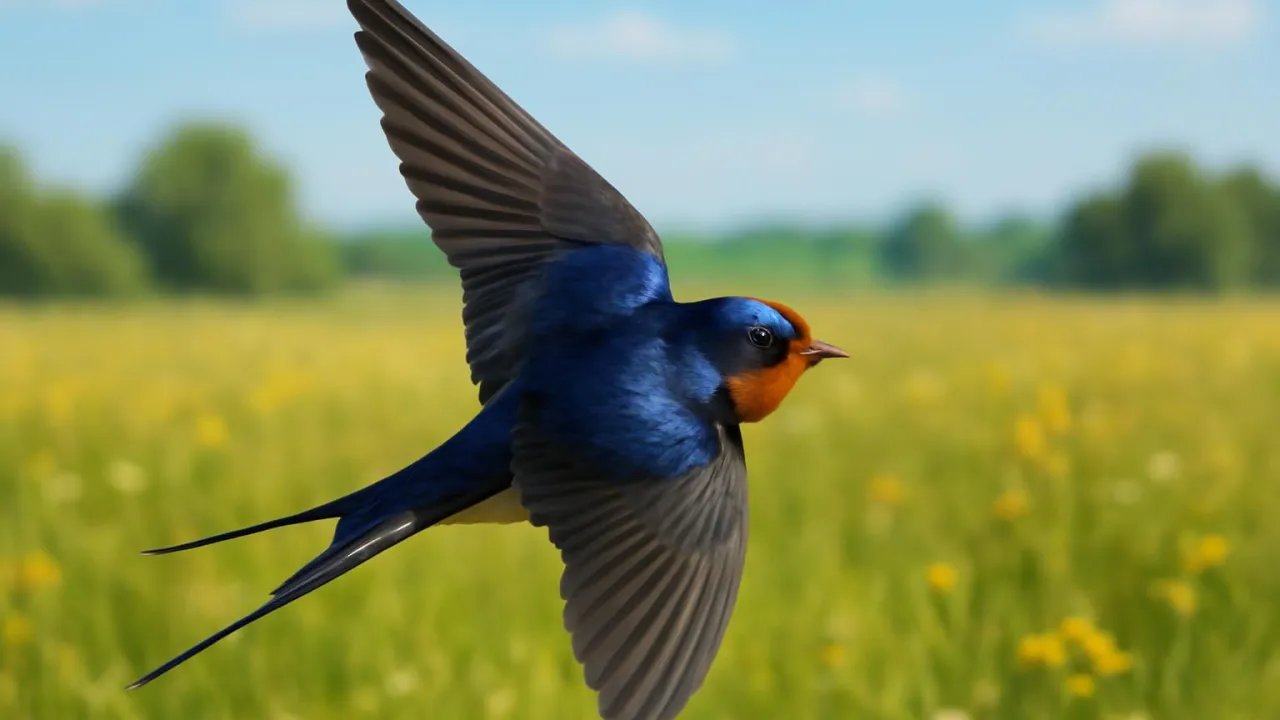
Barn swallows can fly over 6,000 miles to find warm places for winter!
✨ Word Sparks (Grade 2 Glossary)
Tap 🔊 to hear
insect
A small animal with six legs
migrate
To travel far for new seasons
wing
A bird’s arm for flying
🪝
Did you know some birds can catch bugs in mid-air?
1
Flying Experts
Barn swallows are amazing flyers, swooping and turning quickly to catch . Their long, forked tails help them steer in the air. These birds can even grab bugs while flying very fast. Their are long and pointed, perfect for speedy flights.
2
Where They Live
Barn swallows build their nests in barns, sheds, or under bridges. They use mud and grass to make strong cup-shaped nests. These birds like to live near open fields where there are lots of . Swallows return to the same nesting spot every year.
3
Life Cycle and Food
Barn swallows lay tiny white eggs in their nests. The babies hatch and grow quickly, eating many bugs every day. Swallows eat flies, beetles, and other flying . They help farmers by eating pests that harm crops.
1. What do barn swallows use to build their nests?
2. Why do farmers like barn swallows?
🤯 Mind-Blowing Fact • Grade 3
A barn swallow’s migration journey can be longer than the distance across the United States!
✨ Word Sparks (Grade 3 Glossary)
Tap 🔊 to hear
adaptation
A body part that helps survival
predator
An animal that hunts other animals
migration
Long travel to find better weather
🪝
Can you imagine flying thousands of miles without ever getting lost?
1
Aerial Acrobats
Barn swallows are expert fliers, able to twist and turn in mid-air. Their forked tails and pointed wings help them change direction quickly. These let them catch flying insects with amazing skill. Their blue backs and orange throats make them easy to spot.
2
Homes in Surprising Places
Barn swallows build cup-shaped nests out of mud and grass. They often place these nests on beams inside barns, under bridges, or on ledges. Swallows return to the same nesting sites year after year. This behavior helps them stay safe from .
3
A Bug’s Worst Enemy
Barn swallows eat mostly insects, including flies, beetles, and moths. They catch their food while flying, sometimes eating hundreds of bugs in one day. This helps control insect populations in fields and farms. Farmers appreciate swallows for their natural pest control.
4
Amazing Migrators
Each autumn, barn swallows migrate thousands of miles to warmer places. They travel from North America to Central and South America for the winter. Swallows use the sun, stars, and Earth’s magnetic field to navigate. Their long journeys are one of nature’s great wonders.
Barn swallows can eat up to 850 insects a day during nesting season!
✨ Word Sparks (Grade 4 Glossary)
Tap 🔊 to hear
aerodynamic
A shape that moves easily through air
colony
A group living close together
pesticide
A chemical used to kill bugs
🪝
What if you could travel from Virginia to South America using only your wings?
1
Masters of the Air
Barn swallows are recognized for their dazzling aerial skills, using their long, pointed wings and deeply forked tails to make sharp turns and sudden dives. These adaptations allow them to catch flying insects with incredible precision. Their blue-black backs and rusty-orange throats make them easy to identify in flight. Their constant movement helps them avoid predators like hawks and cats.
2
Home Sweet Barn
Barn swallows build sturdy, cup-shaped nests out of mud and grass, often attaching them to beams inside barns, under bridges, or on building ledges. These birds usually return to the same nesting sites each year, sometimes even rebuilding old nests. Nest placement high off the ground helps protect their eggs and chicks from ground predators. Swallows may share nesting spots with other swallow families, creating busy colonies.
3
Ecosystem Helpers
By eating hundreds of flying insects daily, barn swallows play a crucial role in controlling pest populations. Their appetite for bugs benefits farmers by reducing the need for chemical . Swallows themselves are part of the food web, serving as prey for larger birds and mammals. Changes in farming practices and loss of nesting sites can affect swallow populations.
4
Epic Migrators
Barn swallows migrate between North America and Central or South America, traveling over 6,000 miles twice a year. They use environmental cues like daylight length, the position of the sun and stars, and Earth’s magnetic field to navigate these long journeys. Migration allows them to find food and warm weather all year. Along the way, they face dangers such as storms, predators, and habitat loss.
If you lined up all the insects a barn swallow eats in a year, they could stretch longer than a school bus!
✨ Word Sparks (Grade 5 Glossary)
Tap 🔊 to hear
Hirundinidae
The scientific family of swallows
celestial
Related to the sky, sun, or stars
ecological
How living things connect in nature
🪝
How does a tiny bird navigate continents and help shape entire ecosystems?
1
A Swallow’s Scientific Identity
The barn swallow, Hirundo rustica, is a member of the family and is one of the world’s most widespread and recognizable songbirds. Its distinctive metallic-blue upperparts, cinnamon throat, and deeply forked tail feathers set it apart from other swallows. Barn swallows are found on every continent except Antarctica, thriving in open habitats near water and human settlements. Scientists study their migratory patterns to understand global climate changes and species adaptation. Their presence is often considered a sign of a healthy ecosystem.
2
Aerodynamics and Feeding Mechanics
Barn swallows possess long, pointed wings and a streamlined body, making them exceptionally aerodynamic for agile flight. Their deeply forked tails provide remarkable steering ability, allowing them to execute sharp turns and rapid dives while hunting. They feed almost exclusively on flying insects, capturing prey in midair using their wide gapes and quick reflexes. A single barn swallow can consume up to 60 insects per hour during peak feeding times. Their flight speed can reach 25–35 miles per hour, with bursts up to 45 mph when chasing prey.
3
Life Cycle and Social Behavior
Barn swallows construct mud-cup nests, often under the eaves of barns, bridges, or other structures, using hundreds of beakfuls of mud mixed with grass. Females lay 3–7 white, speckled eggs per clutch, with both parents sharing incubation and feeding duties. Chicks fledge in about 18–23 days and may join communal roosts with other young swallows. Barn swallows are highly social, forming colonies that can include dozens of pairs nesting closely together. They communicate using a rich variety of chirps, twitters, and songs.
4
Migration and Navigation Wonders
Barn swallows are long-distance migrants, traveling over 6,000 miles between North America and wintering grounds in Central and South America. They rely on a combination of cues, Earth’s magnetic field, and even polarized light to navigate these vast distances. Migration exposes them to hazards such as storms, habitat destruction, and exhaustion, yet most return to the same nesting sites each year. Their migrations are tracked by scientists using tiny geolocators, providing valuable data on global bird movements. This epic journey is considered one of nature’s most impressive feats.
5
Conservation and Human Connections
Barn swallows have adapted well to human-altered landscapes, but changes in agriculture and loss of nesting sites can threaten their populations. Pesticide use reduces the insects they depend on, while modern buildings often lack suitable ledges for nests. Conservationists encourage farmers and communities to preserve old structures and minimize pesticide use to support swallow populations. In many cultures, barn swallows are symbols of good luck and the arrival of spring. Their global presence and role make them important ambassadors for bird conservation.