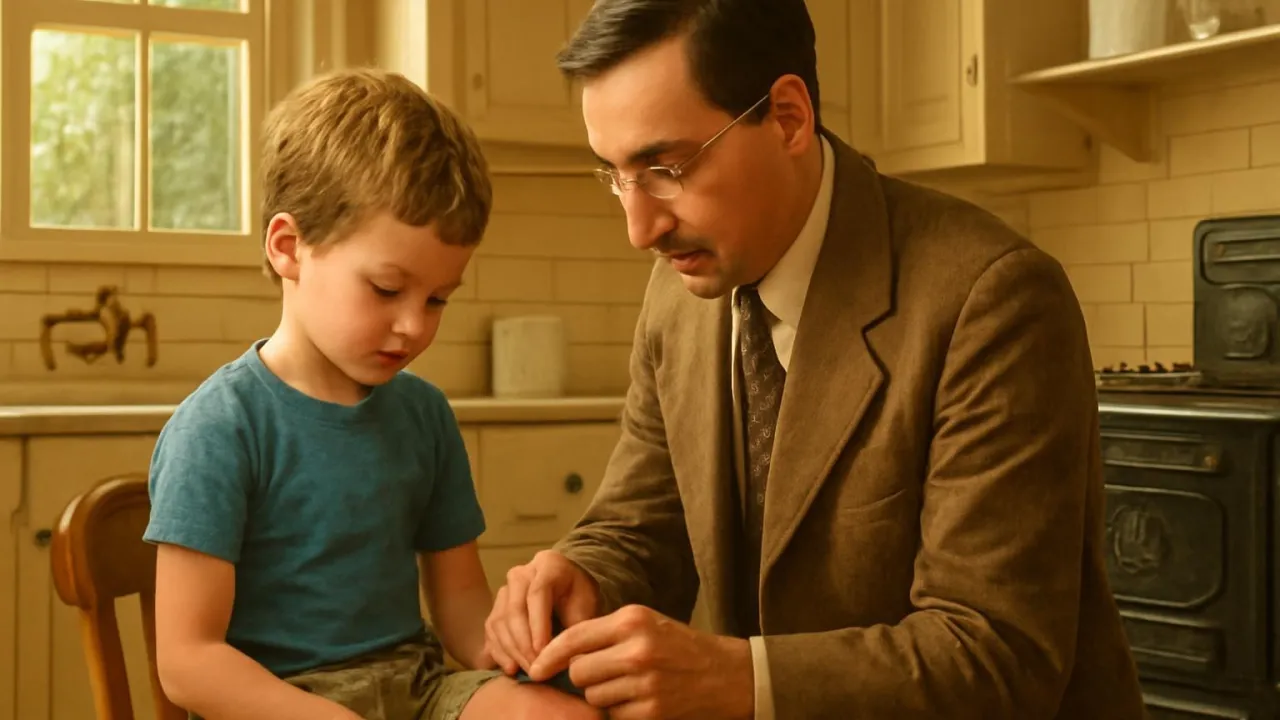
The first Band-Aids were rolled out in long strips and cut by hand!
✨ Word Sparks (Grade 2 Glossary)
Tap 🔊 to hear
gauze
Soft, clean cloth for wounds
germs
Tiny things that can make you sick
invention
A new idea or thing people make
🪝
Have you ever wondered who invented the Band-Aid?
1
A Smart Solution
Earle Dickson wanted to help his wife with small cuts. He put a piece of on tape, so she could use it herself. This idea made caring for cuts much easier. Soon, everyone wanted to try his .
2
How It Works
A Band-Aid has a soft pad to cover a wound, and sticky sides to hold it in place. You peel off the paper, press it on, and it stays put. The pad keeps out dirt and , so your skin can heal. Band-Aids come in many colors and shapes.
3
Used Everywhere
People use Band-Aids at home, school, and outside. They are small enough to carry in your pocket or backpack. You can find them in first aid kits all over the world. Band-Aids help everyone take care of little hurts quickly.
Over 100 billion Band-Aids have been made since 1920!
✨ Word Sparks (Grade 3 Glossary)
Tap 🔊 to hear
adhesive
Sticky stuff that helps things stay
prototype
The first model of an invention
sterile
Very clean, with no germs
🪝
Imagine you have a scraped knee—how does a Band-Aid help you heal?
1
A Kitchen Invention
Earle Dickson invented the Band-Aid in 1920 to help his wife, who often got small kitchen cuts. He combined a piece of gauze with tape, making a simple . This new invention allowed people to care for wounds without help. The idea quickly spread and was made by a company called Johnson & Johnson.
2
How Band-Aids Work
A Band-Aid has a soft, absorbent pad that covers the wound. The sticky, or , sides hold the bandage in place on your skin. The pad protects the cut from dirt and germs, helping the healing process. Its design keeps the area clean and dry, which prevents infection.
3
From Home to Everywhere
At first, Band-Aids were made by hand and cut into strips. As demand grew, machines started making Band-Aids in many shapes and sizes. Today, you find Band-Aids in homes, schools, and hospitals everywhere. They are a trusted tool in first aid kits around the world.
4
A Small Change, A Big Impact
Band-Aids made wound care easy and quick for everyone. They help people heal faster by protecting injuries from bacteria and friction. The invention inspired new types, like waterproof and fun cartoon designs. Band-Aids show how a simple idea can make a big difference in daily life.
The word 'Band-Aid' became so famous, it is now used for all adhesive bandages!
✨ Word Sparks (Grade 4 Glossary)
Tap 🔊 to hear
absorbent
Soaks up liquid quickly
infection
When germs make a wound worse
friction
Rubbing that can hurt skin
🪝
What if you could invent something that helps people heal every day?
1
A Caring Invention from the Kitchen
In 1920, Earle Dickson, a cotton buyer for Johnson & Johnson, noticed his wife Josephine often cut herself while cooking. He wanted to help her care for wounds without needing assistance. By attaching a small pad of sterile gauze to adhesive tape, he created the first prototype of the Band-Aid. This simple yet effective invention soon caught the attention of his employer, who began producing Band-Aids for everyone.
2
How Band-Aids Protect and Heal
Band-Aids use a soft, pad to cover wounds and a sticky adhesive to keep them in place. The sterile pad absorbs blood and fluid, while the adhesive forms a barrier against dirt and bacteria. This combination helps prevent and speeds up the healing process. The bandage also reduces , protecting the wound from further irritation.
3
From Handcrafted to Mass Production
Early Band-Aids were handmade and sold as long rolls that people cut themselves. As their popularity grew, machines were developed to produce individually wrapped, sterile bandages in many shapes and sizes. Today, Band-Aids are found in nearly every first aid kit, and they are used by people of all ages around the world. The invention has inspired many new types, including waterproof, flexible, and even antibacterial versions.
4
A Lasting Impact on Health
The Band-Aid revolutionized personal wound care by making it simple, quick, and accessible. It empowered people to treat minor injuries immediately, reducing the risk of and complications. The invention also influenced the design of other medical products, such as larger wound dressings and specialized bandages. Band-Aids remain a symbol of caring and everyday problem-solving in medicine.
1. How did Band-Aids change wound care for people?
2. Why is the pad on a Band-Aid sterile?
🤯 Mind-Blowing Fact • Grade 5
The Band-Aid was the first mass-produced sterile wound dressing for home use, saving millions from infection.
✨ Word Sparks (Grade 5 Glossary)
Tap 🔊 to hear
exudate
Fluid that leaks from a wound
pathogen
A tiny germ that causes disease
microenvironment
A small space with special conditions
🪝
What if one small invention could change how the whole world treats wounds?
1
A Solution Born from Everyday Life
In 1920, Earle Dickson, a Johnson & Johnson employee, noticed his wife Josephine frequently suffered minor kitchen cuts and burns. He wanted to help her treat these wounds independently, so he attached small pieces of sterile gauze to strips of surgical tape, covering them with crinoline to keep them clean. This clever prototype allowed Josephine to care for her injuries without assistance, and Earle soon shared his idea with his employer. Johnson & Johnson recognized the potential and began manufacturing Band-Aid adhesive bandages, revolutionizing personal wound care.
2
Engineering the Band-Aid: Materials and Mechanics
A Band-Aid consists of three main components: a sterile absorbent pad, a pressure-sensitive adhesive, and a flexible backing. The pad, typically made from cotton or rayon, absorbs blood and while providing a barrier against bacteria. The adhesive, originally made from natural rubber, ensures the bandage stays securely in place, even during movement. The backing, often crafted from plastic or fabric, provides flexibility and breathability, allowing the skin to heal efficiently while remaining protected from friction and contaminants.
3
From Handmade Rolls to Global Icon
The first Band-Aids were hand-assembled and sold as two-and-a-half-inch wide rolls, which users cut to size. By 1924, Johnson & Johnson introduced machine-made, individually wrapped sterile strips, improving convenience and hygiene. Over time, Band-Aids evolved to include waterproof, transparent, and even antibacterial versions, with specialized shapes for fingers, knees, and elbows. Today, more than 100 billion Band-Aids have been produced, making them a staple in first aid kits worldwide.
4
The Science of Healing and Protection
Band-Aids work by creating a that supports the body’s natural healing process. The sterile pad absorbs wound , while the adhesive seals the edges, preventing from entering. By reducing friction and exposure to air, Band-Aids minimize scab formation and promote faster, less painful healing. Modern research has led to advanced bandages with antimicrobial agents and moisture-control technology, further improving wound care outcomes.
5
A Lasting Legacy in Medicine and Culture
The Band-Aid’s impact extends beyond physical healing; it represents comfort, care, and innovation. Its success inspired the development of countless medical adhesives and dressings, shaping the future of emergency and home healthcare. The term 'Band-Aid' has become a generic trademark, used globally to describe adhesive bandages of all kinds. This simple invention continues to empower people of all ages to manage minor injuries swiftly and safely, proving that even the smallest ideas can have a world-changing effect.