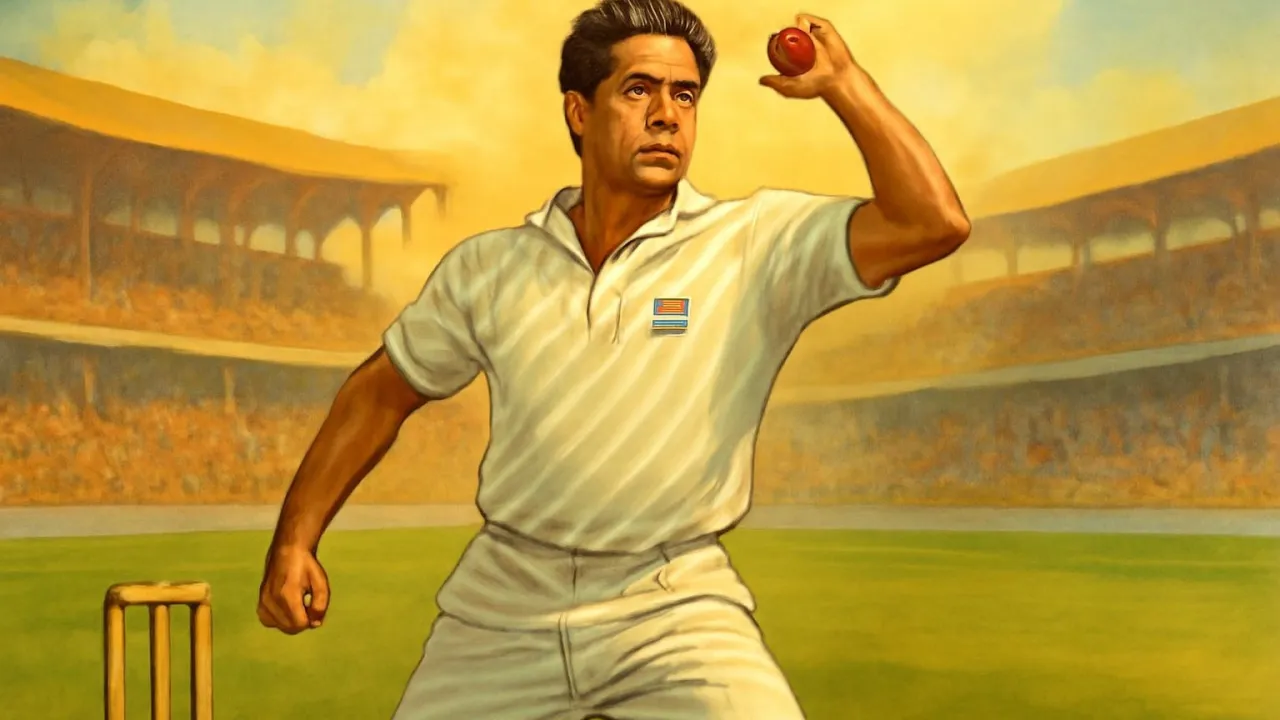
Anil Kumble is one of only two bowlers to take all 10 wickets in a Test innings!
✨ Word Sparks (Grade 2 Glossary)
Tap 🔊 to hear
bowler
A player who throws the ball to the batter
coach
A person who helps players get better
wicket
When the batter is out in cricket
🪝
What makes a cricket ball spin and surprise the batter?
1
Curious About Cricket
As a child, Anil was curious about how to spin the ball. He watched players closely and tried to copy their moves. He practiced bowling every day with his friends to get better.
2
Hard Work and Practice
Anil worked very hard to improve his bowling skills. He learned to spin the ball in different ways to confuse batters. His helped him practice many hours to become a great .
3
A Great Cricket Career
Anil played for India’s national team and became one of the best ever. He took more than 600 in international matches. He also became the captain and later coached the team.
Anil Kumble took all 10 wickets in a single Test match innings in 1999, a rare cricket feat!
✨ Word Sparks (Grade 3 Glossary)
Tap 🔊 to hear
perseverance
Not giving up even when it is hard
spin bowling
A way to bowl that makes the ball turn
sportsmanship
Being fair and kind during a game
🪝
How does a bowler use spin and skill to outsmart a batter in cricket?
1
Early Curiosity and Practice
Anil Kumble’s curiosity about cricket began when he watched skilled bowlers spin the ball. He practiced by bowling for hours each day to master his technique. His dedication helped him develop a unique style of leg .
2
Mastering Spin and Strategy
requires understanding physics and how the ball moves through the air. Anil learned to vary his speed and spin to confuse batters and take wickets. His and focus made him a respected player worldwide.
3
Overcoming Challenges
Anil faced many challenges, including tough opponents and injuries, but his helped him succeed. He adapted his bowling style and worked closely with coaches to improve. This resilience made him one of cricket’s greatest champions.
4
Legacy and Impact
Anil Kumble’s achievements changed cricket by inspiring many young players to focus on . He became captain and later coach, sharing his knowledge globally. His legacy is remembered for skill, leadership, and dedication.
Anil Kumble is one of only two bowlers in history to take all ten wickets in a Test innings!
✨ Word Sparks (Grade 4 Glossary)
Tap 🔊 to hear
accuracy
Hitting the right spot every time
innovations
New ideas that change how things are done
resilience
Bouncing back after hard times
🪝
What made Anil Kumble’s bowling style unique in cricket history?
1
Historical Cricket Context
During the 1990s and early 2000s, cricket was mostly dominated by fast bowlers, but Anil Kumble brought a new focus to leg spin bowling. His style combined with subtle variations that challenged even the best batters worldwide. This shift helped change how teams valued spin bowling and added excitement to the game.
2
Turning Points and Innovations
A major turning point in Anil’s career was when he took all ten wickets in a single Test innings, showing his unmatched skill and control. He innovated by mixing speed and spin, making his deliveries unpredictable and highly effective against strong opponents. This achievement remains one of cricket’s most celebrated moments.
3
Signature Techniques
Anil’s ability to bowl long, patient spells with consistent line and length was his signature technique. His calm demeanor and strategic thinking helped him outwit opponents and lead his team to many victories during challenging matches. He used subtle changes in spin to confuse batters consistently.
4
Global Impact and Leadership
Beyond his playing days, Anil became a respected captain and coach, influencing cricket worldwide. His leadership inspired new generations to value discipline, , and sportsmanship in the game, helping cricket grow globally. His mentorship helped develop many young Indian cricketers into stars.
Anil Kumble took 619 Test wickets, making him India’s highest Test wicket-taker ever!
✨ Word Sparks (Grade 5 Glossary)
Tap 🔊 to hear
accuracy
Hitting the exact spot every time
resilience
Recovering and trying again after hard times
legacy
What someone leaves behind for others
🪝
How did Anil Kumble’s mastery of spin bowling influence cricket’s history and future?
1
Early Life and Cricket Beginnings
Anil Kumble grew up in Bangalore, where his fascination with cricket began at a young age. Encouraged by his family and coaches, he developed a passion for leg spin bowling, practicing tirelessly to perfect his craft. His early years were marked by dedication to understanding the physics behind spin and bounce.
2
Technical Mastery and Career Records
Kumble’s bowling style was defined by his exceptional control, , and ability to vary pace subtly, which confused batters worldwide. Over his international career spanning from 1990 to 2008, he took 619 Test wickets and 337 One Day International wickets, becoming India’s highest wicket-taker. His rare feat of taking all 10 wickets in a single Test innings in 1999 remains a highlight in cricket history.
3
Leadership and Strategic Influence
As captain of the Indian cricket team, Kumble led with calm determination and strategic insight, fostering and teamwork. His leadership extended beyond the field as he later served as coach, helping shape India’s next generation of cricketers with emphasis on discipline and sportsmanship.
4
Legacy and Global Impact
Kumble’s impact on cricket transcends statistics; he inspired countless young players to embrace spin bowling and perseverance. His contributions helped elevate India’s status in international cricket and promoted the art of leg spin globally. His is celebrated for blending skill, humility, and leadership.
5
Inspiring Lessons from Kumble’s Journey
Anil Kumble’s story teaches the importance of hard work, focus, and never giving up despite challenges. His ability to innovate within tradition shows how passion and discipline can change sports history. Young athletes learn from his example that success comes from patience, practice, and respect for the game.