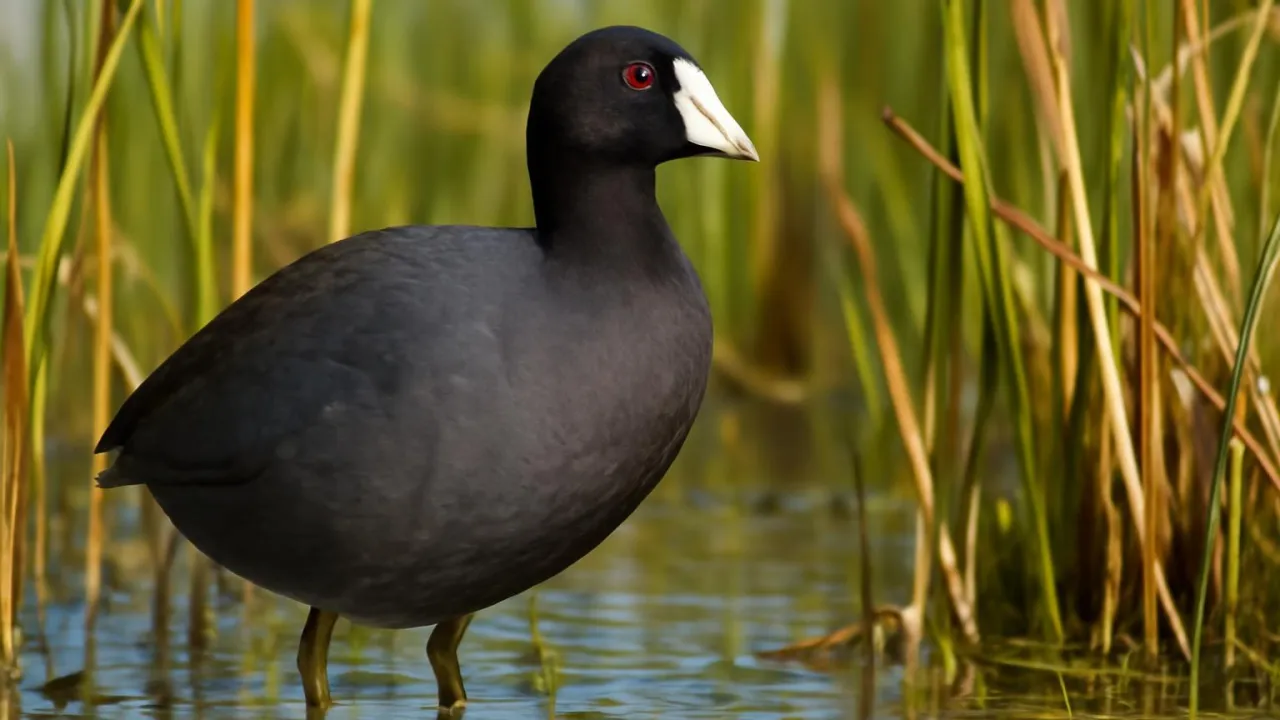
American Coots have special lobed toes that help them swim and walk on soft mud!
✨ Word Sparks (Grade 2 Glossary)
Tap 🔊 to hear
lobed toes
Toes with flat parts that help in swimming.
wetlands
Wet places like lakes and marshes where animals live.
nest
A bird’s home made of sticks and plants.
🪝
Have you ever seen a bird that swims with paddle-like feet?
1
Special Feet for Swimming
The American Coot has that help it swim in lakes and ponds. Its feet are not webbed like ducks but have lobes that spread out in water. These lobes give it good balance on soft mud and help it walk on land easily.
2
What It Eats and Where It Lives
This bird eats plants, insects, and small fish found in . It lives in freshwater lakes, marshes, and ponds across North America. The coot builds near water where it can find food and safety.
3
How It Moves Around
American Coots swim smoothly using their lobed feet to push water back. On land, they walk and run with their strong legs and toes. They can also dive underwater to catch food when needed.
American Coots use lobed toes to swim fast and walk safely on muddy wetlands.
✨ Word Sparks (Grade 3 Glossary)
Tap 🔊 to hear
camouflage
Colors that help animals hide from others.
predator
An animal that hunts other animals for food.
nutrients
Food parts that help animals grow and stay healthy.
🪝
Did you know the American Coot’s feet help it swim and walk on mud?
1
Lobed Toes for Better Movement
The American Coot has lobed toes that act like paddles when swimming. Unlike ducks, its toes are not fully webbed but have flaps that spread in water. This unique adaptation helps it move efficiently in water and walk on soft mud without sinking.
2
Habitat and Food Choices
This bird lives in freshwater wetlands, lakes, and marshes across North America. It feeds on aquatic plants, insects, and small fish found in these habitats. The coot’s diet helps it get needed for energy and growth.
3
Camouflage and Protection
The American Coot’s dark feathers help it blend into water plants, hiding it from . This is important for survival in open wetlands where danger can come from many animals. Its sharp beak also helps defend against threats.
4
Life Cycle and Behavior
Coots build floating nests anchored to plants near water edges. They lay eggs and both parents care for chicks. Young coots learn to swim and find food quickly to survive in their wetland home.
American Coots’ lobed toes let them swim well and walk on soft mud without sinking.
✨ Word Sparks (Grade 4 Glossary)
Tap 🔊 to hear
ecosystem
A place where plants and animals live together.
migration
Animals moving to new places during seasons.
conservation
Protecting nature and animals from harm.
🪝
How do American Coots use their special feet to survive in wetlands?
1
Unique Feet Help in Water and Land
American Coots have lobed toes that spread wide when swimming, pushing water efficiently. This adaptation allows them to glide through freshwater lakes and marshes with ease. On land, their toes contract to help them walk steadily on soft, muddy surfaces without sinking. Their feet also help them escape predators quickly by running on land or swimming fast.
2
Role in the Wetland Ecosystem
As omnivores, coots eat aquatic plants, insects, and small fish, playing a key role in controlling insect populations. They also serve as prey for larger predators like hawks and raccoons, creating important links in the food web. Their nesting habits help maintain wetland plant growth by anchoring nests to vegetation, which supports other animals and plants.
3
Geographic Range and Migration
American Coots breed across much of North America, from Canada to Mexico. Many migrate south during winter to find open water and food. This seasonal movement helps them survive cold months when wetlands freeze over, ensuring they have access to suitable habitats year-round.
4
Human Impact and Conservation
Wetland loss and pollution threaten coot habitats, but efforts protect many wetlands. Restoring marshes and lakes helps maintain healthy populations. People can help by keeping waterways clean, supporting wetland preservation projects, and learning about the importance of these .
American Coots’ lobed toes fold and spread, enabling both fast swimming and steady walking.
✨ Word Sparks (Grade 5 Glossary)
Tap 🔊 to hear
biomechanical
How body parts move to help animals live.
omnivore
An animal that eats plants and animals.
migration
Seasonal movement to find food or warmer places.
🪝
What makes the American Coot’s lobed feet a remarkable adaptation for wetland survival?
1
Taxonomy and Scientific Classification
The American Coot, scientifically named Fulica americana, belongs to the rail family Rallidae. Despite resembling ducks, it is more closely related to rails and gallinules. This bird’s unique anatomical features distinguish it within the order Gruiformes, highlighting its evolutionary adaptations to aquatic environments. Its classification helps scientists understand its behavior and relationships with other birds.
2
Physiological Mechanics of Locomotion
The coot’s lobed toes expand during swimming to increase surface area, generating powerful propulsion through water. When walking on land, the lobes fold back to reduce resistance, allowing efficient movement on soft, muddy substrates. This dual function exemplifies a sophisticated adaptation for amphibious life. The muscles controlling the toes are highly specialized for this movement.
3
Habitat, Distribution, and Migration Patterns
American Coots inhabit freshwater wetlands, lakes, and marshes across North America, from Alaska and Canada to Mexico. Seasonal occurs primarily in northern populations, moving southward to avoid frozen waters. This migration can cover hundreds of miles, ensuring access to suitable feeding and breeding habitats. Their ability to adapt to various climates supports their wide distribution.
4
Ecological Role and Human Impact
As , American Coots influence wetland ecosystems by consuming aquatic vegetation and invertebrates, thus balancing food webs. They serve as prey for raptors and mammals, contributing to biodiversity. Human activities like wetland drainage and pollution threaten their habitats, but conservation efforts have improved population stability. Protecting wetlands benefits many species including the coot.
5
Comparative Measurements and Conservation Status
Adult American Coots measure 14 to 17 inches long and weigh between 1.3 to 2.2 pounds. Their swimming speed can reach up to 3 miles per hour, aided by lobed feet. Currently, they are classified as Least Concern by conservation organizations, but ongoing habitat protection remains essential for their survival. Monitoring populations helps track environmental health and guides conservation strategies.