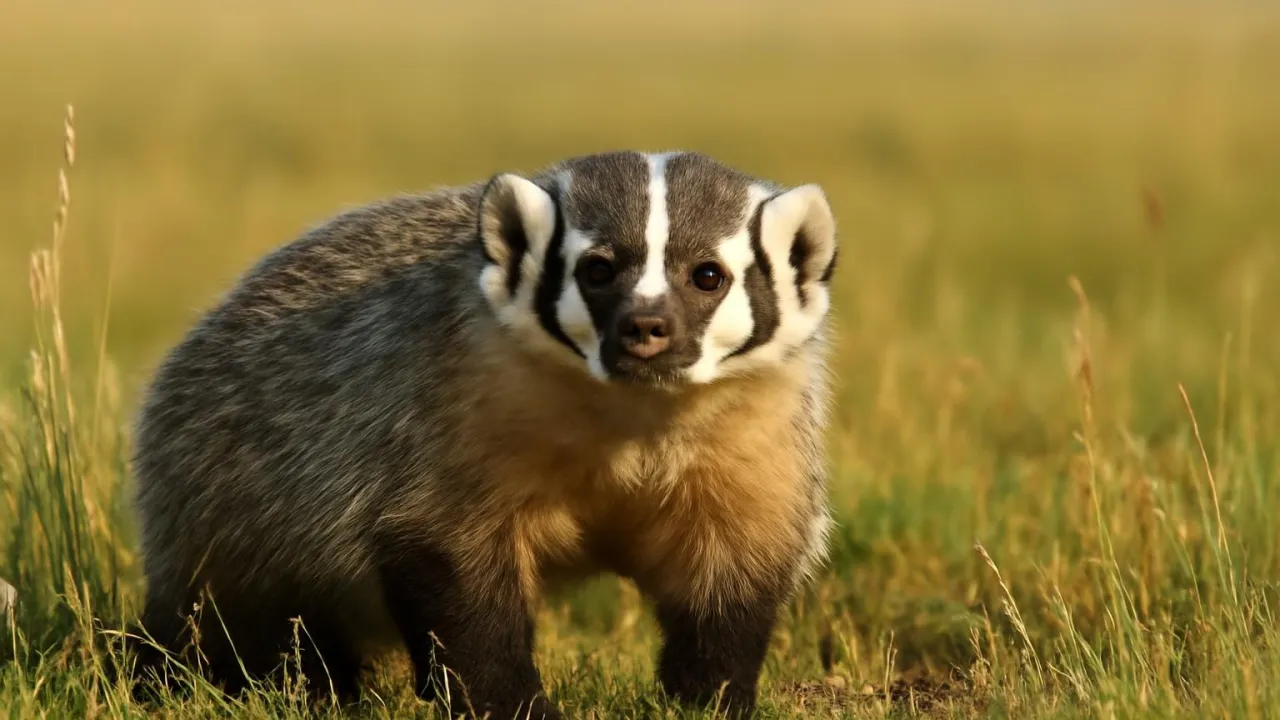
American badgers can dig tunnels up to 15 feet long to catch their prey!
✨ Word Sparks (Grade 2 Glossary)
Tap 🔊 to hear
burrow
A hole or tunnel made by an animal underground
predator
An animal that hunts other animals for food
prey
An animal that is hunted and eaten by another
🪝
Have you ever seen an animal that digs tunnels to catch food?
1
What Does the Badger Look Like?
American badgers have black and white fur with stripes on their face. They have strong legs and sharp claws for digging. Their bodies are low and wide, helping them move underground quickly.
2
Where Do Badgers Live?
Badgers live in dry grasslands and open forests across North America. They dig underground where they sleep and hide. These homes protect them from and weather.
3
How Do Badgers Find Food?
Badgers eat small animals like mice and insects. They use their claws to dig deep tunnels to catch . Their strong sense of smell helps them find food underground.
American badgers can dig through hard soil at speeds up to 3 feet per minute!
✨ Word Sparks (Grade 3 Glossary)
Tap 🔊 to hear
camouflage
Colors or patterns that help animals hide
predator
An animal that hunts other animals for food
symbiosis
When animals live together and help each other
🪝
Did you know the American badger uses its sharp claws to dig for food underground?
1
Badger’s Body and Camouflage
The American badger has fur with black and white stripes that help it blend into dry grasslands. This protects it from . Its low, stocky body and strong legs help it dig quickly. The claws are perfect tools for breaking soil and catching prey.
2
Where Badgers Live and Dig
Badgers live in open areas like grasslands and forests across North America. They create burrows underground to hide and sleep safely. These burrows also protect them from harsh weather and . Their digging is a key adaptation for survival.
3
How Badgers Hunt for Food
Badgers are that hunt small mammals such as mice and ground squirrels. They use their powerful claws to dig tunnels and flush out prey from underground. Their sharp sense of smell helps locate food hidden beneath the soil. This hunting method is very effective in their habitat.
4
Badger’s Role in the Ecosystem
Badgers help control populations of small animals, keeping ecosystems balanced. Their digging also aerates the soil, which helps plants grow better. They share their burrows with other animals, showing a form of . This makes them important members of their environment.
American badgers can dig tunnels up to 15 feet long in less than an hour to catch prey!
✨ Word Sparks (Grade 4 Glossary)
Tap 🔊 to hear
aerate
To add air to soil so plants can grow better
biodiversity
Many different kinds of plants and animals living together
ecosystem
A community of living things and their environment
🪝
How does the American badger’s digging change the world beneath our feet?
1
Physical Traits and Adaptations
The American badger has thick fur with black and white facial markings that provide camouflage in dry grasslands and forests. Its powerful legs and long, sharp claws allow it to dig rapidly through tough soil to reach prey. This digging ability is a key adaptation that helps it survive in its habitat. The badger’s low, stocky body also helps it move easily underground.
2
Habitat and Geographic Range
Badgers live throughout much of North America, from southern Canada to northern Mexico, favoring open grasslands, prairies, and forest edges. They dig extensive burrows underground to create safe dens for resting and raising young. These burrows protect them from predators and extreme weather conditions. Their choice of habitat affects the types of prey they can catch.
3
Ecosystem Role and Food Web Impact
As predators, badgers help control populations of small mammals like rodents and insects, maintaining balance in . Their digging soil, improving water absorption and nutrient cycling, which benefits plant growth. Badgers also share burrows with other animals, such as burrowing owls, showing symbiotic relationships. Human activities like farming can impact badger habitats and food sources.
4
Cause and Effect of Digging Behavior
The badger’s digging causes soil to turn over, which helps plants grow by mixing nutrients and air into the earth. This behavior also creates homes for other animals, increasing . However, heavy farming or construction can destroy burrows, forcing badgers to move or face danger. Their digging is essential for health but can conflict with human land use.
American badgers can dig tunnels up to 15 feet long within an hour, moving soil faster than most animals!
✨ Word Sparks (Grade 5 Glossary)
Tap 🔊 to hear
fossorial
Animals that dig and live underground
aerate
To add air to soil so plants grow well
ecosystem
All living things and their home working together
🪝
What makes the American badger a unique digging specialist in the mammal world?
1
Taxonomy and Scientific Classification
The American badger, scientifically named Taxidea taxus, belongs to the Mustelidae family, which includes weasels and otters. This species is native to North America and is adapted to a variety of open habitats such as grasslands, prairies, and forest edges. Its evolutionary traits reflect a specialization in (digging) behavior uncommon among many mammals. The badger’s lineage dates back millions of years, showing remarkable adaptation to its ecological niche.
2
Physiological Mechanics of Digging
American badgers possess robust forelimbs with long, curved claws that can exert strong force to break compact soil and roots. Their muscular shoulders and neck support rapid digging motions, enabling them to excavate tunnels up to 15 feet long within an hour. The badger’s low body profile reduces resistance underground, while sensitive whiskers help navigate in dark burrows. These physical features combine to make it an efficient subterranean predator.
3
Conservation Status and Human Impact
Currently, the American badger is classified as Least Concern by conservation groups, but habitat loss from agriculture and urban development poses ongoing risks. Road mortality and persecution due to perceived pest status also threaten local populations. Conservation efforts focus on habitat preservation and educating the public about badgers’ ecological benefits. Maintaining healthy populations supports balanced and biodiversity.
4
Ecological Role and Quantitative Comparisons
Badgers regulate populations of small mammals, consuming up to 20% of their body weight daily, which can be about 3 to 5 pounds of prey. Their digging soil, increasing oxygen levels by up to 30%, which promotes plant root growth. Compared to other digging mammals, badgers can excavate at speeds of approximately 3 feet per minute, faster than most burrowing animals. These quantitative traits highlight their role as engineers.
5
Historical and Cultural Significance
Throughout history, American badgers have been featured in Native American folklore as symbols of courage and tenacity. Early settlers noted their fierce digging and hunting skills, often calling them ‘ground wolves.’ Today, badgers are studied for their unique adaptations and contributions to soil health. Understanding their biology helps promote coexistence between humans and wildlife.