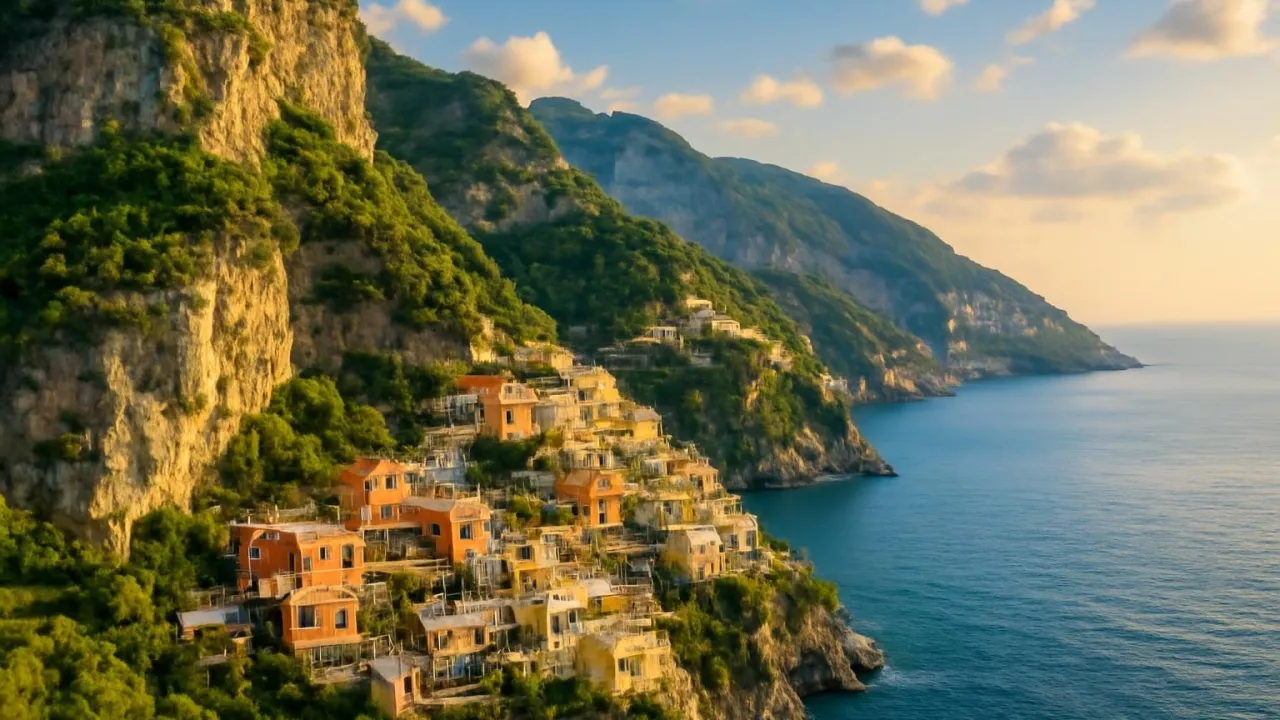
The Amalfi Coast cliffs stretch for almost 30 miles along the sea!
✨ Word Sparks (Grade 2 Glossary)
Tap 🔊 to hear
limestone
A soft, pale rock from the earth
mist
Tiny drops of water in the air
explore
To look around and discover
🪝
Can you imagine standing high above the sparkling sea?
1
Cliffs Touching the Clouds
The Amalfi Coast has cliffs that rise high above the water. Bright houses sit on the rocky edges, and green plants cover the slopes. The view is colorful and amazing for all who visit.
2
Nature’s Big Builders
Long ago, wind and rain shaped these cliffs from rock. The sea crashes at the bottom, making loud splashes and salty . Sometimes, small boats come close to the caves below.
3
Villages on the Edge
People built small villages right on the cliffs. Winding paths and steps connect the homes and gardens. Visitors love to walk these paths and look out over the blue water.
Some cliff villages are only reached by hundreds of stone steps!
✨ Word Sparks (Grade 3 Glossary)
Tap 🔊 to hear
erosion
When wind or water wears away rock
limestone
A rock made from old sea life
grove
A group of trees growing together
🪝
What would it feel like to walk along a cliff where the sky meets the sea?
1
A Coast of Color and Height
The Amalfi Coast cliffs rise steeply above the Tyrrhenian Sea, creating a breathtaking sight. Villages with pastel-colored houses cling to the rocky slopes, looking like they might tumble into the waves. Lush green lemon trees and wildflowers add splashes of color to the landscape. Visitors can see boats gliding far below, making the cliffs seem even taller.
2
Nature’s Sculptors: Wind and Water
Millions of years ago, the cliffs formed from , a soft rock made from ancient sea creatures. Over time, wind and rain caused , carving out caves and sharp edges in the rock. The sea’s constant crashing creates a salty mist and echoes that fill the air. These natural forces keep shaping the cliffs even today.
3
Paths in the Sky
People built winding stone paths and stairs to connect the villages. Some paths hug the cliff edge, offering dizzying views of the blue water below. The famous Path of the Gods lets hikers see the whole coastline from above. These paths make it possible to explore the cliffs safely.
4
A Place Full of Life
The Amalfi Coast is home to unique plants and animals that thrive on the rocky slopes. Lemon , bright flowers, and even tiny lizards can be found here. The cliffs protect villages from strong winds and storms. People celebrate the coast’s beauty with festivals, music, and delicious food.
The cliffs’ limestone was formed from ancient sea shells and tiny sea creatures!
✨ Word Sparks (Grade 4 Glossary)
Tap 🔊 to hear
tectonic
Related to Earth’s moving plates
erosion
Wearing away of rock by nature
UNESCO
A group that protects world treasures
🪝
Have you ever wondered how towering cliffs can hold entire villages safely above the sea?
1
Nature’s Towering Walls
The Amalfi Coast cliffs stretch along southern Italy, rising up to 1,150 feet above the Tyrrhenian Sea. Their dramatic shapes were created over millions of years as plates shifted and ancient sea creatures formed limestone layers. The cliffs’ pale rocks reflect sunlight, making the coastline shimmer with golden and pink hues. These natural walls have become a symbol of Italy’s wild beauty.
2
Wind, Water, and Erosion
Powerful forces like wind, rain, and ocean waves have slowly sculpted the cliffs through . Water seeps into cracks, freezes, and breaks the limestone apart, while waves carve out caves at the base. This ongoing process creates new shapes and even causes small rockslides. Despite these changes, the cliffs remain strong and continue to rise above the sea.
3
Building on the Edge
For centuries, people built villages right on the cliffs, using local stone and clever engineering. Houses are often stacked, with narrow alleys and stairways connecting each level. The famous Path of the Gods is a hiking trail that follows ancient routes, offering breathtaking views and connecting remote villages. These paths allow people to safely travel and trade along the steep coast.
4
A World Treasure
The Amalfi Coast is now a World Heritage Site, recognized for its unique landscape and cultural history. Its cliffs support rare plants, colorful flowers, and even special lizards found nowhere else. Festivals, music, and food traditions celebrate the coast’s beauty and bring visitors from around the world. The cliffs are not just rocks—they are living landmarks full of life and stories.
1. What natural process shapes the cliffs over time?
2. Why are the cliffs important to people?
🤯 Mind-Blowing Fact • Grade 5
The Amalfi Coast cliffs formed over 65 million years from ancient sea life and shifting Earth plates!
✨ Word Sparks (Grade 5 Glossary)
Tap 🔊 to hear
limestone
Rock made from ancient sea creatures
microclimate
A small area’s special weather pattern
terrace
A flat area cut into a slope for farming
🪝
What secrets might you discover if you explored the ancient limestone cliffs of the Amalfi Coast?
1
A Geological Marvel
Stretching nearly 30 miles along Italy’s southern edge, the Amalfi Coast cliffs are a testament to the power of geological time. These cliffs, some soaring over 1,150 feet (350 meters), were formed by the slow accumulation of from the remains of ancient marine organisms, compressed over 65 million years. Tectonic uplift pushed these layers skyward, while the relentless action of wind and water continues to sculpt their dramatic faces. The result is a breathtaking interplay of vertical rock, lush vegetation, and dazzling sunlight reflecting off the Tyrrhenian Sea.
2
Dynamic Forces: Erosion and Adaptation
Erosion remains the cliffs’ most powerful sculptor, as rainwater seeps into cracks, freezes, and expands, fracturing the rock. Ocean waves undercut the cliff bases, forming sea caves and occasional rockfalls. Despite these challenges, the cliffs are remarkably stable, supporting terraced lemon groves and centuries-old villages. The ongoing balance between erosion and human adaptation is a defining feature of life along the Amalfi Coast.
3
Engineering on the Edge
Villages like Positano and Amalfi are feats of architectural ingenuity, with homes and churches built directly into the cliffside using local stone. Narrow, winding stairways and ancient mule paths, such as the famed Sentiero degli Dei (Path of the Gods), connect communities perched hundreds of feet above the sea. These routes were engineered to withstand landslides and provide access for trade, agriculture, and emergency escape, demonstrating a deep understanding of the landscape’s risks and rewards.
4
Ecological and Cultural Riches
The cliffs host a remarkable variety of plant and animal life, including rare Mediterranean flowers, wild herbs, and endemic lizard species. Terraced gardens maximize limited space, using stone walls to prevent soil erosion and capture precious rainwater. The region’s unique , shaped by the cliffs’ orientation and altitude, allows for the cultivation of famous Amalfi lemons and olives. Cultural traditions, from vibrant festivals to ancient fishing techniques, are intimately tied to the land’s dramatic geography.
5
A Living World Heritage
Designated a UNESCO World Heritage Site in 1997, the Amalfi Coast cliffs are protected for their extraordinary natural and cultural value. Tourism brings millions of visitors each year, supporting local economies but also challenging conservation efforts. Sustainable tourism, careful engineering, and community stewardship are now essential to preserve the cliffs’ beauty and stability for future generations. The Amalfi Coast stands as a living example of harmony between human creativity and the forces of nature.