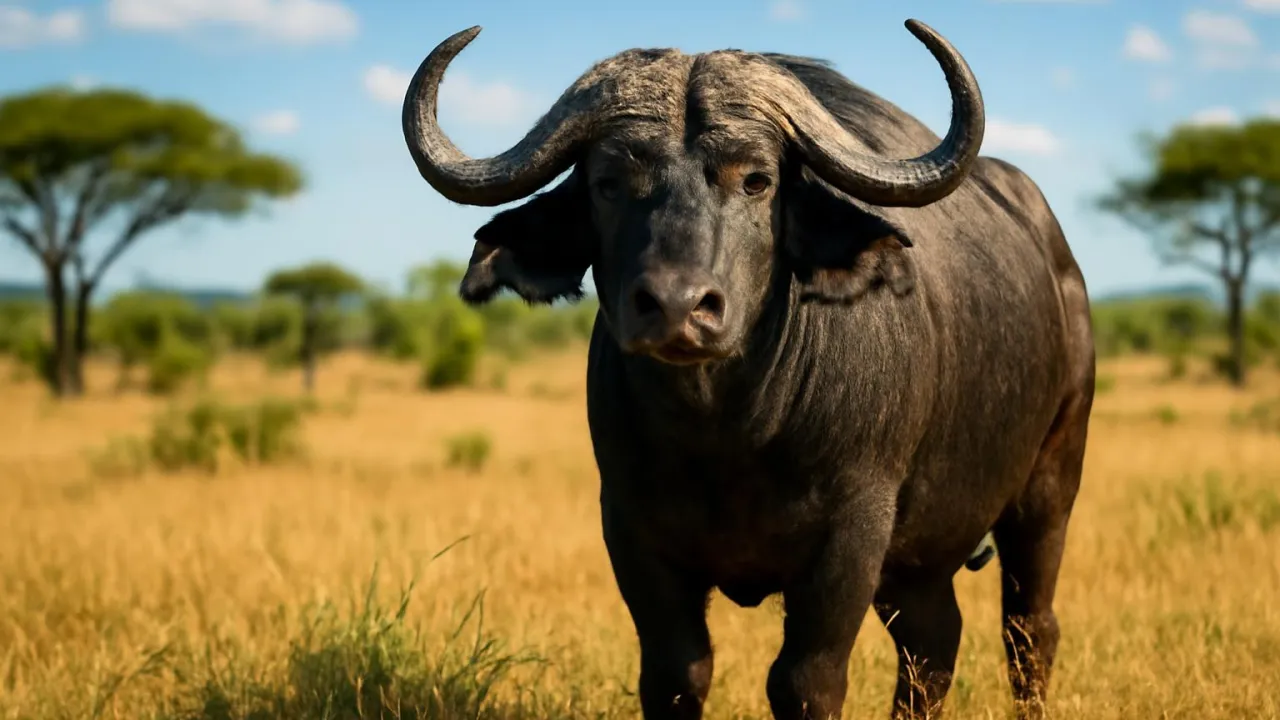
Buffalo herds can have over 100 animals working together for safety.
✨ Word Sparks (Grade 2 Glossary)
Tap 🔊 to hear
herd
A big group of animals together
predator
An animal that hunts others
savanna
A warm grassy place with few trees
🪝
Have you ever seen an animal with huge horns that protect it?
1
Strong Body and Big Horns
The African Cape Buffalo has very strong muscles and big horns. These horns curve out and up. They help the buffalo protect itself from enemies. The buffalo’s dark fur helps it blend in the grasslands.
2
Living in Groups
Buffalo live in large groups called to stay safe. They eat grasses and drink water every day. They live in warm and woodland areas. The herds help watch for like lions.
3
How They Stay Safe
When danger comes, buffalo gather close together to protect each other. They use their sharp horns to fight off threats. The works as a team to keep young buffalo safe. This teamwork helps them survive in the wild.
African Cape Buffalo horns can span over 5 feet, making a strong shield.
✨ Word Sparks (Grade 3 Glossary)
Tap 🔊 to hear
adaptation
A body change that helps survival
camouflage
Colors that help animals hide
predator
An animal that hunts others
🪝
Did you know the African Cape Buffalo uses its horns to defend its herd?
1
Physical Features and Adaptations
The African Cape Buffalo has large, curved horns that protect it from . Its thick, dark fur helps it blend into the tall grasses of the savanna. Strong muscles allow it to run quickly when needed. These help it survive in a dangerous environment.
2
Habitat and Behavior
Buffalo live in the savannas and woodlands of sub-Saharan Africa. They eat mostly grasses and need water daily to stay healthy. Their behavior includes forming large herds that provide safety in numbers. This social structure helps protect them from like lions.
3
Herd Life and Defense
When threatened, buffalo use and group defense to avoid . The herd surrounds the young and weak members to keep them safe. Buffalo use their horns to fight off attackers, showing powerful for survival. This teamwork is key to their success in the wild.
4
Role in the Ecosystem
Buffalo help keep grasslands healthy by grazing on grasses and spreading seeds. They are prey for large , playing a vital role in the food web. Their movements also create paths used by other animals. This interaction supports ecosystem balance and biodiversity.
Buffalo herds can include over 100 members working together to survive threats.
✨ Word Sparks (Grade 4 Glossary)
Tap 🔊 to hear
herd
A large group of animals together
ecosystem
A community of living things and places
migration
Moving to new places for food or water
🪝
How does the African Cape Buffalo’s strong herd behavior affect its survival?
1
Physical Strength and Defense
The African Cape Buffalo’s large, curved horns serve as a powerful defense against predators such as lions and hyenas. Its muscular body allows it to charge quickly and protect itself effectively. These physical traits have evolved to help the buffalo survive in the harsh savanna environment. The buffalo’s dark fur also provides camouflage among the tall grasses.
2
Herd Dynamics and Safety
Buffalo live in large that can number over one hundred individuals, which helps protect them from predators. When threatened, the herd forms a tight circle around calves and weaker members, using their horns to fend off attackers. This cooperative behavior increases the survival chances of all herd members. Herds also communicate through sounds and body language to stay coordinated.
3
Ecological Role and Impact
As herbivores, buffalo graze on grasses, which helps maintain the balance of the savanna by preventing overgrowth. Their grazing patterns promote new plant growth and help disperse seeds through their droppings. Buffalo are also an important food source for large carnivores, linking them directly to the food web. Human activities like hunting and habitat loss have affected buffalo populations.
4
Geographic Distribution and Habitat
African Cape Buffalo are found throughout sub-Saharan Africa, especially in savannas, floodplains, and woodlands. They prefer areas near water sources since they drink daily. Seasonal occur when food or water becomes scarce, showing their adaptability. Conservation efforts focus on protecting these habitats to ensure buffalo survival.
1. Why do buffalo form tight circles when threatened?
2. What role do buffalo play in the savanna ecosystem?
🤯 Mind-Blowing Fact • Grade 5
African Cape Buffalo horns form a solid boss that can withstand powerful predator attacks.
✨ Word Sparks (Grade 5 Glossary)
Tap 🔊 to hear
keystone species
An animal important for ecosystem balance
sexual dimorphism
Males and females look different
digestive system
Body parts that break down food
🪝
What makes the African Cape Buffalo a keystone species in African savannas?
1
Scientific Classification and Physical Traits
The African Cape Buffalo, scientifically known as Syncerus caffer, belongs to the Bovidae family. Adult males can weigh up to 1,900 pounds and stand nearly 6 feet tall at the shoulder. Their distinctive large, curved horns form a continuous bone shield called a boss, which protects their skull during fights. This species exhibits , with males larger than females.
2
Physiological Adaptations and Behavior
Cape Buffalo have powerful muscles and a robust skeletal structure that support their heavy horns and enable rapid charges reaching speeds of up to 35 miles per hour. Their efficiently processes tough grasses, extracting nutrients vital for survival. Socially, they form complex herds with cooperative defense strategies that include vocal communication and coordinated movements to deter predators.
3
Ecological Importance and Conservation
As a keystone herbivore, the Cape Buffalo influences vegetation patterns by grazing, which maintains savanna biodiversity. Their droppings enrich soil nutrients and aid seed dispersal, supporting plant growth. However, habitat loss and diseases like bovine tuberculosis threaten populations. Conservation programs focus on habitat protection and disease management to sustain buffalo numbers.
4
Geographic Range and Migration Patterns
African Cape Buffalo inhabit sub-Saharan Africa, favoring savannas, floodplains, and woodlands with reliable water sources. Seasonal migrations occur over tens of miles to access fresh grazing areas and water during dry periods. These movements demonstrate their adaptability to environmental changes and resource availability.
5
Comparative Facts and Records
Adult Cape Buffalo can weigh nearly twice as much as a large male lion and run faster than many predators at speeds up to 35 miles per hour. Their horn span can exceed 5 feet, providing a formidable defense. These impressive physical characteristics make them one of Africa’s most powerful and resilient large mammals.