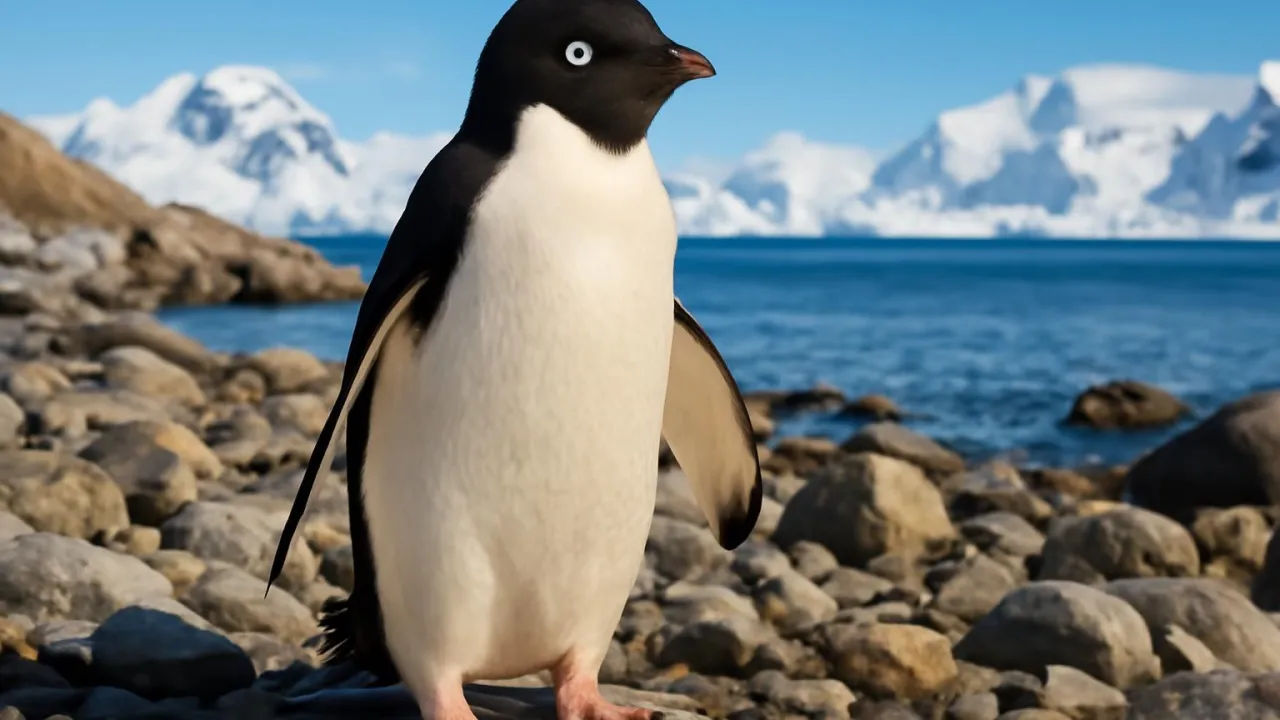
Adelie penguins can swim underwater at speeds up to 7 miles per hour!
✨ Word Sparks (Grade 2 Glossary)
Tap 🔊 to hear
predator
An animal that hunts other animals for food
nest
A home made by birds to hold their eggs
krill
Tiny sea animals that penguins like to eat
🪝
Have you ever seen a bird that swims better than it flies?
1
What Adelie Penguins Look Like
Adelie penguins have black backs and white fronts that help them hide. Their short wings help them swim fast underwater. They have bright eyes and a white ring around each eye.
2
Where They Live
These penguins live along the cold Antarctic coast and on icy islands nearby. They build from small stones on rocky shores. The cold weather keeps them safe from many .
3
How They Find Food
Adelie penguins dive deep into cold ocean waters to catch and fish. They use their strong flippers to swim quickly. Their sharp beaks help them grab slippery prey.
Adelie penguins can dive over 500 feet deep to hunt for food in the ocean!
✨ Word Sparks (Grade 3 Glossary)
Tap 🔊 to hear
camouflage
Colors or patterns that help hide animals
predator
An animal that hunts other animals
nutrients
Food parts that help animals grow strong
🪝
How do Adelie penguins survive in the icy Antarctic waters?
1
Appearance and Adaptations
Adelie penguins have black backs and white fronts for in water. This coloring helps them hide from above and below. Their short, stiff wings act like flippers for swimming. Their thick feathers keep them warm in freezing temperatures.
2
Habitat and Nesting
They live along the rocky Antarctic coast and nearby islands covered in ice. Adelie penguins build nests from small stones to keep their eggs safe. These nests protect eggs from cold winds and . They return to the same nesting sites every year.
3
Diet and Hunting
Adelie penguins mainly eat krill, small fish, and squid found in cold ocean waters. They use strong swimming skills to catch prey quickly. Their sharp beaks help them grab slippery food. Hunting underwater is their main way to get .
4
Survival Challenges
Adelie penguins face like leopard seals and skuas that hunt their eggs. They use teamwork to protect their young. Climate changes affect their icy habitat and food supply. Their adaptations help them survive in this harsh environment.
1. Why do Adelie penguins have black backs and white fronts?
2. What helps Adelie penguins catch slippery fish?
🤯 Mind-Blowing Fact • Grade 4
Adelie penguins can swim up to 7 miles per hour and dive deeper than 500 feet to find food!
✨ Word Sparks (Grade 4 Glossary)
Tap 🔊 to hear
countershading
Color pattern that hides animals in water
site fidelity
Returning to the same place to live or breed
nutrient cycling
Nature’s way of moving food parts around
🪝
What makes Adelie penguins key players in the Antarctic ecosystem?
1
Physical Adaptations and Camouflage
Adelie penguins have a black back and white belly that create camouflage called , which helps them avoid predators both above and below the water’s surface. Their strong flipper-like wings enable agile swimming, allowing them to catch prey efficiently in cold Antarctic waters. Thick insulating feathers and a layer of fat protect them from freezing temperatures, enabling survival in harsh climates.
2
Habitat and Nesting Behavior
These penguins inhabit rocky shores and ice edges along the Antarctic continent and surrounding islands. They build nests from small stones to protect their eggs from cold winds and predators such as skuas. Returning annually to the same breeding sites, Adelie penguins demonstrate strong , which supports colony stability and chick survival.
3
Role in the Food Web
Adelie penguins are important mid-level predators feeding mainly on krill, small fish, and squid, which helps control these populations in the Antarctic marine ecosystem. They are prey for leopard seals and killer whales, which keeps predator-prey balances intact. Their guano enriches the soil, supporting moss and microbial life, showing their indirect role in .
4
Human Impact and Climate Change
Climate change threatens Adelie penguins by reducing sea ice and altering krill availability, impacting their food supply and breeding success. Human activities such as fishing and tourism can disturb their habitats and nesting colonies. Conservation efforts focus on protecting Antarctic ecosystems to ensure these penguins continue to thrive despite environmental changes.
1. Why do Adelie penguins build nests from stones?
2. How does climate change affect Adelie penguins?
🤯 Mind-Blowing Fact • Grade 5
Adelie penguins can dive over 500 feet deep and swim at speeds up to 7 miles per hour underwater!
✨ Word Sparks (Grade 5 Glossary)
Tap 🔊 to hear
countershading
Color pattern that helps hide animals in water
site fidelity
Returning to the same place to live or breed
subcutaneous fat
Fat under skin that keeps animals warm
🪝
How do Adelie penguins’ unique biology and ecosystem roles reflect Antarctic survival?
1
Scientific Classification and Physical Traits
Adelie penguins belong to the genus Pygoscelis and species adeliae, part of the Spheniscidae family. They measure between 18 and 28 inches tall and weigh around 8 to 12 pounds. Their countershaded plumage provides camouflage from aerial and aquatic predators. Their flipper-like wings, adapted for swimming rather than flying, allow them to reach speeds up to 7 miles per hour underwater.
2
Physiological Adaptations for Cold and Diving
These penguins have dense waterproof feathers and a thick layer of that insulates against Antarctic cold. Their circulatory system conserves heat by redirecting blood flow in extremities. Adelie penguins can dive over 500 feet deep and hold their breath for more than two minutes, enabling them to hunt krill and fish efficiently in frigid waters.
3
Reproductive Behavior and Nesting Ecology
During the breeding season, Adelie penguins return to rocky coastal colonies to build nests from carefully selected stones. They lay two eggs, which both parents incubate for about 32 to 34 days. ensures that penguins return to the same nesting grounds annually, promoting colony stability and chick survival in a harsh environment.
4
Ecological Role and Food Web Dynamics
Adelie penguins serve as both predator and prey in Antarctic ecosystems, feeding primarily on krill, small fish, and squid. Their predation helps regulate prey populations, while they provide food for leopard seals and orcas. Their guano contributes essential nutrients to terrestrial ecosystems, supporting microbial and plant life, thus playing a vital role in nutrient cycling.
5
Conservation Challenges and Climate Impact
Climate change poses significant threats by reducing sea ice, which affects krill populations and breeding habitats. Human activities such as commercial fishing and tourism increase stress on penguin colonies. Conservation efforts include protected marine areas and international agreements to preserve Antarctic biodiversity and ensure the survival of Adelie penguins amid environmental changes.