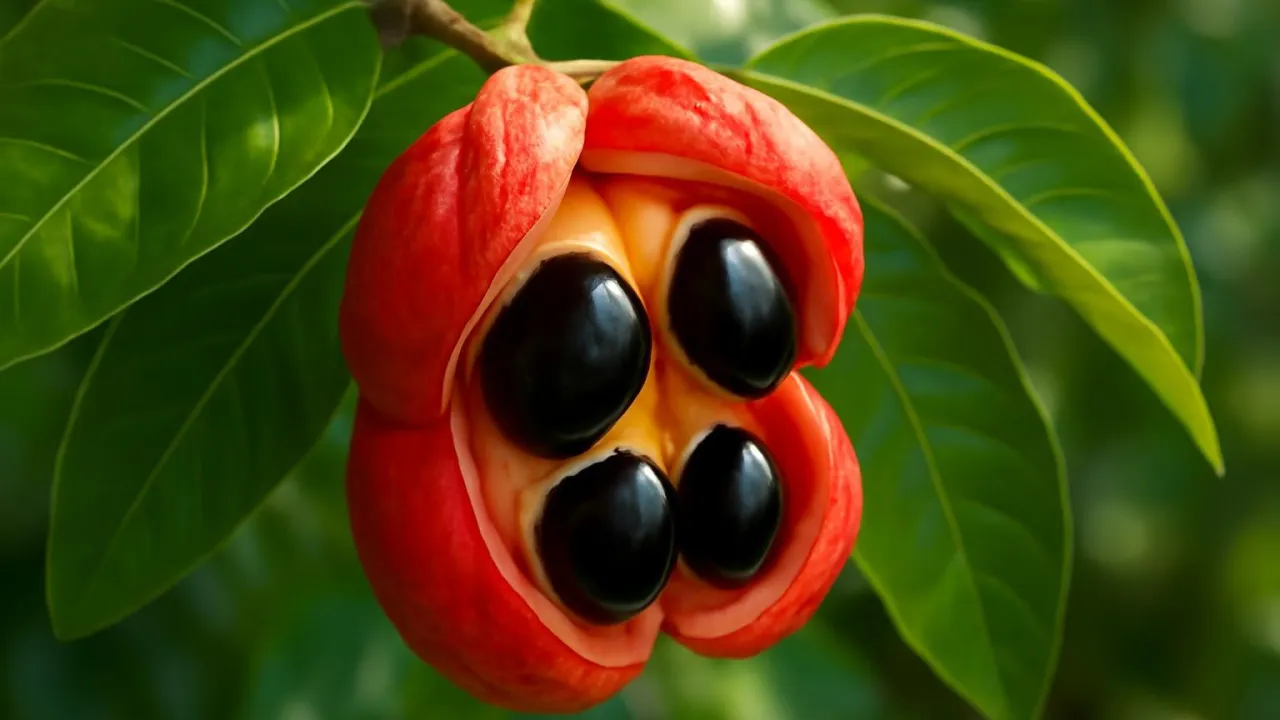
Ackee fruit is poisonous if eaten before it opens fully like a star.
✨ Word Sparks (Grade 2 Glossary)
Tap 🔊 to hear
poisonous
Something that can make you very sick
tropical
A warm place near the equator
ripe
Ready to eat and tastes good
🪝
Have you ever seen a fruit that opens like a star?
1
Ackee’s Bright Appearance
The ackee fruit is bright yellow and round when it is . It opens wide like a star shape. The tree can grow up to thirty feet tall. People notice its bright color in the forest.
2
Where Ackee Grows
Ackee trees grow best in warm, rainy places like forests. They need lots of sunlight and water to grow well. This fruit is native to West Africa but is also found in the Caribbean. Farmers grow ackee for food and sale.
3
Eating Ackee Safely
Ackee fruit must be fully before eating because it can be if not. People cook the fruit carefully to make it safe. The yellow part inside is soft and tasty when cooked. Eating unripe ackee can cause sickness.
2. What happens if you eat ackee before it is ripe?
🤯 Mind-Blowing Fact • Grade 3
Ackee fruit’s star shape helps spread its seeds by attracting animals safely.
✨ Word Sparks (Grade 3 Glossary)
Tap 🔊 to hear
adaptation
A change that helps plants or animals survive
toxin
A poison made by plants or animals
tropical
A warm place near the equator
🪝
Did you know ackee fruit looks like a bright yellow star when ripe?
1
Ackee’s Unique Star Shape
The ackee fruit opens like a star when it ripens fully on the tree. This shape helps the seeds spread far away from the tree. The bright yellow color warns animals that it is ready to eat. This is an example of for survival.
2
Where Ackee Thrives
Ackee trees grow in climates with warm temperatures and plenty of rainfall. They are native to West Africa but were introduced to the Caribbean, where they became an important food source. The trees prefer well-drained soil and full sunlight.
3
How Ackee Protects Itself
Before the fruit opens, ackee contains that can harm animals and people if eaten. This poison protects the fruit until it is ripe and safe. When the fruit opens, the toxins decrease, allowing animals to eat the soft yellow flesh and help spread the seeds.
4
Using Ackee in Food
Ackee is a popular ingredient in Caribbean cooking, especially in Jamaica’s national dish, ackee and saltfish. The fruit must be cooked properly to remove . This cooking process makes the fruit safe and tasty for people to enjoy.
2. What must happen before ackee fruit is safe to eat?
🤯 Mind-Blowing Fact • Grade 4
Ackee’s bright star shape signals ripeness and helps spread seeds through animals safely.
✨ Word Sparks (Grade 4 Glossary)
Tap 🔊 to hear
ecosystem
A community of plants, animals, and their environment
adaptation
A change that helps plants or animals survive
toxin
A poison made by plants or animals
🪝
Have you ever wondered how a fruit’s shape can protect it and help it grow?
1
Ackee’s Star Shape and Seed Spread
Ackee fruit opens into a bright yellow star shape when ripe, which is an to attract animals. This shape allows the seeds inside to be easily seen and spread by animals that eat the fruit. The fruit’s bright color signals ripeness, helping animals know when it is safe to eat. This cause-and-effect relationship helps the ackee tree reproduce successfully.
2
Where Ackee Grows and Thrives
Ackee trees grow naturally in tropical regions of West Africa and the Caribbean, thriving in warm, rainy climates. They prefer well-drained soils and full sunlight for healthy growth. Humans cultivate ackee in these regions for food and economic reasons, showing how people impact . The tree’s ability to grow in these environments shows its strong to tropical conditions.
3
How Ackee Protects Itself with Toxins
Before the ackee fruit fully ripens and opens, it contains that protect it from predators and animals. These toxins cause sickness if the fruit is eaten too early, which encourages animals to wait until the fruit is safe. This natural defense helps the fruit survive until its seeds are ready to disperse. The toxins decrease as the fruit opens, allowing animals to safely eat the soft yellow arils.
4
Ackee’s Role in Food and Culture
Ackee plays an important role in Caribbean food culture, especially in Jamaica where it is part of the national dish, ackee and saltfish. The fruit must be harvested and cooked carefully to remove , showing human knowledge of plant safety. Ackee also supports local economies and food webs by providing nutrition to people and wildlife. This relationship between humans and ackee highlights the fruit’s ecological and cultural significance.
1. Why does ackee fruit have toxins before it opens?
2. How do humans use ackee fruit?
🤯 Mind-Blowing Fact • Grade 5
Ackee fruit contains natural toxins that require careful cooking to keep people safe.
✨ Word Sparks (Grade 5 Glossary)
Tap 🔊 to hear
hypoglycin
A natural poison found in unripe ackee fruit
taxonomy
The science of classifying living things
aril
The soft, edible part around a seed
🪝
Did you know ackee is a fruit with a fascinating scientific and cultural story?
1
Scientific Classification and Origin
Ackee, scientifically known as Blighia sapida, belongs to the Sapindaceae family, which includes lychee and longan. It is native to West Africa but was introduced to the Caribbean in the 18th century, where it became culturally significant. The tree grows up to 30 feet tall and produces distinctive yellow fruit that opens like a star. This taxonomic context helps us understand its botanical relatives and origins.
2
Physiology and Fruit Mechanics
The ackee fruit contains three large black seeds surrounded by soft, creamy that are edible when fully ripe. The fruit’s outer skin splits open naturally when ripe, exposing the arils and seeds. Inside, the arils provide nutrients and energy for animals that disperse the seeds. However, unripe fruit contains toxins, which inhibit metabolism and can cause severe poisoning if consumed.
3
Conservation and Cultural Importance
In the Caribbean, especially Jamaica, ackee is a staple food and part of the national dish, ackee and saltfish. Proper harvesting and cooking methods have been developed to avoid poisoning. Conservation efforts focus on sustainable cultivation to protect wild populations and maintain genetic diversity. The fruit’s cultural history reflects a blend of African heritage and Caribbean adaptation.
4
Ecological Role and Human Impact
Ackee trees contribute to tropical forest ecosystems by providing food for birds and mammals that help disperse seeds. Their growth depends on warm temperatures between 70 and 90 degrees Fahrenheit and well-drained soils. Human agricultural practices affect ackee populations positively through cultivation and negatively through habitat loss. Understanding these dynamics is crucial for balancing ecological health and food production.
5
Quantitative Comparisons and Growth
Ackee trees can grow up to 30 feet (9 meters) tall and produce fruit measuring 2 to 4 inches (5 to 10 centimeters) in length. The fruit opens fully when temperatures are warm, usually above 75 degrees Fahrenheit. Seeds inside can weigh up to 10 grams each, while the edible provide essential nutrients. These measurements help farmers optimize growing conditions and harvest timing.