Introduction
Hold two magnets close together and you can feel an invisible force pull them together with a snap—or push them apart as if an invisible spring were between them! Magnetism is a fundamental force of nature created by the motion of electric charges inside atoms.
A foundational concept in this investigation is (pronounced mag-NET-ik feeld), which refers to: The invisible region around a magnet where magnetic forces of attraction and repulsion can be detected. Every part of Why Magnets Stick within Everyday Physics & Chemistry builds upon this essential concept.
At the Grade 4 level of Science & Technology (Everyday Physics & Chemistry), researchers compare structure, function, and environmental context to see how , , and shape measurable outcomes.
Key Features
Every magnet—whether a horseshoe magnet, a bar magnet, or a refrigerator magnet—has two ends called a North Pole and a South Pole. The golden rule of magnetism is simple: opposite poles attract (North pulls South), while like poles repel (North pushes North away, and South pushes South away).
To analyze these defining traits accurately, specialists examine (fair-oh-mag-NET-ik): Materials such as iron, nickel, cobalt, and steel whose atomic domains strongly align with a magnet. Alongside (The invisible region around a magnet where magnetic forces of attraction and repulsion can be detected.), these specialized characteristics set Why Magnets Stick apart within Everyday Physics & Chemistry.
Field Observation & Evidence: Researchers studying Why Magnets Stick observe how physical form matches function in Science & Technology. Each observable feature provides a clear advantage that supports stability, survival, or performance across changing conditions.

How It Works
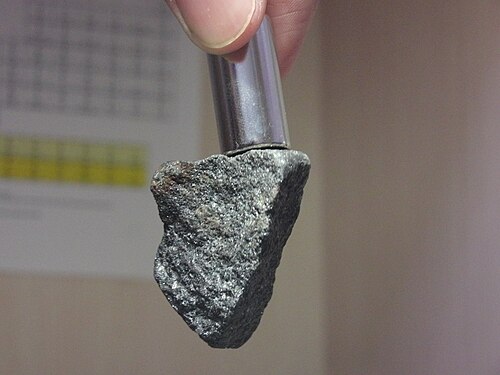
Why does a magnet stick to an iron nail or steel refrigerator door, but not to wood, plastic, or aluminum? Inside metals—specifically iron, nickel, and cobalt—spinning electrons form microscopic magnetic regions called domains. In ordinary iron, those domains point in random directions and cancel out; inside a permanent magnet, all the domains line up pointing the same way, creating an invisible around the magnet!
This step-by-step process relies on (pronounced mag-NEE-toh-sfeer), defined as: Earth’s protective global generated by swirling liquid iron in the planet’s outer core. Each stage of the process prepares the way for the next phase to unfold.
Cause-and-Effect Balance: When conditions remain balanced, and interact inside the to keep the system running smoothly. If any single link in this sequence is disrupted, the entire pace of activity shifts.
In Our World
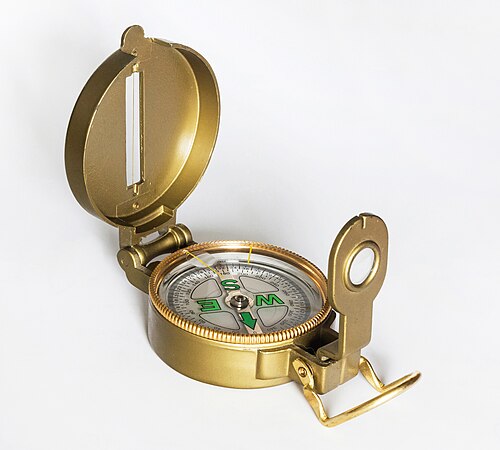
Our entire planet Earth is a giant magnet! Churning liquid iron and nickel in Earth’s outer core generate a global (the ). That is why a magnetic compass needle always points toward magnetic north—and why Earth’s magnetic shield deflects harmful solar wind particles toward the poles to create the glowing Northern Lights (auroras)!
Understanding how Why Magnets Stick functions in real environments also involves (fair-oh-mag-NET-ik): Materials such as iron, nickel, cobalt, and steel whose atomic domains strongly align with a magnet. Even when surrounding conditions shift across seasons or regions, the interaction between , Ferromagnetic, and helps sustain balance and resilience in the wider environment.
Global & Practical Significance: Opposite magnetic poles attract (N-S), while like magnetic poles repel (N-N or S-S). Furthermore, Only metals—iron, nickel, cobalt, and steel—have magnetic domains that align strongly with magnets.
Amazing Facts
1. Remarkable Scale & Numbers: If you cut a bar magnet in half to try to separate its North and South poles, you don’t get a single pole—you get two smaller magnets, each with its own North and South pole! This discovery highlights why is central to understanding Why Magnets Stick.
2. Extraordinary Adaptation & Design: High-speed Maglev (magnetic levitation) trains in Japan and China use powerful electromagnets to float slightly above the track with zero wheel friction, reaching 600 km/h (375 mph)! Specialized conditions involving make these adaptations possible.
3. Surprising Scientific & Historical Record: Not all metals are magnetic: gold, silver, copper, and aluminum cans are NOT attracted to magnets—only iron, nickel, cobalt, and their alloys like steel! Over time, processes linked to leave a lasting mark across Everyday Physics & Chemistry.
Read & Review
Chapter Synthesis: Throughout this investigation of Why Magnets Stick in Science & Technology (Everyday Physics & Chemistry), we examined its core foundations, defining traits, step-by-step mechanisms, and real-world connections using key terms like , , and .
Academic Vocabulary Review: • (mag-NET-ik feeld): The invisible region around a magnet where magnetic forces of attraction and repulsion can be detected. • (fair-oh-mag-NET-ik): Materials such as iron, nickel, cobalt, and steel whose atomic domains strongly align with a magnet. • (mag-NEE-toh-sfeer): Earth’s protective global magnetic field generated by swirling liquid iron in the planet’s outer core.
Critical Thinking Check: (1) What happens when you bring the North Pole of one magnet close to the North Pole of another magnet? — They repel (push away from) each other because like poles repel. (2) Which of these everyday metals will stick strongly to a magnet? — Iron, nickel, cobalt, and steel.