Introduction
Hold two magnets close together and you can feel an invisible force pull them together with a snap—or push them apart as if an invisible spring were between them! Magnetism is a fundamental force of nature created by the motion of electric charges inside atoms.
An important word to know in this book is (mag-NET-ik feeld). Magnetic Field means: The invisible region around a magnet where magnetic forces of attraction and repulsion can be detected. Learning about Magnetic Field helps us understand how Why Magnets Stick fits into Everyday Physics & Chemistry.
Key Features
Every magnet—whether a horseshoe magnet, a bar magnet, or a refrigerator magnet—has two ends called a North Pole and a South Pole. The golden rule of magnetism is simple: opposite poles attract (North pulls South), while like poles repel (North pushes North away, and South pushes South away).
Scientists and explorers also look closely at (fair-oh-mag-NET-ik), which means: Materials such as iron, nickel, cobalt, and steel whose atomic domains strongly align with a magnet. These special traits make Why Magnets Stick easy to spot and study.

How It Works
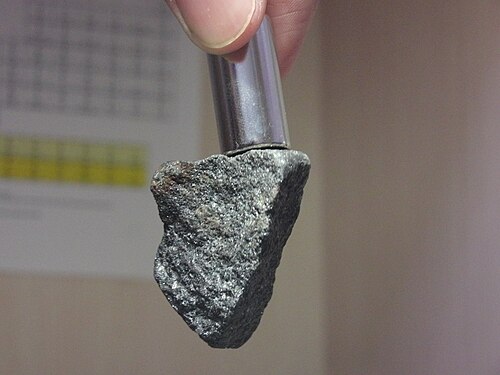
Why does a magnet stick to an iron nail or steel refrigerator door, but not to wood, plastic, or aluminum? Inside metals—specifically iron, nickel, and cobalt—spinning electrons form microscopic magnetic regions called domains. In ordinary iron, those domains point in random directions and cancel out; inside a permanent magnet, all the domains line up pointing the same way, creating an invisible around the magnet!
Here is another helpful term: (mag-NEE-toh-sfeer). It means: Earth’s protective global generated by swirling liquid iron in the planet’s outer core. Step by step, Magnetic Field and Magnetosphere work together in nature.
In Our World
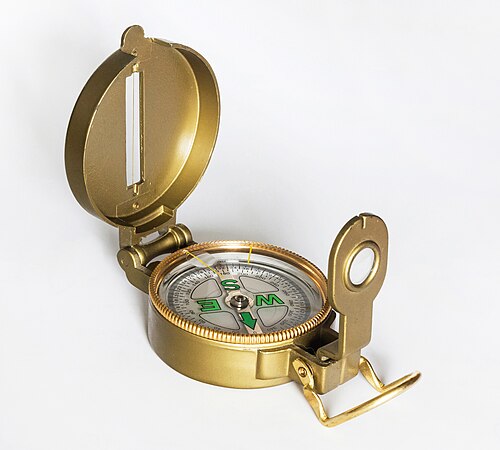
Our entire planet Earth is a giant magnet! Churning liquid iron and nickel in Earth’s outer core generate a global (the ). That is why a magnetic compass needle always points toward magnetic north—and why Earth’s magnetic shield deflects harmful solar wind particles toward the poles to create the glowing Northern Lights (auroras)!
Understanding how Why Magnets Stick works in our world also involves (fair-oh-mag-NET-ik): Materials such as iron, nickel, cobalt, and steel whose atomic domains strongly align with a magnet. Even when surrounding conditions shift across seasons or regions, the interaction between , Ferromagnetic, and helps sustain balance and resilience in the wider environment.
Amazing Facts
Amazing Fact #1: If you cut a bar magnet in half to try to separate its North and South poles, you don’t get a single pole—you get two smaller magnets, each with its own North and South pole!
Amazing Fact #2: High-speed Maglev (magnetic levitation) trains in Japan and China use powerful electromagnets to float slightly above the track with zero wheel friction, reaching 600 km/h (375 mph)!
Amazing Fact #3: Not all metals are magnetic: gold, silver, copper, and aluminum cans are NOT attracted to magnets—only iron, nickel, cobalt, and their alloys like steel!
Read & Review
Let's review what we discovered about Why Magnets Stick! In this book, we explored how , , and connect to Everyday Physics & Chemistry.
Key Question #1: What happens when you bring the North Pole of one magnet close to the North Pole of another magnet? Answer: They repel (push away from) each other because like poles repel. Opposite magnetic poles attract (N-S), while like magnetic poles repel (N-N or S-S).
Key Question #2: Which of these everyday metals will stick strongly to a magnet? Answer: Iron, nickel, cobalt, and steel. Only metals—iron, nickel, cobalt, and steel—have magnetic domains that align strongly with magnets.