Introduction
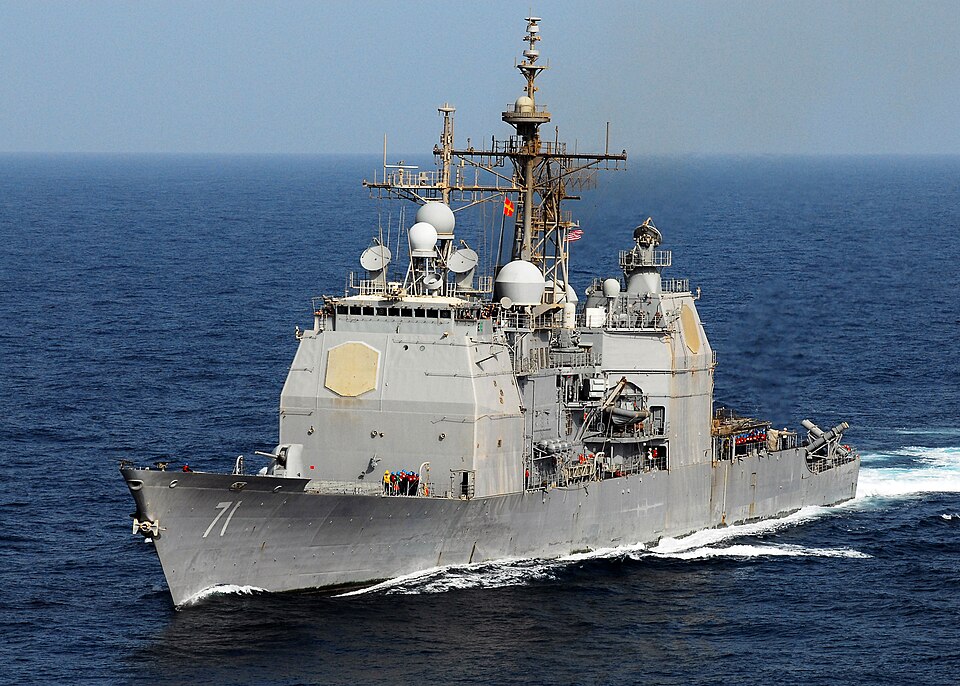
The Ticonderoga-class guided-missile cruisers (CG-47 class) were the first surface warships in history built around the AN/SPY-1 and Aegis Combat System, serving as the Air and Missile Defense Commander (IAMDC) for every U.S. Carrier Strike Group.
A foundational concept in this investigation is (pronounced fayzd uh-RAY RAY-dar), which refers to: A flat electronic radar panel that steers beams in milliseconds using computer timing rather than a rotating mechanical dish. Every part of Guided-Missile Cruisers: Ticonderoga-Class Air-Defense Flagships within 🚢 U.S. Navy Surface Fleet, Submarines ("The Silent Service") & Hospital Ships builds upon this essential concept.
In Grade 5 advanced nonfiction inquiry across United States Armed Forces (🚢 U.S. Navy Surface Fleet, Submarines ("The Silent Service") & Hospital Ships), synthesizing primary evidence around , , and reveals how complex systems operate and adapt over time.
Key Features
Measuring 567 feet (173 meters) in length and displacing 9,800 tons, Ticonderoga-class cruisers feature twin superstructures mounting four fixed radar arrays for continuous 360-degree sky coverage, plus stern hangars for two MH-60R Seahawk helicopters.
To analyze these defining traits accurately, specialists examine (kun-TROHL-uh-bul pich proh-PEL-er): A ship propeller whose blades can rotate their angle to push forward or reverse thrust instantly without reversing the engine. Alongside (A flat electronic radar panel that steers beams in milliseconds using computer timing rather than a rotating mechanical dish.), these specialized characteristics set Guided-Missile Cruisers: Ticonderoga-Class Air-Defense Flagships apart within 🚢 U.S. Navy Surface Fleet, Submarines ("The Silent Service") & Hospital Ships.
Field Observation & Evidence: Researchers studying Guided-Missile Cruisers: Ticonderoga-Class Air-Defense Flagships observe how physical form matches function in United States Armed Forces. Each observable feature provides a clear advantage that supports stability, survival, or performance across changing conditions.
How It Works
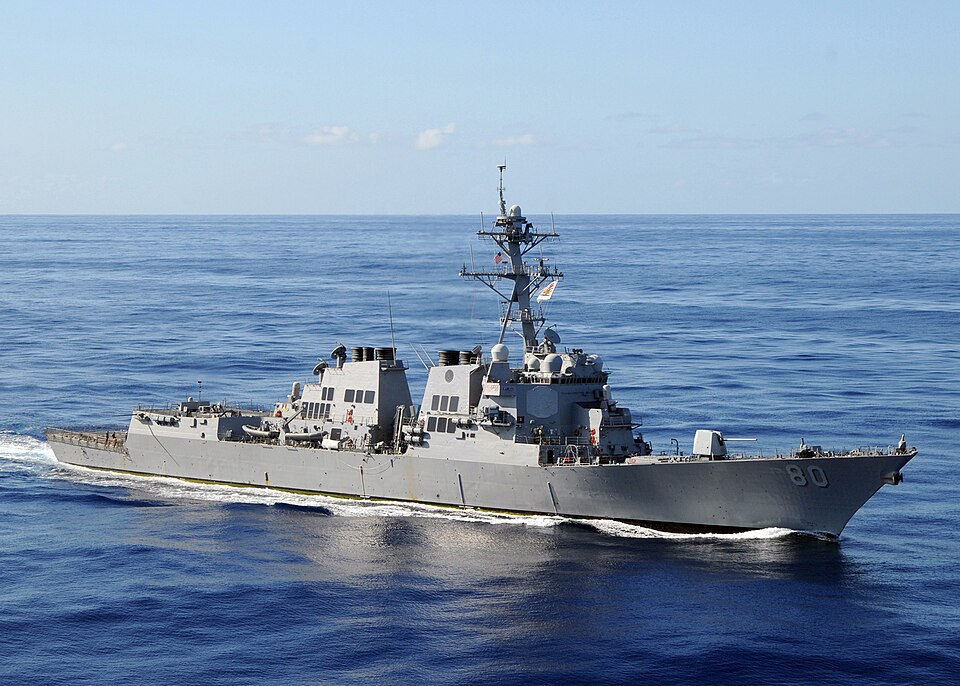
Four General Electric LM2500 gas turbines drive controllable-reversible pitch propellers, allowing a 9,800-ton cruiser traveling at full speed (32.5 knots) to come to a complete stop in just two ship lengths!
This step-by-step process relies on (pronounced FLAG-ship), defined as: A command vessel equipped with extra communication and radar consoles where a commodore or commander directs fleet operations. Each stage of the process prepares the way for the next phase to unfold.
Cause-and-Effect Balance: When conditions remain balanced, and interact inside the to keep the system running smoothly. If any single link in this sequence is disrupted, the entire pace of activity shifts.
In Our World
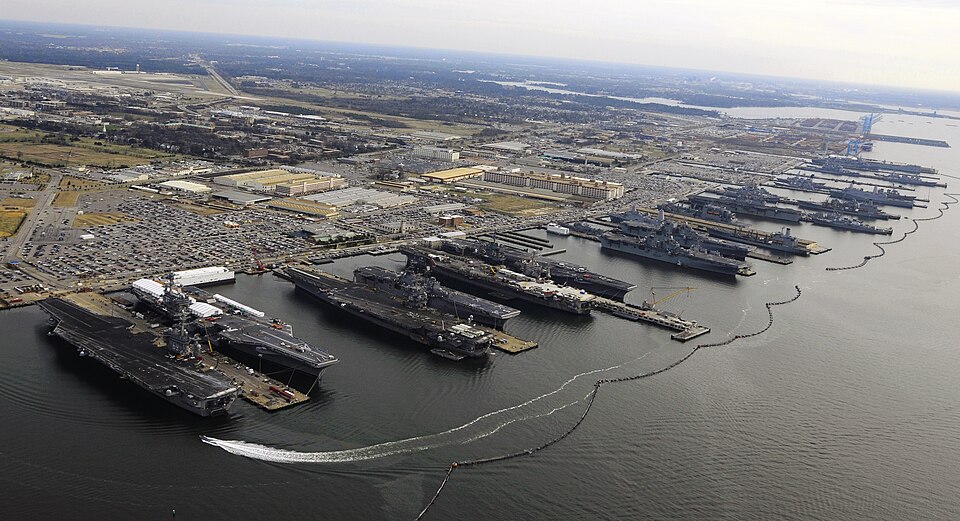
Every ship in the Ticonderoga class is named after a historic American battle or turning point—including Virginia's Battle of Yorktown, Battle of Cape St. George, and Battle of Chancellorsville (renamed USS Robert Smalls)—with Atlantic Fleet cruisers homeported at Naval Station Norfolk, Virginia.
Understanding how Guided-Missile Cruisers: Ticonderoga-Class Air-Defense Flagships functions in real environments also involves (kun-TROHL-uh-bul pich proh-PEL-er): A ship propeller whose blades can rotate their angle to push forward or reverse thrust instantly without reversing the engine. Even when surrounding conditions shift across seasons or regions, the interaction between , Controllable-Pitch Propeller, and helps sustain balance and resilience in the wider environment.
Global & Practical Significance: Ticonderoga-Class Guided-Missile Cruisers operates as Ticonderoga-Class Guided-Missile Cruiser supporting Integrated Air & Missile Defense Commander for Carrier Strike Groups. Furthermore, Key technical specification: 567 ft Length • 32.5 Knots • Carrier Strike Group Air-Defense Command.
Amazing Facts
1. Remarkable Scale & Numbers: Thanks to controllable-reversible pitch propeller blades that twist in the water, a 567-foot Ticonderoga cruiser can stop from 30+ knots in just 1,100 feet! This discovery highlights why is central to understanding Guided-Missile Cruisers: Ticonderoga-Class Air-Defense Flagships.
2. Extraordinary Adaptation & Design: In 2023, the Navy renamed CG-62 USS Robert Smalls to honor the heroic African American maritime pilot and Congressman! Specialized conditions involving make these adaptations possible.
3. Surprising Scientific & Historical Record: A Ticonderoga cruiser's radar computer can track more than 100 aircraft and surface contacts simultaneously over a 200-mile radius. Over time, processes linked to leave a lasting mark across 🚢 U.S. Navy Surface Fleet, Submarines ("The Silent Service") & Hospital Ships.
Read & Review
Chapter Synthesis: Throughout this investigation of Guided-Missile Cruisers: Ticonderoga-Class Air-Defense Flagships in United States Armed Forces (🚢 U.S. Navy Surface Fleet, Submarines ("The Silent Service") & Hospital Ships), we examined its core foundations, defining traits, step-by-step mechanisms, and real-world connections using key terms like , , and .
Academic Vocabulary Review: • (fayzd uh-RAY RAY-dar): A flat electronic radar panel that steers beams in milliseconds using computer timing rather than a rotating mechanical dish. • (kun-TROHL-uh-bul pich proh-PEL-er): A ship propeller whose blades can rotate their angle to push forward or reverse thrust instantly without reversing the engine. • (FLAG-ship): A command vessel equipped with extra communication and radar consoles where a commodore or commander directs fleet operations.
Critical Thinking Check: (1) What is the primary classification and role of Ticonderoga-Class Guided-Missile Cruisers? — Ticonderoga-Class Guided-Missile Cruiser — Integrated Air & Missile Defense Commander for Carrier Strike Groups. (2) Which key engineering or performance specification defines Ticonderoga-Class Guided-Missile Cruisers? — 567 ft Length • 32.5 Knots • Carrier Strike Group Air-Defense Command.