Introduction
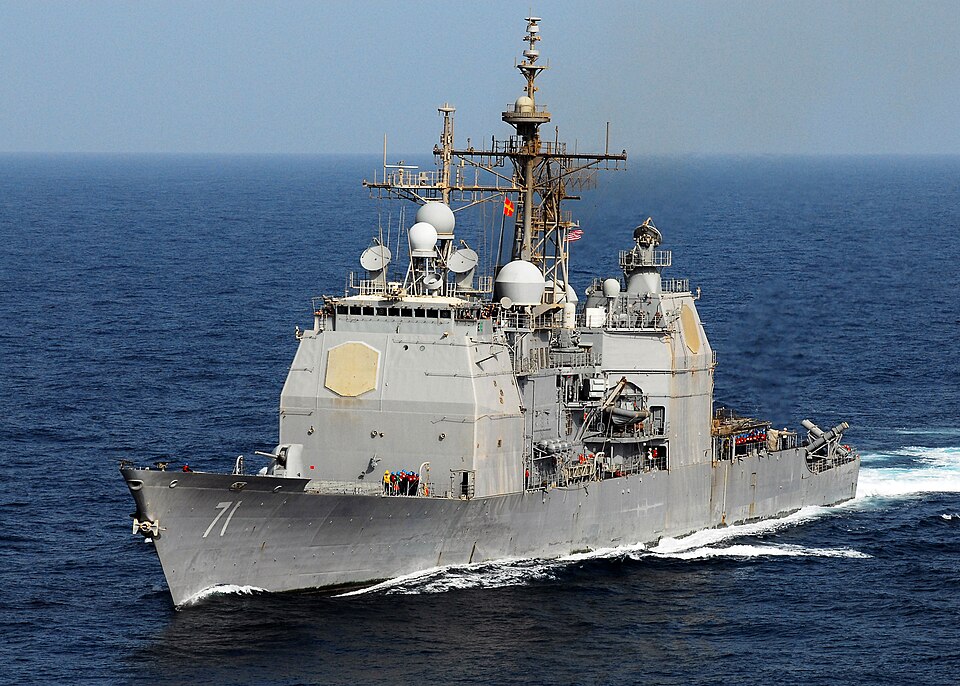
Ticonderoga-class Guided-Missile Cruisers are 567-foot-long command ships that sail beside aircraft carriers as the "Air Traffic & Radar Shield Captain" of the fleet!
An important word to know in this book is (fayzd uh-RAY RAY-dar). Phased-Array Radar means: A flat electronic radar panel that steers beams in milliseconds using computer timing rather than a rotating mechanical dish. Learning about Phased-Array Radar helps us understand how Guided-Missile Cruisers: Ticonderoga-Class Air-Defense Flagships fits into 🚢 U.S. Navy Surface Fleet, Submarines ("The Silent Service") & Hospital Ships.
Key Features
Each cruiser has two tall deckhouses carrying four flat radar panels, two helicopter hangars for MH-60R Seahawks, and reversible propeller blades for quick stopping.
Scientists and explorers also look closely at (kun-TROHL-uh-bul pich proh-PEL-er), which means: A ship propeller whose blades can rotate their angle to push forward or reverse thrust instantly without reversing the engine. These special traits make Guided-Missile Cruisers: Ticonderoga-Class Air-Defense Flagships easy to spot and study.
How It Works
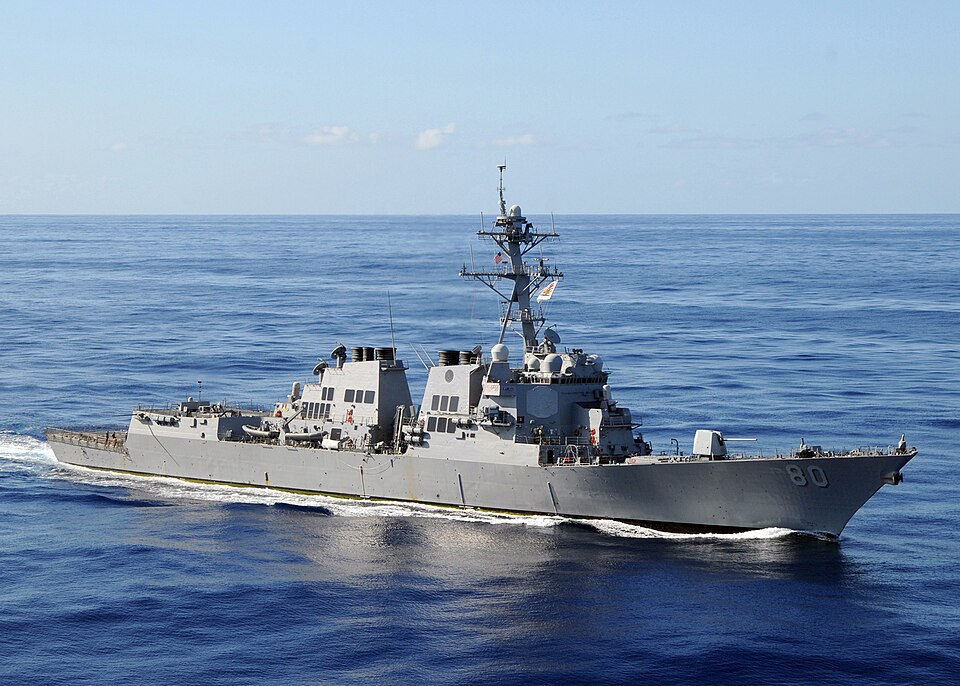
Inside the cruiser's Combat Information Center, radar specialists monitor the skies for hundreds of miles around the Carrier Strike Group.
Here is another helpful term: (FLAG-ship). It means: A command vessel equipped with extra communication and radar consoles where a commodore or commander directs fleet operations. Step by step, and Flagship work together.
In Our World
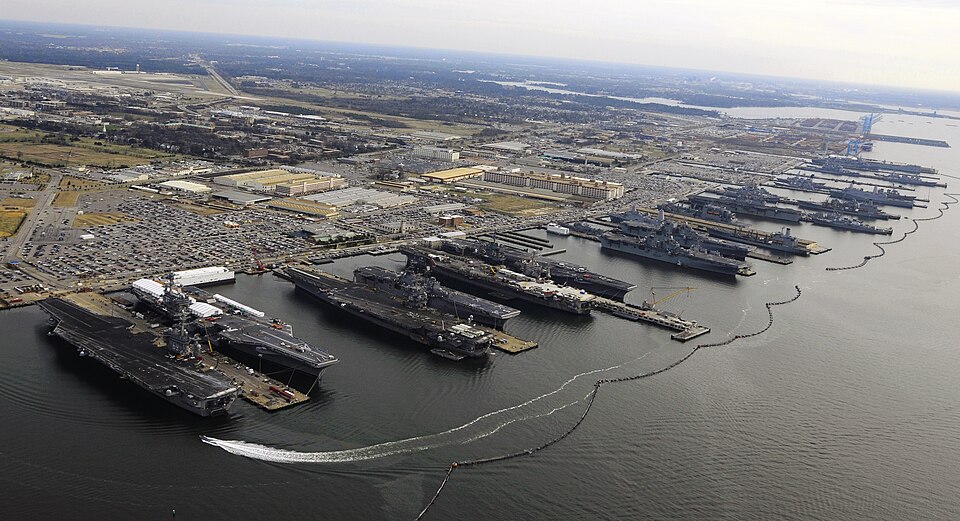
Named after famous turning points in American history—including USS Yorktown and USS Monterey—many Ticonderoga cruisers have called Naval Station Norfolk, Virginia, their homeport!
Understanding how Guided-Missile Cruisers: Ticonderoga-Class Air-Defense Flagships works in our world also involves (kun-TROHL-uh-bul pich proh-PEL-er): A ship propeller whose blades can rotate their angle to push forward or reverse thrust instantly without reversing the engine. Even when surrounding conditions shift across seasons or regions, the interaction between , Controllable-Pitch Propeller, and helps sustain balance and resilience in the wider environment.
Amazing Facts
Amazing Fact #1: Thanks to controllable-reversible pitch propeller blades that twist in the water, a 567-foot Ticonderoga cruiser can stop from 30+ knots in just 1,100 feet!
Amazing Fact #2: In 2023, the Navy renamed CG-62 USS Robert Smalls to honor the heroic African American maritime pilot and Congressman!
Amazing Fact #3: A Ticonderoga cruiser's radar computer can track more than 100 aircraft and surface contacts simultaneously over a 200-mile radius.
Read & Review
Let's review what we discovered about Guided-Missile Cruisers: Ticonderoga-Class Air-Defense Flagships! In this book, we explored how , , and connect to 🚢 U.S. Navy Surface Fleet, Submarines ("The Silent Service") & Hospital Ships.
Key Question #1: What is the primary classification and role of Ticonderoga-Class Guided-Missile Cruisers? Answer: Ticonderoga-Class Guided-Missile Cruiser — Integrated Air & Missile Defense Commander for Carrier Strike Groups. Ticonderoga-Class Guided-Missile Cruisers operates as Ticonderoga-Class Guided-Missile Cruiser supporting Integrated Air & Missile Defense Commander for Carrier Strike Groups.
Key Question #2: Which key engineering or performance specification defines Ticonderoga-Class Guided-Missile Cruisers? Answer: 567 ft Length • 32.5 Knots • Carrier Strike Group Air-Defense Command. Key technical specification: 567 ft Length • 32.5 Knots • Carrier Strike Group Air-Defense Command.