Introduction
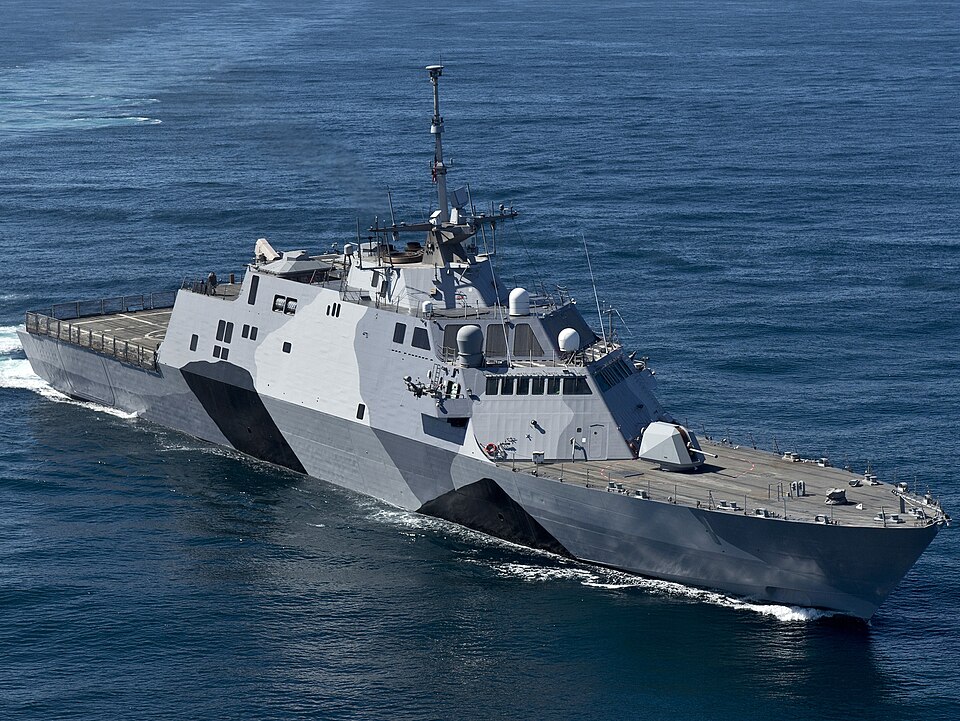
The Littoral Combat Ship (LCS) program introduced two distinct, high-speed vessel architectures designed for the "littoral" zone (shallow coastal waters, straits, and archipelagos): the steel semi-planing monohull Freedom-class (odd hull numbers) and the aluminum Independence-class (even hull numbers).
A foundational concept in this investigation is (pronounced LIT-er-ul zohn), which refers to: The shallow coastal ocean waters near the shoreline, harbors, and island straits. Every part of Littoral Combat Ships (LCS): Freedom Monohull & Independence within 🚢 U.S. Navy Surface Fleet, Submarines ("The Silent Service") & Hospital Ships builds upon this essential concept.
In Grade 5 advanced nonfiction inquiry across United States Armed Forces (🚢 U.S. Navy Surface Fleet, Submarines ("The Silent Service") & Hospital Ships), synthesizing primary evidence around , , and reveals how complex systems operate and adapt over time.
Key Features
Freedom-class ships (387 feet long) use a sleek semi-planing steel hull designed for tight, high-speed turns, whereas Independence-class ships (421 feet long) utilize a slender central hull flanked by two stabilizing outrigger sponsons (a ), creating the largest flight deck of any surface combatant of its size.
To analyze these defining traits accurately, specialists examine (TRY-muh-ran): A multi-hulled boat or ship consisting of a main center hull and two smaller outrigger hulls ("ama") on either side for stability. Alongside (The shallow coastal ocean waters near the shoreline, harbors, and island straits.), these specialized characteristics set Littoral Combat Ships (LCS): Freedom Monohull & Independence Trimaran apart within 🚢 U.S. Navy Surface Fleet, Submarines ("The Silent Service") & Hospital Ships.
Field Observation & Evidence: Researchers studying Littoral Combat Ships (LCS): Freedom Monohull & Independence observe how physical form matches function in United States Armed Forces. Each observable feature provides a clear advantage that supports stability, survival, or performance across changing conditions.
How It Works
Rather than conventional shafts and submerged propellers that could strike shallow reefs, both LCS classes use four steerable Rolls-Royce or Wärtsilä waterjets powered by combined diesel and gas turbines—pumping hundreds of thousands of gallons of water per minute to exceed 40 knots in water just 14 feet deep!
This step-by-step process relies on (pronounced WAW-ter-jet proh-PUL-shun), defined as: A marine propulsion system that draws water in from beneath the hull and blasts it out through steerable nozzles at high speed. Each stage of the process prepares the way for the next phase to unfold.
Cause-and-Effect Balance: When conditions remain balanced, and interact inside the to keep the system running smoothly. If any single link in this sequence is disrupted, the entire pace of activity shifts.
In Our World
Equipped with reconfigurable mission bays and stern launch ramps for rigid-hull inflatable boats and autonomous unmanned surface/underwater vehicles (USVs/UUVs), LCS vessels keep coastal shipping lanes clear of hazards.
Understanding how Littoral Combat Ships (LCS): Freedom Monohull & Independence functions in real environments also involves Trimaran (TRY-muh-ran): A multi-hulled boat or ship consisting of a main center hull and two smaller outrigger hulls ("ama") on either side for stability. Even when surrounding conditions shift across seasons or regions, the interaction between , Trimaran, and helps sustain balance and resilience in the wider environment.
Global & Practical Significance: Littoral Combat Ships (LCS): Freedom-Class & Independence-Class operates as Freedom-Class (Monohull) & Independence-Class () LCS supporting High-Speed Shallow-Water Patrol, Mine Countermeasures & Coastal Agile Operations. Furthermore, Key technical specification: 40+ Knots High Speed • • Monohull & Trimaran Designs.
Amazing Facts
1. Remarkable Scale & Numbers: The four waterjets on a Littoral Combat Ship pump enough water every minute to fill an entire Olympic-sized swimming pool! This discovery highlights why is central to understanding Littoral Combat Ships (LCS): Freedom Monohull & Independence .
2. Extraordinary Adaptation & Design: Because waterjets sit flush with the hull instead of hanging underneath like propellers, an LCS can safely enter shallow 15-foot island harbors that deeper warships cannot reach. Specialized conditions involving make these adaptations possible.
3. Surprising Scientific & Historical Record: The word "littoral" comes from the Latin word "litus," meaning the seashore or coast! Over time, processes linked to leave a lasting mark across 🚢 U.S. Navy Surface Fleet, Submarines ("The Silent Service") & Hospital Ships.
Read & Review
Chapter Synthesis: Throughout this investigation of Littoral Combat Ships (LCS): Freedom Monohull & Independence in United States Armed Forces (🚢 U.S. Navy Surface Fleet, Submarines ("The Silent Service") & Hospital Ships), we examined its core foundations, defining traits, step-by-step mechanisms, and real-world connections using key terms like , Trimaran, and .
Academic Vocabulary Review: • (LIT-er-ul zohn): The shallow coastal ocean waters near the shoreline, harbors, and island straits. • (TRY-muh-ran): A multi-hulled boat or ship consisting of a main center hull and two smaller outrigger hulls ("ama") on either side for stability. • (WAW-ter-jet proh-PUL-shun): A marine propulsion system that draws water in from beneath the hull and blasts it out through steerable nozzles at high speed.
Critical Thinking Check: (1) What is the primary classification and role of Littoral Combat Ships (LCS): Freedom-Class & Independence-Class? — Freedom-Class (Monohull) & Independence-Class () LCS — High-Speed Shallow-Water Patrol, Mine Countermeasures & Coastal Agile Operations. (2) Which key engineering or performance specification defines Littoral Combat Ships (LCS): Freedom-Class & Independence-Class? — 40+ Knots High Speed • • Monohull & Trimaran Designs.