Introduction
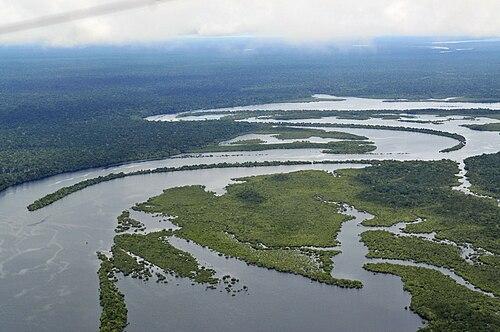
Imagine a towering, 60-meter-tall (200-foot) living skyscraper built entirely out of trees, vines, and flowers—where every floor has its own climate, sunlight level, and wildlife! That is a Tropical Rainforest, divided vertically into four distinct living layers: the , the , the , and the Forest Floor.
An important word to know in this book is (ih-MUR-juhnt LAY-er). Emergent Layer means: The highest rainforest layer (up to 70 meters), made of giant isolated trees towering above the main . Learning about Emergent Layer helps us understand how Inside the Tropical Rainforest: The 4 Living Layers fits into 🌴 World Biomes: Savannas, Jungles & Rainforests.
Key Features
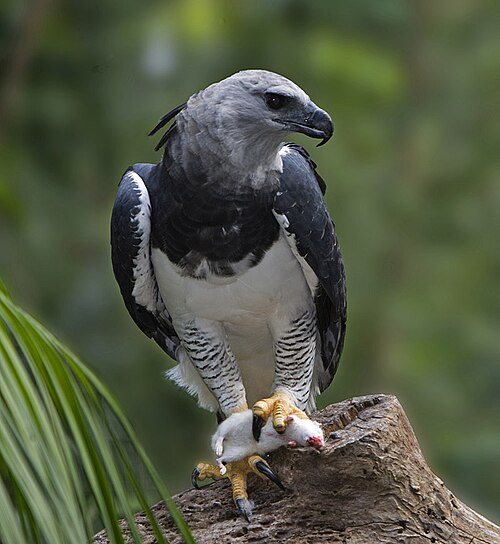
At the very top, giant trees like the Brazil nut and kapok poke above the forest roof up to 60–70 meters high into the , braving hot sun and strong winds where Harpy Eagles, bats, and morpho butterflies soar. Below them (at 30–45 meters) sits the —a dense, sunlit green ceiling of overlapping branches and liana vines where 60% to 80% of all rainforest wildlife lives, including toucans, sloths, howler monkeys, and tree frogs!
Scientists and explorers also look closely at (KAN-uh-pee), which means: The thick, sunlit roof of overlapping tree crowns 30 to 45 meters up that houses the majority of rainforest fruits, flowers, and animals. These special traits make Inside the Tropical Rainforest: The 4 Living Layers easy to spot and study.
How It Works
Beneath the thick roof, only 2% to 5% of sunlight filters down into the humid, dim Layer (5–25 meters high). Here, plants like philodendrons grow huge, wide dark-green leaves to catch every stray beam of light, while jaguars, ocelots, boa constrictors, and glass frogs hunt in the shadows. Finally, at the bottom lies the dark Forest Floor, where less than 2% of sunlight reaches!
Here is another helpful term: (UN-der-stor-ee). It means: The shaded, humid middle layer between the and the ground where large-leafed shrubs, tree frogs, and jaguars live. Step by step, and Understory work together in nature.
In Our World
Because the blocks the wind and traps moisture, a tropical rainforest makes up to half of its own rainfall through transpiration—releasing mist that rises into rainclouds every afternoon! On the dark Forest Floor, an army of decomposers—leafcutter ants, velvet worms, millipedes, termites, and glowing fungi—breaks down fallen leaves and fruit in just 6 weeks (compared to 1 to 2 years in a northern forest) so massive tree roots can immediately recycle the nutrients!
Understanding how Inside the Tropical Rainforest: The 4 Living Layers works in our world also involves (KAN-uh-pee): The thick, sunlit roof of overlapping tree crowns 30 to 45 meters up that houses the majority of rainforest fruits, flowers, and animals. Even when surrounding conditions shift across seasons or regions, the interaction between , Canopy, and helps sustain balance and resilience in the wider environment.
Amazing Facts
Amazing Fact #1: Tropical rainforests cover only about 6% of Earth’s land surface, yet they are home to more than 50% of all plant and animal species on the planet!
Amazing Fact #2: The Harpy Eagle of the has talons as large as a grizzly bear’s claws—strong enough to snatch a sloth or monkey right off a high branch!
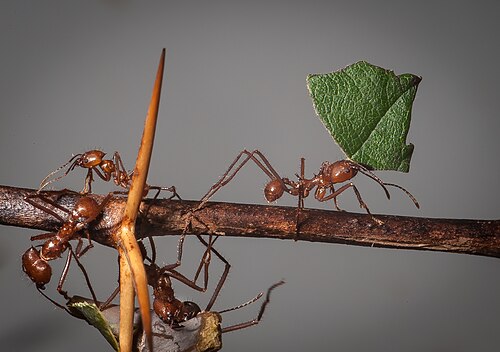
Amazing Fact #3: Millions of Leafcutter Ants on the forest floor march in long highways carrying cut leaf pieces 20 times their body weight—not to eat the leaves directly, but to fertilize underground fungus gardens that feed their colony!
Read & Review
Let's review what we discovered about Inside the Tropical Rainforest: The 4 Living Layers! In this book, we explored how , , and connect to 🌴 World Biomes: Savannas, Jungles & Rainforests.
Key Question #1: What are the four vertical layers of a tropical rainforest in order from TOP to BOTTOM? Answer: 1. → 2. → 3. → 4. Forest Floor. Sunlight decreases from 100% at the Emergent Layer down to under 2% at the Forest Floor.
Key Question #2: Which of the four rainforest layers contains 60% to 80% of all rainforest wildlife (including toucans, sloths, and monkeys), and why? Answer: The , because abundant sunlight produces a year-round feast of fruits, flowers, nectar, and leaves. The sunlit Canopy is the powerhouse of photosynthesis and food production in the rainforest.