Introduction
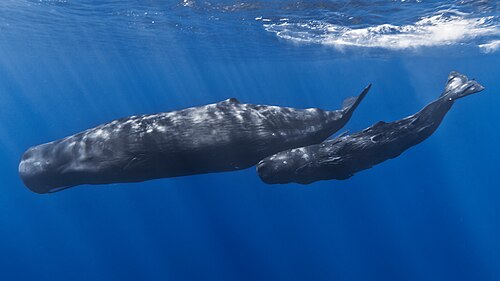
The Sperm Whale (Physeter macrocephalus) is the largest toothed predator that has ever lived on Earth and the supreme deep-diving champion of the marine mammal world! Adult males can grow up to 18 meters (60 feet) long, weigh 45 to 57 metric tons, and plunge over 2,000 meters (6,500 feet) into pitch-black ocean trenches on a single breath.
A foundational concept in this investigation is (pronounced spur-muh-SEE-tee OR-guhn), which refers to: A huge wax-filled chamber inside a sperm whale’s head that focuses powerful sonar clicks and helps control buoyancy during deep dives. Every part of Sperm Whales: Deepest Divers on Earth within 🌊 Ocean Giants & Apex Predators builds upon this essential concept.
At the Grade 4 level of Animals (🌊 Ocean Giants & Apex Predators), researchers compare structure, function, and environmental context to see how , , and shape measurable outcomes.
Key Features
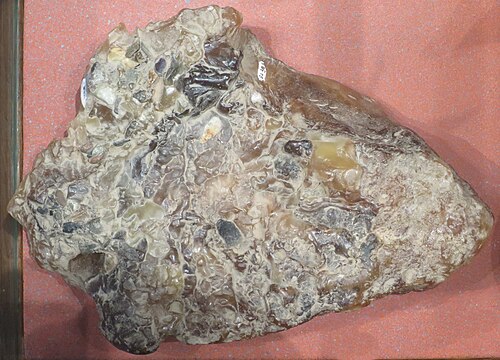
A sperm whale’s massive, block-shaped head makes up one-third of its entire body length and houses the largest brain of any animal in history—weighing about 8 kilograms (18 pounds), more than five times heavier than a human brain! Only its narrow lower jaw carries 40 to 52 cone-shaped ivory teeth, each weighing up to 1 kilogram (2.2 pounds), which fit into sockets in the toothless upper jaw.
To analyze these defining traits accurately, specialists examine (my-oh-GLOH-bin): An oxygen-binding protein concentrated in deep-diving mammal muscles that stores massive reserves of oxygen for 90-minute dives. Alongside (A huge wax-filled chamber inside a sperm whale’s head that focuses powerful sonar clicks and helps control buoyancy during deep dives.), these specialized characteristics set Sperm Whales: Deepest Divers on Earth apart within 🌊 Ocean Giants & Apex Predators.
Field Observation & Evidence: Researchers studying Sperm Whales: Deepest Divers on Earth observe how physical form matches function in Animals. Each observable feature provides a clear advantage that supports stability, survival, or performance across changing conditions.
How It Works
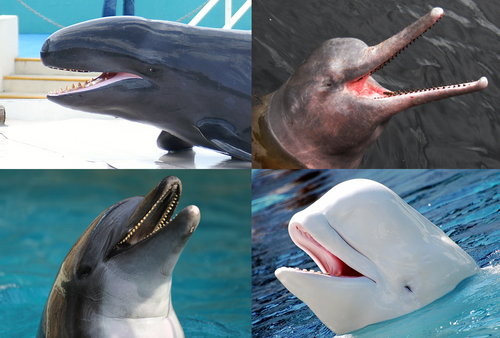
Inside the whale’s giant forehead sits the , filled with up to 1,900 liters (500 gallons) of liquid wax. When diving, cool water solidifies this wax to increase density and help the whale sink effortlessly; when returning to the surface, warm blood melts the wax to restore buoyancy! Its flexible ribcage and lungs collapse safely under crushing water pressure while oxygen is stored inside dark, -packed muscles.
This step-by-step process relies on (pronounced KOH-duh), defined as: A rhythmic pattern of clicks used by sperm whales for social communication and clan identity. Each stage of the process prepares the way for the next phase to unfold.
Cause-and-Effect Balance: When conditions remain balanced, and interact inside the to keep the system running smoothly. If any single link in this sequence is disrupted, the entire pace of activity shifts.
In Our World
Sperm whales produce the loudest sound made by any animal on Earth—230-decibel sonar clicks that act like an acoustic spotlight in the abyss and can be heard by other whales 60 kilometers (37 miles) away! When resting near the surface, entire pods of sperm whales float vertically like giant drifting tree trunks, taking 15-minute synchronized naps.
Understanding how Sperm Whales: Deepest Divers on Earth functions in real environments also involves (my-oh-GLOH-bin): An oxygen-binding protein concentrated in deep-diving mammal muscles that stores massive reserves of oxygen for 90-minute dives. Even when surrounding conditions shift across seasons or regions, the interaction between , Myoglobin, and helps sustain balance and resilience in the wider environment.
Global & Practical Significance: High concentrations of in their muscles and a slowed heart rate () let sperm whales hunt in the deep sea for 90+ minutes. Furthermore, The acts as both a giant acoustic reverberator for biosonar and a density-adjusting buoyancy aid.
Amazing Facts
1. Remarkable Scale & Numbers: A sperm whale can hold its breath for over 90 minutes (and up to 2 hours!) while diving more than 2 kilometers (1.25 miles) deep in search of giant squid. This discovery highlights why is central to understanding Sperm Whales: Deepest Divers on Earth.
2. Extraordinary Adaptation & Design: At 230 decibels underwater, a sperm whale’s echolocation click is louder than a rocket launch at close range! Specialized conditions involving make these adaptations possible.
3. Surprising Scientific & Historical Record: In 2008, scuba divers photographed a pod of sperm whales sleeping vertically side-by-side just below the ocean surface like floating obelisks. Over time, processes linked to leave a lasting mark across 🌊 Ocean Giants & Apex Predators.
Read & Review
Chapter Synthesis: Throughout this investigation of Sperm Whales: Deepest Divers on Earth in Animals (🌊 Ocean Giants & Apex Predators), we examined its core foundations, defining traits, step-by-step mechanisms, and real-world connections using key terms like , , and .
Academic Vocabulary Review: • (spur-muh-SEE-tee OR-guhn): A huge wax-filled chamber inside a sperm whale’s head that focuses powerful sonar clicks and helps control buoyancy during deep dives. • (my-oh-GLOH-bin): An oxygen-binding protein concentrated in deep-diving mammal muscles that stores massive reserves of oxygen for 90-minute dives. • (KOH-duh): A rhythmic pattern of clicks used by sperm whales for social communication and clan identity.
Critical Thinking Check: (1) How long can a sperm whale hold its breath during a deep-ocean dive? — Over 90 minutes while diving up to 2,000+ meters (6,500+ feet) deep. (2) What are the two main functions of the giant wax-filled "" in a sperm whale’s forehead? — Focusing powerful 230-decibel echolocation clicks and helping regulate buoyancy during deep dives.