Introduction
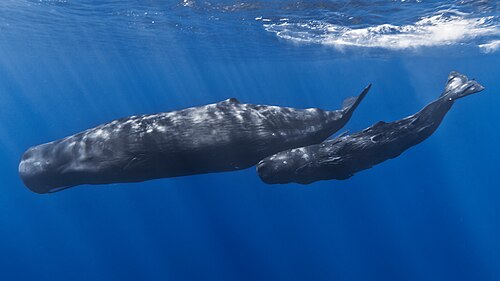
The Sperm Whale (Physeter macrocephalus) is the largest toothed predator that has ever lived on Earth and the supreme deep-diving champion of the marine mammal world! Adult males can grow up to 18 meters (60 feet) long, weigh 45 to 57 metric tons, and plunge over 2,000 meters (6,500 feet) into pitch-black ocean trenches on a single breath.
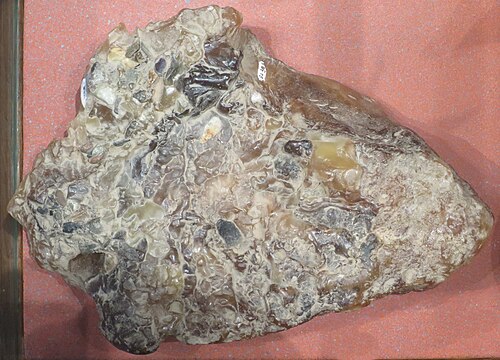
An important word to know in this book is (spur-muh-SEE-tee OR-guhn). Spermaceti Organ means: A huge wax-filled chamber inside a sperm whale’s head that focuses powerful sonar clicks and helps control buoyancy during deep dives. Learning about Spermaceti Organ helps us understand how Sperm Whales: Deepest Divers on Earth fits into 🌊 Ocean Giants & Apex Predators.
Key Features
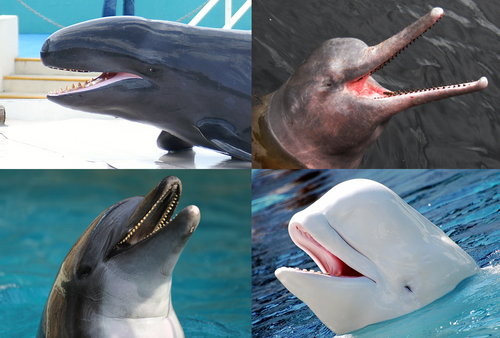
A sperm whale’s massive, block-shaped head makes up one-third of its entire body length and houses the largest brain of any animal in history—weighing about 8 kilograms (18 pounds), more than five times heavier than a human brain! Only its narrow lower jaw carries 40 to 52 cone-shaped ivory teeth, each weighing up to 1 kilogram (2.2 pounds), which fit into sockets in the toothless upper jaw.
Scientists and explorers also look closely at (my-oh-GLOH-bin), which means: An oxygen-binding protein concentrated in deep-diving mammal muscles that stores massive reserves of oxygen for 90-minute dives. These special traits make Sperm Whales: Deepest Divers on Earth easy to spot and study.
How It Works
Inside the whale’s giant forehead sits the , filled with up to 1,900 liters (500 gallons) of liquid wax. When diving, cool water solidifies this wax to increase density and help the whale sink effortlessly; when returning to the surface, warm blood melts the wax to restore buoyancy! Its flexible ribcage and lungs collapse safely under crushing water pressure while oxygen is stored inside dark, -packed muscles.
Here is another helpful term: (KOH-duh). It means: A rhythmic pattern of clicks used by sperm whales for social communication and clan identity. Step by step, and Coda work together in nature.
In Our World
Sperm whales produce the loudest sound made by any animal on Earth—230-decibel sonar clicks that act like an acoustic spotlight in the abyss and can be heard by other whales 60 kilometers (37 miles) away! When resting near the surface, entire pods of sperm whales float vertically like giant drifting tree trunks, taking 15-minute synchronized naps.
Understanding how Sperm Whales: Deepest Divers on Earth works in our world also involves (my-oh-GLOH-bin): An oxygen-binding protein concentrated in deep-diving mammal muscles that stores massive reserves of oxygen for 90-minute dives. Even when surrounding conditions shift across seasons or regions, the interaction between , Myoglobin, and helps sustain balance and resilience in the wider environment.
Amazing Facts
Amazing Fact #1: A sperm whale can hold its breath for over 90 minutes (and up to 2 hours!) while diving more than 2 kilometers (1.25 miles) deep in search of giant squid.
Amazing Fact #2: At 230 decibels underwater, a sperm whale’s echolocation click is louder than a rocket launch at close range!
Amazing Fact #3: In 2008, scuba divers photographed a pod of sperm whales sleeping vertically side-by-side just below the ocean surface like floating obelisks.
Read & Review
Let's review what we discovered about Sperm Whales: Deepest Divers on Earth! In this book, we explored how , , and connect to 🌊 Ocean Giants & Apex Predators.
Key Question #1: How long can a sperm whale hold its breath during a deep-ocean dive? Answer: Over 90 minutes while diving up to 2,000+ meters (6,500+ feet) deep. High concentrations of in their muscles and a slowed heart rate () let sperm whales hunt in the deep sea for 90+ minutes.
Key Question #2: What are the two main functions of the giant wax-filled "" in a sperm whale’s forehead? Answer: Focusing powerful 230-decibel echolocation clicks and helping regulate buoyancy during deep dives. The spermaceti organ acts as both a giant acoustic reverberator for biosonar and a density-adjusting buoyancy aid.