Introduction
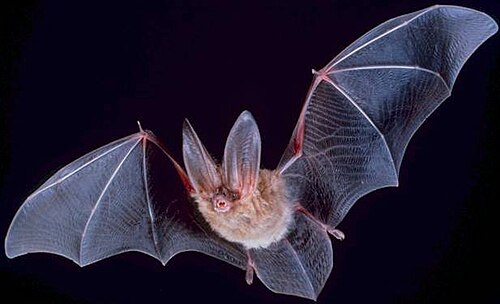
Contrary to the old saying "blind as a bat," bats can see quite well—but in pitch-black caves and midnight forests, most insect-hunting bats navigate and catch tiny mosquitoes in midair using biological sonar called !
A foundational concept in this investigation is (pronounced ek-oh-loh-KAY-shuhn), which refers to: Locating objects by emitting high-pitched sound waves and listening to the returning echoes. Every part of Echo-Location in Bats within Animal Behavior & Working Animals builds upon this essential concept.
At the Grade 4 level of Animals (Animal Behavior & Working Animals), researchers compare structure, function, and environmental context to see how , , and shape measurable outcomes.
Key Features
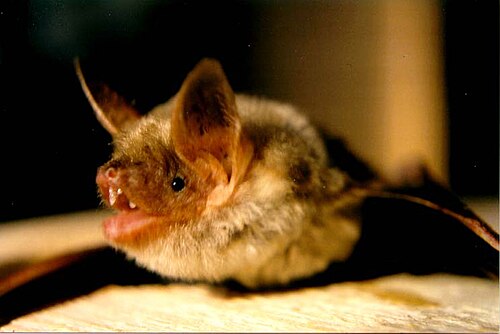
Bats are the only mammals capable of true sustained flight. Their wings are actually modified hands with elongated finger bones connected by a thin, elastic skin membrane (), and their large sculpted ears are shaped like satellite dishes.
To analyze these defining traits accurately, specialists examine (UL-truh-sownd): High-frequency sound waves above 20,000 Hertz—pitched higher than the upper limit of human hearing. Alongside (Locating objects by emitting high-pitched sound waves and listening to the returning echoes.), these specialized characteristics set Echo-Location in Bats apart within Animal Behavior & Working Animals.
Field Observation & Evidence: Researchers studying Echo-Location in Bats observe how physical form matches function in Animals. Each observable feature provides a clear advantage that supports stability, survival, or performance across changing conditions.
How It Works
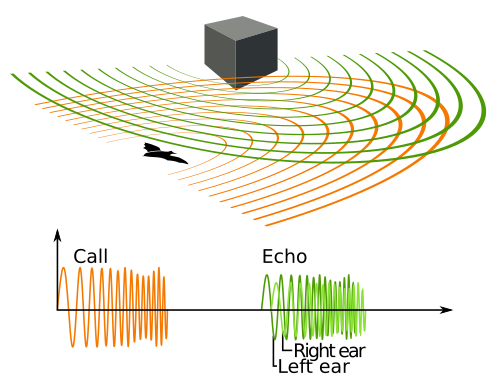
A hunting microbat emits rapid, high-pitched ultrasonic chirps from its larynx (voice box)—too high for human ears to hear. When those sound waves hit a flying moth or tree branch, the echoes bounce back. By measuring the time delay and pitch shift, the bat’s brain builds a 3D sound map!
This step-by-step process relies on (pronounced puh-TAY-jee-uhm), defined as: The thin, flexible membrane of skin stretched between a bat’s elongated finger bones to form its wing. Each stage of the process prepares the way for the next phase to unfold.
Cause-and-Effect Balance: When conditions remain balanced, and interact inside the to keep the system running smoothly. If any single link in this sequence is disrupted, the entire pace of activity shifts.
In Our World
A single little brown bat can catch up to 1,000 mosquitoes in a single hour! Across the world, over 1,400 bat species protect farm crops from insect pests, pollinate night-blooming desert cacti and agave, and disperse tropical fruit seeds.
Understanding how Echo-Location in Bats functions in real environments also involves (UL-truh-sownd): High-frequency sound waves above 20,000 Hertz—pitched higher than the upper limit of human hearing. Even when surrounding conditions shift across seasons or regions, the interaction between , Ultrasound, and helps sustain balance and resilience in the wider environment.
Global & Practical Significance: Most bat calls range from 20 kHz to over 100 kHz, above human hearing. Furthermore, The scientific order for bats, Chiroptera, means "hand-wing."
Amazing Facts
1. Remarkable Scale & Numbers: As a bat closes in on a flying insect, it speeds up its calls to 200 chirps per second—called a "feeding buzz"! This discovery highlights why Echolocation is central to understanding Echo-Location in Bats.
2. Extraordinary Adaptation & Design: Just before shouting an ultrasonic call, tiny muscles in a bat’s middle ear disconnect for a millisecond so the bat doesn’t deafen itself. Specialized conditions involving make these adaptations possible.
3. Surprising Scientific & Historical Record: Bracken Cave in Texas is the summer home to 15 million Mexican free-tailed bats that eat over 100 tons of insects every single night! Over time, processes linked to leave a lasting mark across Animal Behavior & Working Animals.
Read & Review
Chapter Synthesis: Throughout this investigation of Echo-Location in Bats in Animals (Animal Behavior & Working Animals), we examined its core foundations, defining traits, step-by-step mechanisms, and real-world connections using key terms like , , and .
Academic Vocabulary Review: • (ek-oh-loh-KAY-shuhn): Locating objects by emitting high-pitched sound waves and listening to the returning echoes. • (UL-truh-sownd): High-frequency sound waves above 20,000 Hertz—pitched higher than the upper limit of human hearing. • (puh-TAY-jee-uhm): The thin, flexible membrane of skin stretched between a bat’s elongated finger bones to form its wing.
Critical Thinking Check: (1) Why can’t humans usually hear the calls of a hunting bat? — The calls are ultrasonic—pitched higher than human ears can detect. (2) What is a bat’s wing actually made of anatomically? — Elongated finger bones covered by a flexible skin membrane.